
Catalogue Search | MBRL


Are you sure you want to remove the book from the shelf?

{{itemTitle}}
78
result(s) for
"Kvinnorollen"
Sort by:

Women's letters from ancient Egypt, 300 BC-AD 800
\"More than three hundred letters written in Greek and Egyptian by women in Egypt in the millennium from Alexander the Great to the Arab conquest survive on papyrus and pottery. These letters were written by women from various walks of life and shed light on critical social aspects of life in Egypt after the pharaohs. Roger S. Bagnall and Raffaella Cribiore collect the best preserved of these letters in translation and set them in their paleographic, linguistic, social, and economic contexts. As a result, Women's Letters from Ancient Egypt, 300 B.C.-A.D. 800, provides a sense that these women's habits, interests, and means of expression were a product more of their social and economic standing than of specifically gender-related concerns or behavior.\"--Jacket.
Book

When Gossips Meet
This book explores how women of the poorer and middling sorts in early modern England negotiated a patriarchal culture in which they were generally excluded, marginalized, or subordinated. It focuses on the networks of close friends (‘gossips’) which gave them a social identity beyond the narrowly domestic, providing both companionship and practical support in disputes with husbands and with neighbours of either sex. The book also examines the micropolitics of the household, with its internal alliances and feuds, and women's agency in neighbourhood politics, exercised by shaping local public opinion, exerting pressure on parish officials, and through the role of informal female juries. If women did not openly challenge male supremacy, they could often play a significant role in shaping their own lives and the life of the local community.
eBook

Beyond Rosie
More so than any war in history, World War II was a woman's war. Women, motivated by patriotism, the opportunity for new experiences, and the desire to serve, participated widely in the global conflict. Within the Allied countries, women of all ages proved to be invaluable in the fight for victory. Rosie the Riveter became the most enduring image of women's involvement in World War II. What Rosie represented, however, is only a small portion of a complex story. As wartime production workers, enlistees in auxiliary military units, members of voluntary organizations or resistance groups, wives and mothers on the home front, journalists, and USO performers, American women found ways to challenge traditional gender roles and stereotypes.Beyond Rosieoffers readers an opportunity to see the numerous contributions they made to the fight against the Axis powers and how American women's roles changed during the war. The primary documents (newspapers, propaganda posters, cartoons, excerpts from oral histories and memoirs, speeches, photographs, and editorials) collected here represent cultural, political, economic, and social perspectives on the diverse roles women played during World War II.
eBook

Unrivalled Influence
Unrivalled Influence explores the exceptional roles that women played in the vibrant cultural and political life of medieval Byzantium. Written by one of the world's foremost historians of the Byzantine millennium, this landmark book evokes the complex and exotic world of Byzantium's women, from empresses and saints to uneducated rural widows. Drawing on a diverse range of sources, Judith Herrin sheds light on the importance of marriage in imperial statecraft, the tense coexistence of empresses in the imperial court, and the critical relationships of mothers and daughters. She looks at women's interactions with eunuchs, the in-between gender in Byzantine society, and shows how women defended their rights to hold land. Herrin describes how they controlled their inheritances, participated in urban crowds demanding the dismissal of corrupt officials, followed the processions of holy icons and relics, and marked religious feasts with liturgical celebrations, market activity, and holiday pleasures. The vivid portraits that emerge here reveal how women exerted an unrivalled influence on the patriarchal society of Byzantium, and remained active participants in the many changes that occurred throughout the empire's millennial history.
Unrivalled Influence brings together Herrin's finest essays on women and gender written throughout the long span of her esteemed career. This volume includes three new essays published here for the very first time and a new general introduction by Herrin. She also provides a concise introduction to each essay that describes how it came to be written and how it fits into her broader views about women and Byzantium.
eBook

Gender Epistemologies and Eurasian Borderlands
Tlostanova examines Central Asia and the Caucasus to trace the genealogy of feminism in those regions following the dissolution of the USSR. The forms it takes resist interpretation through the lenses of Western feminist theory and woman of color feminism, hence Eurasian borderland feminism must chart a third path.
eBook

Women and the Informal Economy in Urban Africa
In this highly original work, Mary Njeri Kinyanjui explores the trajectory of women's movement from the margins of urbanization into the centres of business activities in Nairobi and its accompanying implications for urban planning. While women in much of Africa have struggled to gain urban citizenship and continue to be weighed down by poor education, low income and confinement to domestic responsibilities due to patriarchic norms, a new form of urban dynamism - partly informed by the informal economy - is now enabling them to manage poverty, create jobs and link to the circuits of capital and labour. Relying on social ties, reciprocity, sharing and collaboration, women's informal 'solidarity entrepreneurialism' is taking them away from the margins of business activity and catapulting them into the centre. Bringing together key issues of gender, economic informality and urban planning in Africa, Kinyanjui demonstrates that women have become a critical factor in the making of a postcolonial city.
eBook
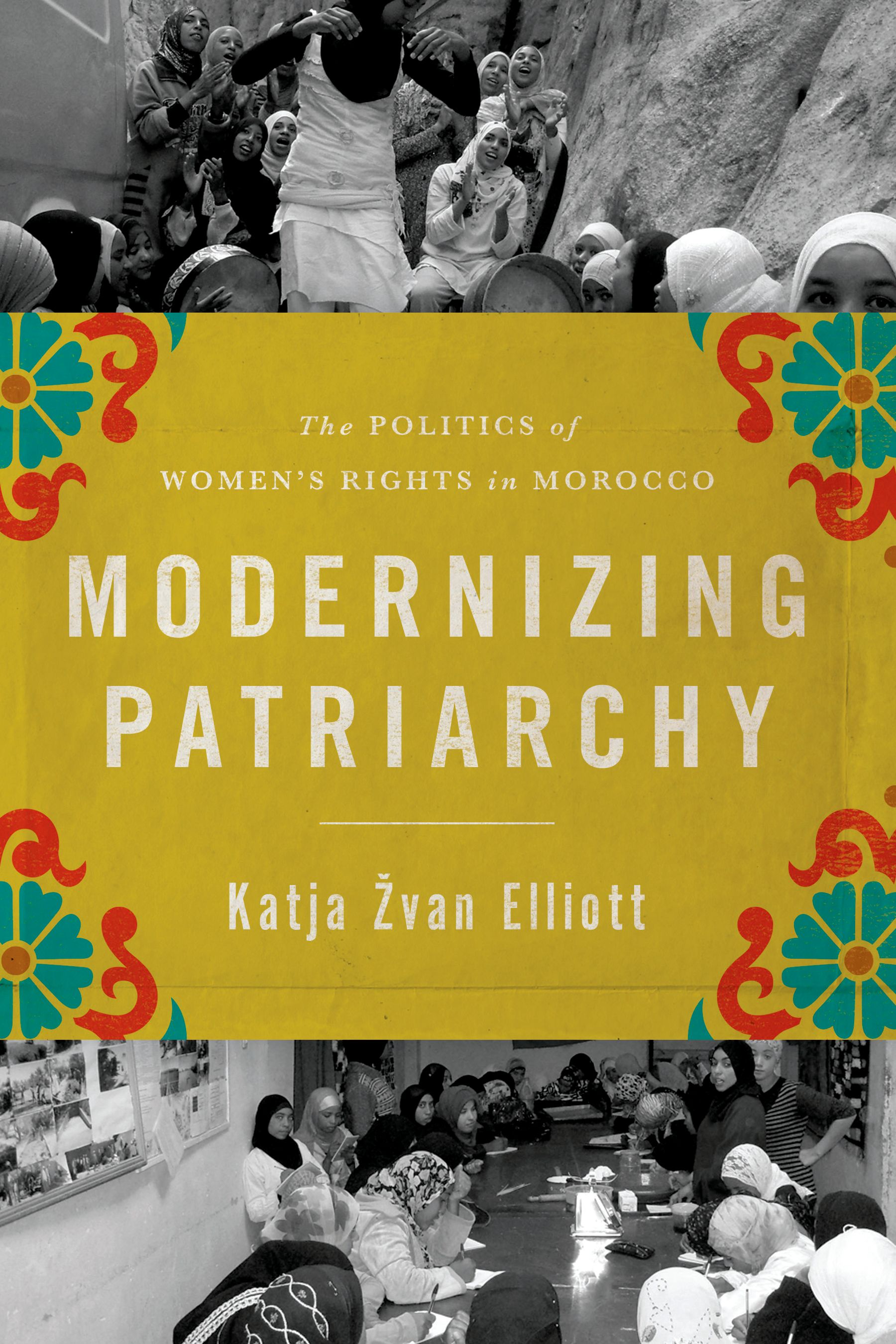
Modernizing Patriarchy
Morocco is hailed by academics, international NGO workers, and the media as a trailblazer in women’s rights and legal reforms. The country is considered a model for other countries in the Middle East and North African region, but has Morocco made as much progress as experts and government officials claim? In Modernizing Patriarchy, Katja Žvan Elliott examines why women’s rights advances are lauded in Morocco in theory but are often not recognized in reality, despite the efforts of both Islamist and secular feminists. In Morocco, female literacy rates remain among the lowest in the region; many women are victims of gender-based violence despite legal reforms; and girls as young as twelve are still engaged to adult men, despite numerous reforms. Based on extensive ethnographic research and fieldwork in Oued al-Ouliya, Modernizing Patriarchy offers a window into the life of Moroccan Muslim women who, though often young and educated, find it difficult to lead a dignified life in a country where they are expected to have only one destiny: that of wife and mother. Žvan Elliott exposes their struggles with modernity and the legal reforms that are supposedly ameliorating their lives. In a balanced approach, she also presents male voices and their reasons for criticizing the prevailing women’s rights discourse. Compelling and insightful, Modernizing Patriarchy exposes the rarely talked about reality of Morocco’s approach toward reform.
eBook

The Invention and Gendering of Epicurus
The school of Greek philosopher Epicurus, which became known as the Garden, famously put great stock in happiness and pleasure. As a philosophical community, and a way of seeing the world, Epicureanism had a centuries-long life in Athens and Rome, as well as across the Mediterranean.
The Invention and Gendering of Epicurusstudies how the Garden's outlook on pleasure captured Greek and Roman imaginations---particularly among non-Epicureans---for generations after its legendary founding. Unsympathetic sources from disparate eras generally focus not on historic personages but on the symbolic Epicurean. And yet the traditions of this imagined Garden, with its disreputable women and unmanly men, give us intermittent glimpses of historical Epicureans and their conceptions of the Epicurean life.
Pamela Gordon suggests how a close hearing and contextualization of anti-Epicurean discourse leads us to a better understanding of the cultural history of Epicureanism. Her primary focus is on sources hostile to the Garden, but her Epicurean-friendly perspective is apparent throughout. Her engagement with ancient anti-Epicurean texts makes more palpable their impact on modern responses to the Garden.
Intended both for students and for scholars of Epicureanism and its response, the volume is organized primarily according to the themes common among Epicurus' detractors. It considers the place of women in Epicurean circles, as well as the role of Epicurean philosophy in Homer and other writers.
eBook

Citizen Bacchae
What activities did the women of ancient Greece perform in the sphere of ritual, and what were the meanings of such activities for them and their culture? By offering answers to these questions, this study aims to recover and reconstruct an important dimension of the lived experience of ancient Greek women. A comprehensive and sophisticated investigation of the ritual roles of women in ancient Greece, it draws on a wide range of evidence from across the Greek world, including literary and historical texts, inscriptions, and vase-paintings, to assemble a portrait of women as religious and cultural agents, despite the ideals of seclusion within the home and exclusion from public arenas that we know restricted their lives. As she builds a picture of the extent and diversity of women's ritual activity, Barbara Goff shows that they were entrusted with some of the most important processes by which the community guaranteed its welfare. She examines the ways in which women's ritual activity addressed issues of sexuality and civic participation, showing that ritual could offer women genuinely alternative roles and identities even while it worked to produce wives and mothers who functioned well in this male-dominated society. Moving to more speculative analysis, she discusses the possibility of a women's subculture focused on ritual and investigates the significance of ritual in women's poetry and vase-paintings that depict women. She also includes a substantial exploration of the representation of women as ritual agents in fifth-century Athenian drama.
eBook

Pythagorean Women
Love triangles and Pythagorean women.
In Pythagorean Women, classical scholar Sarah B. Pomeroy discusses the groundbreaking principles that Pythagoras established for family life in Archaic Greece, such as constituting a single standard of sexual conduct for women and men. Among the Pythagoreans, women played an important role and participated actively in the philosophical life. While Pythagoras encouraged women to be submissive to men, his reasoning was based on the desire to preserve harmony in the home.
Pythagorean Women provides English translations of all the earliest extant examples of literary Greek prose by Neopythagorean women, shedding light on their attitudes about marriage, the home, music, and the cosmos. Pomeroy sets the Pythagorean and Neopythagorean women vividly in their historical, ecological, and intellectual contexts, illustrated with original photographs of sites and artifacts known to these women.
eBook