
Catalogue Search | MBRL


Are you sure you want to remove the book from the shelf?

{{itemTitle}}
35
result(s) for
"L2 users"
Sort by:

Effects of the Second Language on the First
This book looks at changes in the first language of people who know a second language, thus seeing L2 users as people in their own right differing from the monolingual in both first and second languages. It presents theories and research that investigate the first language of second language users from a variety of perspectives including vocabulary, pragmatics, cognition, and syntax and using a variety of linguistic and psychological models.
eBook

The use of the semi-lexical word ‘while’ by non-native (Polish) and native users of English based on corpora studies
The objective of the article is the theoretical and practical analysis of the use of the semi-lexical word
‘while’ by Polish (non-native) users of English representing different proficiency groups (B2-C2, in accordance with CEFR, which stands for Common European Framework of Reference for Languages) as well as by native users of English. The practical part of the article will be centred on the demonstration of the use of the afore-mentioned word based on the available corpus of L2 users (PELCRA – PLEC). The first acronym denotes Polish and English Language and Corpora for Research and Applications (PELCRA), which is the result of scientific work of the scholars from the University of Łódź. The other one (PLEC), stands for PELCRA English Learner Corpus (see the References section below). It is commonly known that learners/students find it difficult to use semi-lexical words properly, as they are differently realised in their native language. It is generally assumed that learners/students will demonstrate different strategies in the use of the word in question. The strategies selected by them will revolve around hesitations, overuse, avoidance, lack of decisions in the use of the above word
Hence such idea of the research occurred, the objective of which is to verify and demonstrate learners’/students’ performance with reference to the selected word, which is challenging depending on the available contexts.
Journal Article

Conceptualizing Language Learners: Socioinstitutional Mechanisms and their Consequences
Through examination of one recently manufactured term for language learners (Long-term English Learners) and review of a century of MLJ articles, we examine varying 'socioinstitutional' conceptualizations of second/foreign/heritage language learners as shaped by educational institutions and related stakeholders over time, given evolving understandings of the practice of language teaching that are directly related to theoretical, political, and institutional discourses. We focus very specifically on constructions of language learners that reflect different views and definitions of language learning, language acquisition/development, and ultimate attainment, examining the intersections of these definitions with formalized language instruction as a particularly significant force for learner categorizations. We argue that formalized language instruction both creates and requires categorizations/classifications of learners that are not neutral and that often have life-impacting consequences for individuals. These constructions of learners, moreover, are shaped by a number of interacting and intersecting mechanisms, including theoretical perspectives, educational policies, informing disciplines, instructional materials, pedagogical traditions, and testing and accountability requirements.
Journal Article
Learning and Retaining Specialized Vocabulary From Textbook Reading: Comparison of Learning Outcomes Through L1 and L2
This study investigated the acquisition of specialized vocabulary from L1 and L2 textbook reading by 64 Slovak high school students who were intermediate or advanced users of English. The students were divided into two groups: One group reads the academic texts in their L1, the other group in their L2. In a posttest and a delayed posttest, they were asked to orally recall the meanings of 12 technical words that appeared in the texts. The word meanings recalled by the students immediately after reading and 1 week later were examined in terms of their breadth and depth. Results showed that although the L2-instructed students acquired the meanings of the specialized vocabulary items to a considerable degree, they still differed significantly from their L1-instructed counterparts in several respects: They could recall fewer word meanings after the reading; they acquired the words to a lesser depth; and after a week, their knowledge of the words faded more rapidly than that of the L1-instructed participants. The significance of the findings for L2 vocabulary acquisition and bilingual education is discussed. (Verlag).
Journal Article

Insights into L2 connected speech segmentation: A gating experiment with listeners of different English proficiency levels
The relative contribution of bottom-up (i.e. acoustic-phonetic) and top-down (i.e. contextual) cues for successful L2 online segmentation is still a matter of debate. This study used the gating paradigm to investigate the segmentation processes of adult L2 English listeners with different proficiency levels, by looking at the type of cues they exploit and how they revise their hypotheses as connected speech is progressively revealed. Twenty-one French and Tunisian undergraduates were selected from a larger pool (n=226) and identified as skilled (n=11) and unskilled (n=10) listeners based on their scores on standardized English listening and vocabulary tests. Descriptive statistics, analysis of variance and qualitative analysis were performed on the obtained data. Overall, this study provides supporting L2 evidence for the hierarchical nature of the multiple speech segmentation cues (Mattys et al., 2005). The results indicated an early effect of context on segmentation that was independent of L2 proficiency when the context is constraining. In non-constraining contexts, successful segmentation is delayed for both groups with L2 unskilled listeners needing far more bottom-up information to process input and revise their segmentation hypotheses. We conclude that, in online L2 speech segmentation, what distinguishes proficient from non-proficient listeners is their efficient processing of bottom-up cues. Pedagogical implications are provided hoping to help L2 English teachers (and materials developers) focus on bottom-up training to improve their learners’ real-time comprehension competence.
Journal Article

On the Mutual Effect of L1 and L2 in SLA: A Brief Look at Cook's Multi-competence
Considering the notion of multi-competence coined by Cook (1991) calls on the necessity to revisit the stance of first language in foreign language teaching. The use of mother tongue in second language acquisition (SLA) is widely criticized by many practitioners, notably Krashen (1981). However, more recently Widdowson (2003) also called for an explicitly bilingual approach. The present paper, though arguing for the use of L1 in L2 context, did not ignore the fact that L2 can exert inevitable effects on L1.
Journal Article
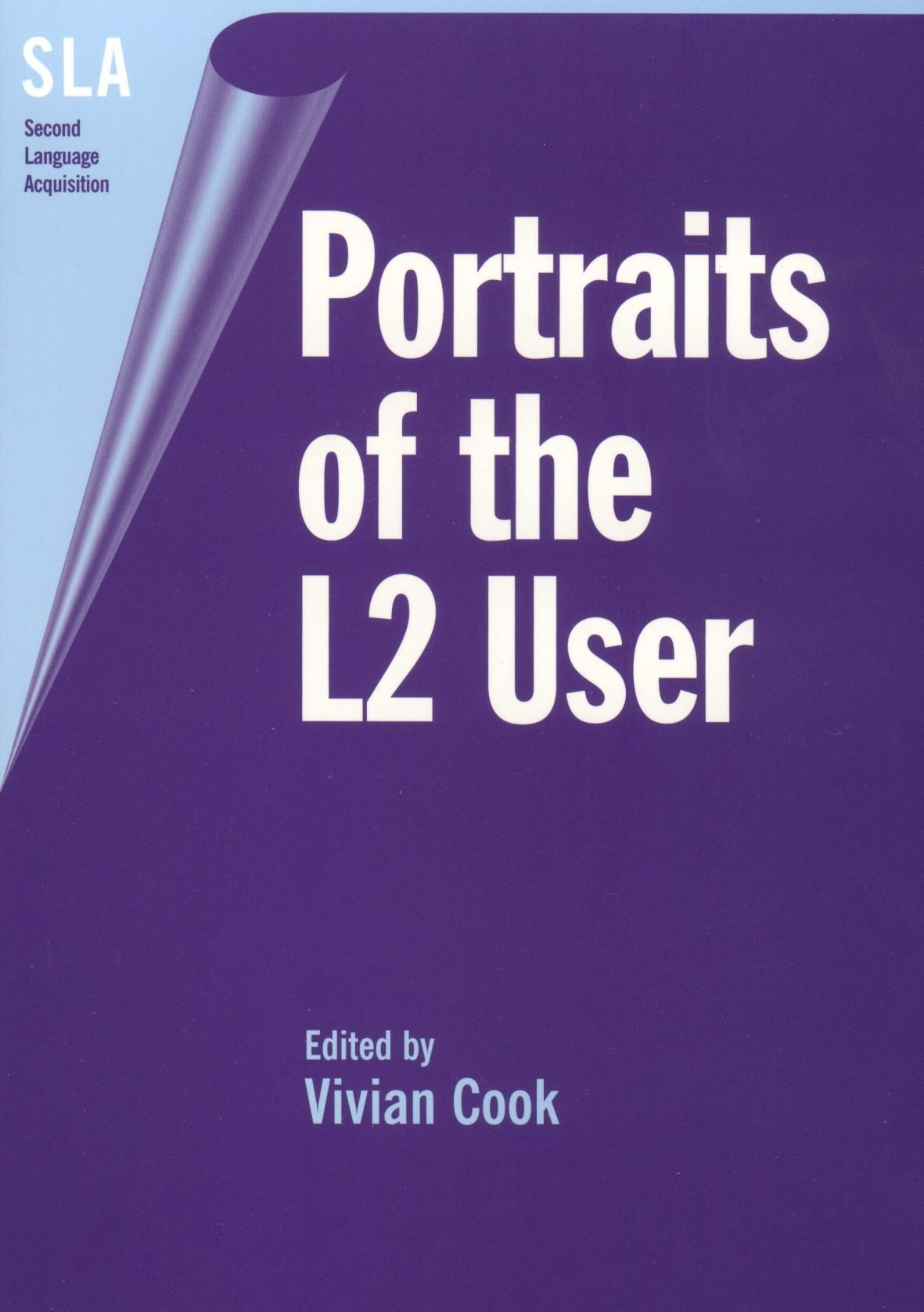
Portraits of the L2 User
Portraits of the L2 User treats second language users in their own right rather than as failed native speakers. It describes a range of psychological and linguistic approaches to diverse topics about L2 users. It thus provides an overview of current second language acquisition theories, results and methods, seen from a common perspective.
eBook

The effects of generative AI usage in EFL classrooms on the l2 motivational self system
This study aimed to examine the effect of incorporating the generative pre-trained AI chatbot, ChatGPT, into an instructor-led writing class on the motivation of Japanese university students. This study examines changes in students’ Ideal L2 Self, Ought-to L2 Self, and L2 Learning Experience using Dörnyei’s L2 Motivational Self System (L2MSS) framework. These changes were analyzed before and after students engaged with ChatGPT. A mixed-methods approach, including questionnaires and open-ended questions, was employed. Eighty students were divided into two groups: control and treatment. The treatment group participated in writing workshops, collaborated, and received feedback from ChatGPT. Students who utilized ChatGPT reported higher levels in all three motivational factors, although only Ideal L2 Self and L2 Learning Experience showed statistical significance. These findings highlight the potential of AI chatbots such as ChatGPT in enhancing motivation and writing skills. This research aims to inform instructional practices and pave the way for future advancements in AI-assisted language learning. By exploring the nuanced effects of AI tools on language learning motivation, this study contributes to the understanding of effective AI integration in language classrooms and offers valuable insights for educators and researchers.
Journal Article
The impact of ChatGPT on L2 writing and expected responses: Voice from doctoral students
Despite the growing popularity of ChatGPT and chatbot-assisted writing, research on the use of ChatGPT in second language (L2) writing classrooms remains insufficient. Using reflection papers and focus group interviews, the qualitative study examined doctoral students’ views on the impact of using ChatGPT on L2 writing and their expected responses. Thematic analysis revealed that ChatGPT could support writers at the pre-writing, during-writing and post-writing stages and serve as a self-learning tool for writing and thinking development with its human and non-human features. Nonetheless, its generative nature also gave rise to concerns for learning loss, authorial voice, unintelligent texts, academic integrity as well as social and safety risks. Based on the benefits and drawbacks, the doctoral students expected the education sector to make concerted efforts for the effective, ethical and responsible use of ChatGPT in L2 writing. Suggestions are accordingly provided for future considerations in teaching and research to leverage ChatGPT for L2 writing.
Journal Article

Impact of social media on learning English language during the COVID-19 pandemic
PurposeThis research shows how social media has affected learning at present during the COVID-19 pandemic and how it has become the largest and most convenient area of communication. In the current scenario, it seems that social networking sites not only had a profound impact on our social structure and intra-social interaction, but also affected education in general and learning English language in particular. It has been proven that these various social media platforms have created a realm of digital environment in today's new-age learning. Social media platforms are social networking sites through which people interact and communicate with each other easily and conveniently. Undoubtedly and unquestionably, social networking has been proven to be a global phenomenon that has caused a vast paradigm shift in the world of Learning and education during the current pandemic. Therefore, the present study aims to reach the extent of the impact of the various social media platforms on learning English language during the COVID-19 pandemic from the students' point of view.Design/methodology/approachThe study was conducted at the undergraduate level for English language learners. The sample comprised 166 undergraduate students at Najran University. A survey questionnaire was administered to find out the impact of various social media platforms and social networking sites on learning English language in the academic year of 2020 due to the COVID-19 pandemic and to highlight possible suggestions for improving future virtual language learning.FindingsThe findings of the study contributed to the area of online learning of English language during the COVID-19 pandemic. Final results confirmed that the utilization of social media has been significantly perceived to have positively impacted learning English language in terms of writing style, reading skills, listening and lexical variation, communication skills and grammar usage.Practical implicationsThe findings of the study can serve as fundamental indicators to implement prompt pedagogical reformations, for which a number of pedagogical implications can be proposed. Another equally important pedagogical implication is to design and provide professional development and training sessions to both students and educators on the ultimate utilization of social media as instructional technologies in the context of English language teaching and learning.Originality/valueThis research provides insights in developing policies to assist with the integration and utilization of social media platforms as instructional technologies in the context of English language teaching and learning and how institutions can respond to the advent of advancing technology, especially during and after the COVID-19 era. A model to improve online English language learning process is recommended as a guideline for all educators offering online learning.
Journal Article