
Catalogue Search | MBRL


Are you sure you want to remove the book from the shelf?

{{itemTitle}}
17,366
result(s) for
"LAND CLAIMS"
Sort by:

Negotiating the deal : comprehensive land claims agreements in Canada
Using in-depth interviews with Indigenous, federal, provincial, and territorial officials, Christopher Alcantara compares the experiences of four Aboriginal groups: the Kwanlin Dün First Nation (with a completed treaty) and the Kaska Nations (with incomplete negotiations) in Yukon Territory, and the Inuit (completed) and Innu (incomplete) in Newfoundland and Labrador. Based on the experiences of these groups, Alcantara argues that scholars and policymakers need to pay greater attention to the institutional framework governing treaty negotiations and, most importantly, to the active role that Aboriginal groups play in these processes.\"--pub. desc.
Book


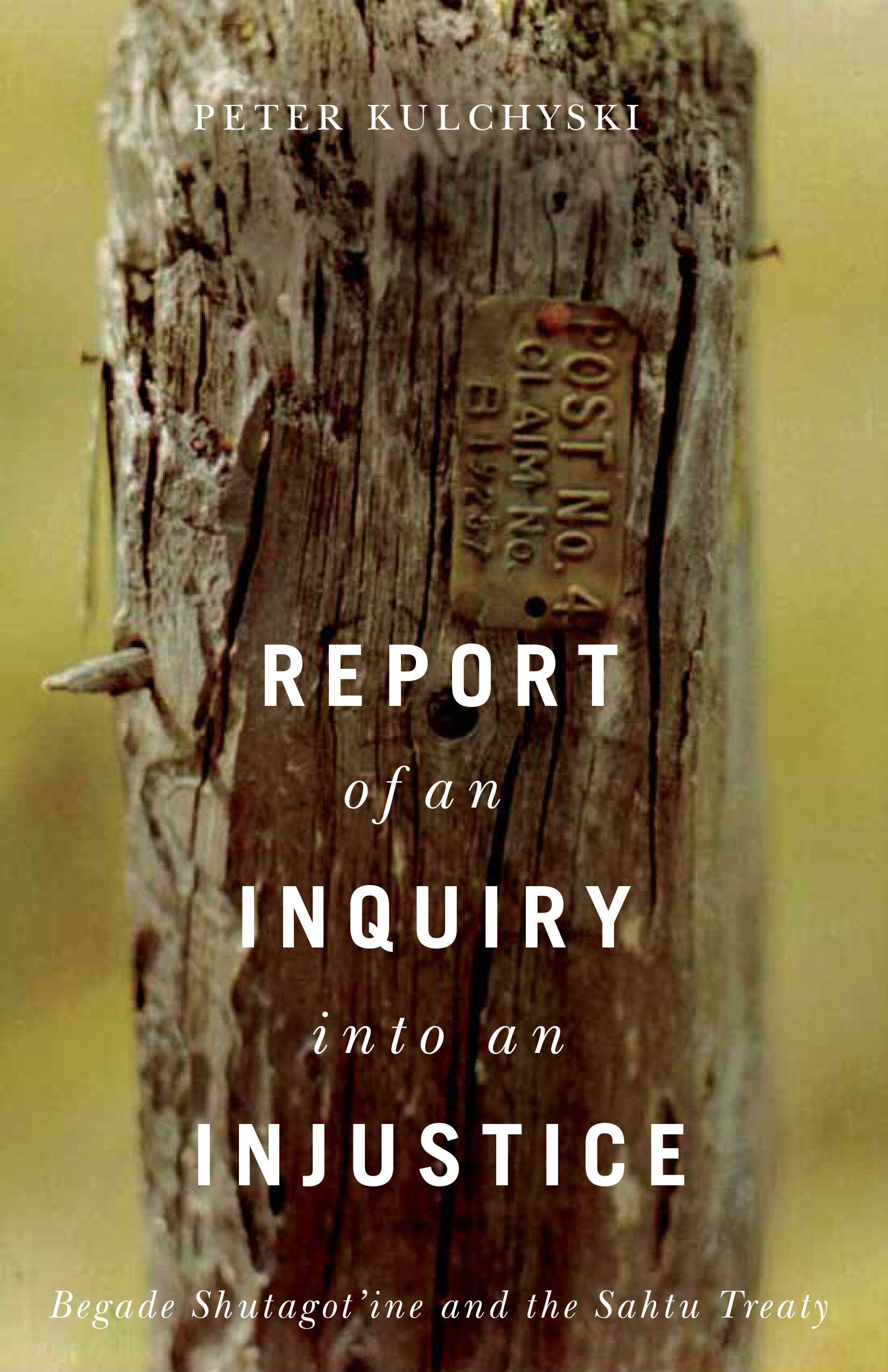
Report of an Inquiry into an Injustice
A Report of an Inquiry into an Injustice chronicles Peter Kulchyski's experiences with the Begade Shutagot'ine, a small community of a few hundred people living in and around Tulita (formerly Fort Norman), on the Mackenzie River in the heart of Canada's Northwest Territories. Despite their formal objections and boycott of the agreement, the band and their lands were included in the Sahtu Treaty, a modern comprehensive land claims agreement negotiated between the Government of Canada and the Sahtu Tribal Council, representing Dene and Metis peoples of the region. While both Treaty 11 (1921) and the Sahtu Treaty (1994) purport to extinguish Begade Shutagot'ine Aboriginal title, oral history and documented attempts to exclude themselves from treaty strongly challenge the validity of that extinguishment. Structured as a series of briefs to an inquiry into the Begade Shutagot'ine's claim, this manuscript documents the negotiation and implementation of the Sahtu Treaty and amasses evidence of historical and continued presence and land use to make eminently clear that the Begade Shutagot'ine are the continued owners of the land by law: they have not extinguished title to their traditional territories; they continue to exercise their customs, practices, and traditions on those territories; and they have a fundamental right to be consulted on, and refuse or be compensated for, development projects on those territories. Kulchyski bears eloquent witness to the Begade Shutagot'ine people's two-decade struggle for land rights, which have been blatantly ignored by federal and territorial authorities for too long.
eBook


The Political Economy of the American Frontier
This book offers an analytical explanation for the origins of and change in property institutions on the American frontier during the nineteenth century. Its scope is interdisciplinary, integrating insights from political science, economics, law and history. This book shows how claim clubs - informal governments established by squatters in each of the major frontier sectors of agriculture, mining, logging and ranching - substituted for the state as a source of private property institutions and how they changed the course of who received a legal title, and for what price, throughout the nineteenth century. Unlike existing analytical studies of the frontier that emphasize one or two sectors, this book considers all major sectors, as well as the relationship between informal and formal property institutions, while also proposing a novel theory of emergence and change in property institutions that provides a framework to interpret the complicated history of land laws in the United States.
eBook

No surrender : the land remains indigenous
\"Between 1869 and 1877 the government of Canada negotiated Treaties One through Seven with the Indigenous peoples of the Great Plains. Many historians argue that the negotiations suffered from cultural misunderstandings between the treaty commissioners and Indigenous chiefs, but newly uncovered eyewitness accounts show that the Canadian government had a strategic plan to deceive over the \"surrender clause\" and land sharing. According to Sheldon Krasowski's research, Canada understood that the Cree, Anishnabeg, Saulteaux, Assiniboine, Siksika, Piikani, Kainaa, Stoney and Tsuu T'ina nations wanted to share the land with newcomers--with conditions--but were misled over governance, reserved lands, and resource sharing. Exposing the government chicanery at the heart of the negotiations, No Surrender demonstrates that the land remains Indigenous.\"-- Provided by publisher.
Book

Ecological Sustainability for “Life on Land”: Wellspring of Indigenous Knowledge
This article argues that indigenous knowledge is significantly resourceful for ecological sustainability, without which humanity will not survive. It addresses the intersection between the 15th United Nations Sustainable Development Goal (SGD) “Life on Land” and African indigenous knowledge systems, including the fundamental support system that can sustain the livelihoods of communities. It reconstructs the vision of ecological sustainability from the indigenous knowledge perspective by first analyzing the inadequacy of the United Nations carbon-pricing approach to reforestation and conservation in developing countries. Then, it uses the ethnosphere methodological approach, affirming the ecological ethical warrants found in indigenous epistemology and cosmology in regard to land protection in dialogue with the sustainability vision of Laudado Si’, Querida Amazonia, and Laudate Deum. This article explores indigenous knowledge’s wellspring for ecological sustainability and what it offers for a more sustainable “Life on Land”. It suggests an approach to ecological sustainability that goes beyond a market-based instrument to CO2 reduction to embrace a view of the “sacramental universe” as essential theological input, without which sustainable “Life on Land” cannot be met. It concludes by showing how African mountain region conservancy practices are not essential in sustaining “Life on Land” not solely because they provide the earth’s freshwater but also because they contain valuable ecologically sensitive cultural and religious wisdom.
Journal Article

Mapuche Worldview, Territory, and Language: Narratives of Mapuche Speakers and Elders
This article addresses the relationship between worldview, territory, and language among the Mapuche people. Our research aims to explore, through the voices of Mapuche elders, the sociocultural, political, and territorial knowledge that guides the teaching and transmission of Mapuzugun to new generations. In alignment with the proposed objective, we have adopted a socio-critical approach to explore Mapuche identity through the territorial and communal dimensions that underpin linguistic revitalization. The findings reveal that the elders possess a vast source of knowledge, serving as primary cultural bearers through epistemology centered on the unity of language and territory.
Journal Article

Proximity, Family Lore, and False Claims to an Algonquin Identity
This article examines the type of family lore that leads white Canadians and Americans to claim Indigenous identities. Using a case-study approach, I demonstrate how 2000 descendants of a French-Canadian couple, born in the early 1800s near Montréal, joined one of the largest land claims in Canadian history as “Algonquins”. The tools of critical settler family history provide the necessary theoretical scaffolding to unpack how genealogical and geographical proximity to Indigenous people in the past are the bases for the family lore that propelled these individuals to become card-carrying, voting members of the land claim. Despite continued opposition to their inclusion by the Algonquins of Pikwakanagan First Nation, the only federally recognized Algonquin community involved in the land claim, these fake Algonquins remained potential land claim beneficiaries for over two decades, until an independent tribunal finally removed them in 2023. Family lore resolves the crisis in the family: no longer the colonizers responsible for Indigenous displacement and dispossession, white pretendians become the victims of settler colonial violence.
Journal Article