
Catalogue Search | MBRL


Are you sure you want to remove the book from the shelf?

{{itemTitle}}
24,231
result(s) for
"LANDSCAPE PLANTS"
Sort by:


Plant landscape characteristics of mountain traditional villages under cultural ecology: a case study of Pilin village
With the rapid increase in urbanization, the landscape appearance of traditional village plants under the intensification of human activities is transforming. The lack of knowledge about the characteristics and values of traditional village plant landscapes has led to the “urban parkification” of rural plant landscapes, which makes the style and cultural characteristics of the village gradually fade, there is a need to sort out the characteristics of traditional village plant landscapes to conserve them. From the perspective of cultural ecology, this paper analyzed the characteristics of the plant landscape and its influencing factors in the “production-living-ecological” spaces of traditional mountain villages, selecting Pilin Village in Gaopo Miao Township, Guiyang as a case study. The results showed that Pilin Village has a stepped landscape pattern of “forest-field-village-field-river”, the spatial distribution of the plant landscape was summarized as “natural forest land-surrounding village forest-terraces-garden-farmland”, and the planting structure reflected a different layout in the vertical direction. The plant landscape in the “production-living-ecological” spaces was rich, with obvious differences in the spaces’ characteristics, but they also intersected, showing a “mutual adaptation” relationship with the environment and social humanities. The formation and development of the plant landscape characteristics and style of Pilin Village are the concentrated reflections of multiple factors in the cultural ecosystem, which is a dynamic process of continuous integration and adaptation with the environment from a macroscopic pattern to microscopic construction, reflecting the wisdom of Chinese ethnic minorities’ living environment construction. Based on the analysis of the plant landscape characteristics of Pilin Village and its influencing factors, the need for plant landscape conservation and construction in traditional mountain villages under the background of rural revitalization was determined, and the study provides some reference for contemporary village plant landscape planning, biodiversity conservation, and rural habitat construction.
Journal Article


Study of the Procurement of Landscape Plant Nurseries in Sukamantri Village Tamansari Sub-district Bogor Regency
Nurserymen play an important role in the landscape industry by producing and providing plants according to the required specifications. Sukamantri Village is one of the centers of landscape plant production and sales in Bogor Regency. The main problem faced by the nursery is the fluctuating demand for landscape plants, which can cause a shortage or excess of plant stock. This research was conducted in Sukamantri Village, Tamansari Sub-district, Bogor Regency, from November 2022 to February 2023. This study aims to obtain information on the variety of plants in the nurseries and analyze the problems in order to obtain recommendations for the development and sustainability of the nursery. Data obtained through surveys, interviews, and secondary data. They were analyzed quantitatively and qualitatively using the SWOT approach regarding internal and external factors in the procurement of landscape plants. The results show the variety of plants includes indoor and outdoor ornamental plants, herbal plants, and fruit plant seedlings. The problem faced is the decline in domestic and foreign sales. Some of the recommended strategies include developing human resource skills, improving production technology, better planning production, promoting on social media, and expanding the market by strengthening networks.
Journal Article


A Review of Invasive Offenders and Strategies to Mitigate Their Impact: Proceedings from the ASHS Invasive Plants Research Group 2022 Workshop
The objective of this workshop, titled “A Review of Invasive Offenders and Strategies to Mitigate Their Impact,” was to showcase problematic species, both nonnative and native, and then suggest solutions to mitigate their impact either proactively, reactively, or using a combination of proactive and reactive approaches. Because of the current misunderstandings within the scientific community, as well as among citizen scientists to everyday gardeners, workshop leaders M.A. Schnelle and L.A. Gettys encouraged speakers to present real-world problems as they pertain to invasive plants and then offer pragmatic solutions for academics, industry, and consumers. The final presentation, “An Overview of Juniperus virginiana: A Resilient and Valuable Native Ornamental Which Can be Invasive Under Certain Conditions,” was delivered by Schnelle who mentioned the many positive attributes and uses for eastern redcedar (J. virginiana), not only for the ornamentals industry but for its potential medicinal value, food source for a plethora of animals in the wild, etc. [...]of climate change, altered environmental conditions define every species as a potential new invader or colonizer, and species that adapt and regenerate via seeds are the ones most likely to survive (Huebner 2022). [...]they argue that fewer plant
Journal Article


Multimodal Interaction of MU Plant Landscape Design in Marine Urban Based on Computer Vision Technology
At present, there is a growing focus on the landscape and environment of ocean cities, with an increasing demand for improved ecological sustainability and aesthetic appeal. With the emergence of computer vision design technologies such as 3D and VR, people have overcome the limitations of traditional paper-based design materials. Through the use of computer software, various forms of expression, such as drawings and animations, can be produced, thereby meeting the diverse demands for showcasing plant landscapes. The purpose of this paper is to study the design of marine urban (MU) botanical landscapes based on computer vision technology (CVT) and multimodal interaction design (MID) theory, so that the design of MU botanical landscape can meet people’s psychological behavior and visual needs, and at the same time enable people to participate in and experience the landscape, so as to better meet people’s needs for viewing, leisure, and entertainment. At the same time, it is hoped that the research of this paper will play a role in promoting the innovation and development of the concept of MU landscape design (LD) in the future, specifically from two levels of theoretical and practical significance. First, at the level of theoretical research: Based on the theory of MID, this paper explores the application of communication and interaction among humans and between humans and the landscape in the design of MU planting, and tries to explore and summarize the content and methods of interactive LD in marine cities with a theoretical basis and research value. The goal is to both enhance the theoretical level of interactive LD, and also provide new reference for future marine city (MC) LD. Second, at the level of practical application: In the field of LD, the new concept of computer vision is introduced to fully understand the visual needs of people and increase the practicality and pleasantness of the MU landscape, hoping to attract more people to come to play and rest. Through the attraction of MU landscapes to tourists, the design and construction of the landscape no longer focus on its appearance, but rather on the participation and experience of people.
Journal Article
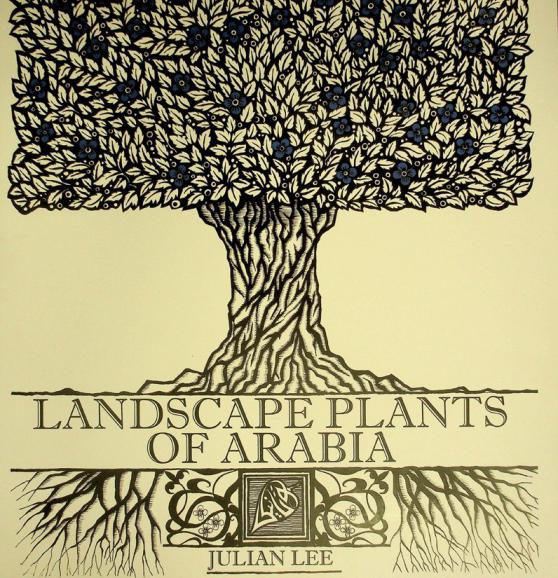
Landscape plants of Arabia
\"Landscape Plants of Arabia has been some thirty years in the making--the personal passion of its author as he built his landscaping business headquartered in Dubai. Julian Lee's meticulous notes, based on extensive practical experience on the ground, were gathered, catalogued and studiously verified. The massive job of providing no fewer than five images per plant was undertaken by a dedicated photographer, sometimes travelling extensively to locate the correct plant and variants. The whole was then painstakingly pieced together working closely with the editorial and design team, creating a remarkable work of reference that will prove invaluable for horticulturalists and amateur gardeners across the Middle East and beyond.\"--Publisher's description.
Book

Variation of heavy metal accumulation in certain landscaping plants due to traffic density
Air pollution is one of the biggest problems of urban environments today. Heavy metals are particularly important in terms of components that pollute the air. This is due to the reason that heavy metals can stay in nature for a long time without being disintegrated, and their concentration in the environment is constantly increasing. They also tend to bioaccumulate. Therefore, determination of the heavy metal concentration is crucial for identifying high-risk areas and the level of risk. Plants are generally used as biomonitors for determining heavy metal concentration in the air. Determination of heavy metal concentrations in plants is crucial in determining the ability of plants to remove heavy metals from the air, and thus being used as a means of increasing air quality, as well as monitoring air quality. The aim of this study was to determine the variation of different heavy metal concentrations depending on traffic density in certain landscape plants collected from areas where traffic density is at different levels. For this purpose, leaf samples of Salix babylonica, Robinia pseudoacacia, Sophora japonica, and Aesculus hippocastanum, which are frequently used in landscaping studies, were collected from individuals where there was dense traffic, less dense traffic, and almost no traffic, and the quantities of Pb, Cu, Ca, Mg, Cd, Cr, Ni, Fe, Mn, and Zn were determined by heavy metal analysis. Based on the results, the highest mean values of Cd, Ni, and Zn were found in S. babylonica, highest mean values of Pb and Mn were found in A. hippocastanum, and those of other elements were found in S. japonica. In areas with a high traffic density; the highest values of Cd, Ni and Zn were found in S. babylonica and the highest values of Cu, Mg, Cr, Fe and Mn were found in S. japonica. In areas with high traffic density, only the highest value of Pb was found in A. hippocastanum and the highest value of Ca was found in R. pseudoacacia. Based on these results, it can be concluded that S. babylonica and S. japonica are good bioindicators.
Journal Article