
Catalogue Search | MBRL


Are you sure you want to remove the book from the shelf?

{{itemTitle}}
551
result(s) for
"LEGO"
Sort by:

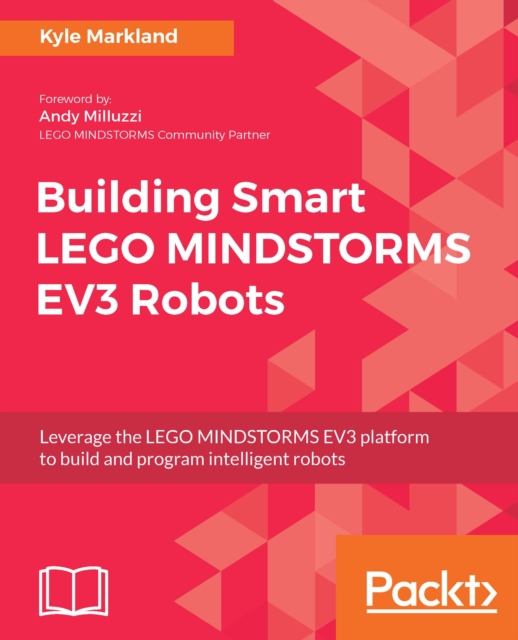
Building Smart LEGO MINDSTORMS EV3 Robots
LEGO MINDSTORMS EV3 is a robotics platform that allows enthusiasts of all ages and skill levels to prototype their own smart robots. This book will walk you through six EV3 projects that demonstrate engineering concepts used in real world smart robots, which will help you master the EV3 and develop the skills necessary to build your own smart.
eBook

The LEGO book
Everything you ever wanted to know about LEGOs, from how the bricks are made, to the secrets of master builders, and fabulous LEGO art.
Book

LEGO® SERIOUS PLAY® as a Tool for Reflective and Sustainable Learning in Optometry
This study examines the pedagogical potential of LEGO® SERIOUS PLAY® (LSP) in optometric education, aiming to foster critical reflection on optics, sustainability, and professional identity. A qualitative interpretative phenomenological analysis was conducted with 48 students from Optics and Optometry and Renewable Energies programs at ISEC Lisboa. Participants took part in LSP sessions focused on optics and sustainability, using metaphorical models to express their reflections. Data were collected via observations, group discussions, and open-ended questionnaires, and analyzed with Grounded Theory. In the optics theme, models revealed both scientific and symbolic views, with visual correction (46.7%), professional roles (21.3%), and perception (14.7%) being most frequent. Statistically significant differences appeared by academic background (p < 0.001) and experience (p = 0.0018): optometry students emphasized clinical roles, while environmental students highlighted perception. For sustainability, main categories included sustainable practices (41.7%), polluting industries (15.3%), ecological footprint (13.9%), and social responsibility (12.5%). Actions proposed included recycling, reuse, and biodegradable materials. Age was linked to action-oriented responses (p = 0.038), with no differences by gender or nationality. LSP emerged as an effective tool for deep reflection, interdisciplinary learning, and ethical engagement, supporting integration of sustainability and identity in technical education. Further research should explore its long-term educational impact.
Journal Article

The LEGO movie 2 : the awesomest, most amazing, most epic movie guide in the universe!
Companion guide to the characters, vehicles, and locations featured in The LEGO Movie 2.
Book

LeGO-LOAM-SC: An Improved Simultaneous Localization and Mapping Method Fusing LeGO-LOAM and Scan Context for Underground Coalmine
Simultaneous localization and mapping (SLAM) is one of the key technologies for coal mine underground operation vehicles to build complex environment maps and positioning and to realize unmanned and autonomous operation. Many domestic and foreign scholars have studied many SLAM algorithms, but the mapping accuracy and real-time performance still need to be further improved. This paper presents a SLAM algorithm integrating scan context and Light weight and Ground-Optimized LiDAR Odometry and Mapping (LeGO-LOAM), LeGO-LOAM-SC. The algorithm uses the global descriptor extracted by scan context for loop detection, adds pose constraints to Georgia Tech Smoothing and Mapping (GTSAM) by Iterative Closest Points (ICP) for graph optimization, and constructs point cloud map and an output estimated pose of the mobile vehicle. The test with KITTI dataset 00 sequence data and the actual test in 2-storey underground parking lots are carried out. The results show that the proposed improved algorithm makes up for the drift of the point cloud map, has a higher mapping accuracy, a better real-time performance, a lower resource occupancy, a higher coincidence between trajectory estimation and real trajectory, smoother loop, and 6% reduction in CPU occupancy, the mean square errors of absolute trajectory error (ATE) and relative pose error (RPE) are reduced by 55.7% and 50.3% respectively; the translation and rotation accuracy are improved by about 5%, and the time consumption is reduced by 2~4%. Accurate map construction and low drift pose estimation can be performed.
Journal Article

Brick by brick : how LEGO rewrote the rules of innovation and conquered the global toy industry
In the 1990s, LEGO failed to keep pace with the revolutionary changes in kids' lives and began sliding into irrelevance. It took a new LEGO management team, faced with the growing rage for electronic toys, few barriers to entry, and ultra-demanding consumers, to reinvent the innovation rule book and transform LEGO into one of the world's most profitable, fastest-growing companies. Robertson reveals how LEGO looked beyond products and learned to leverage a full-spectrum approach to innovation.
Book

A Temporal Perspective on Organizational Identity
We offer as our main theoretical contribution a conceptual framework for how the past is evoked in present identity reconstruction and the ways in which the past influences the articulation of claims for future identity. We introduce the notion of textual, material, and oral memory forms as the means by which organizational actors evoke the past. The conceptual framework is applied in a study of two occasions of identity reconstruction in the LEGO Group, which revealed differences in ways that the past was evoked and influenced claims for future identity. Our study suggests that (1) a longer time perspective in the use of memory enabled a longer time perspective in formulating claims for future identity, (2) a broader scope of articulated identity claims for the future was related to the combination of a broader range of memory forms, and (3) the depth of claims for future identity was related to the way in which memory forms were combined. At a more general level, our paper illustrates how viewing identity construction from the perspective of an ongoing present adds a new dimension to understanding the temporal dynamics of organizational identity.
Journal Article

Extreme bricks : spectacular, record-breaking, and astounding LEGO projects from around the world
From the Great Pyramid of Giza and Hogwarts, to a fully functioning harpsichord and James May's LEGO house, man has never shied away from an extreme building challenge, and the LEGO builders of the twenty-first century are no different. Whether they're re-creating the works of ancient masters in brick form or building life-size superheroes, some LEGO fans are taking their passion for plastic to the extreme. Sarah Herman has brought together some of the world's most ambitious builders in a fact-filled showcase of truly mind-blowing models for this exciting illustrated book that will delight all AFOLs (adult fans of LEGO).
Book

Migrants’ integration
Abstract This article explores the specificities and nuances of employing LEGO® Serious Play® (LSP) in scientific research on migration, contrasting its application in academic contexts with its more common use in business settings. While LSP has gained recognition for its effectiveness in fostering creativity and communication in corporate environments, its adaptation to the complexities of migration research introduces unique considerations. The article delves into the challenges and opportunities of utilizing LSP as a research methodology, emphasizing its potential to unveil diverse migrant narratives, facilitate cross-cultural understanding, and contribute to innovative research methodologies. Empirical examples from the H2020 MIMY research project provide a critical examination of distinctive characteristics and benefits of employing LSP in migration research, shedding light on its adaptability and utility beyond traditional business applications. Este artículo explora las especificidades y matices del empleo de LEGO® Serious Play® (LSP) en la investigación científica sobre migración, contrastando su aplicación en contextos académicos con su uso más común en entornos empresariales. Si bien el LSP ha ganado reconocimiento por su eficacia a la hora de fomentar la creatividad y la comunicación en entornos empresariales, su adaptación a las complejidades de la investigación sobre migración introduce consideraciones únicas. El artículo profundiza en los retos y oportunidades de utilizar la LSP como metodología de investigación, haciendo hincapié en su potencial para desvelar diversas narrativas de los migrantes, facilitar el entendimiento intercultural y contribuir a metodologías de investigación innovadoras. Los ejemplos empíricos del proyecto de investigación MIMY de H2020 proporcionan un examen crítico de las características distintivas y los beneficios de emplear la LSP en la investigación sobre migración, arrojando luz sobre su adaptabilidad y utilidad más allá de las aplicaciones comerciales tradicionales. Cet article explore les spécificités et les nuances de l'utilisation de LEGO® Serious Play® (LSP) dans la recherche scientifique sur la migration, en contrastant son application dans les contextes académiques avec son utilisation plus courante dans les milieux d'affaires. Alors que le LSP est reconnu pour son efficacité à stimuler la créativité et la communication dans les entreprises, son adaptation aux complexités de la recherche sur les migrations introduit des considérations uniques. Cet article se penche sur les défis et les opportunités liés à l'utilisation des LSP en tant que méthodologie de recherche, en mettant l'accent sur son potentiel à dévoiler les divers récits des migrants, à faciliter la compréhension interculturelle et à contribuer à des méthodologies de recherche novatrices. Des exemples empiriques tirés du projet de recherche H2020 MIMY fournissent un examen critique des caractéristiques distinctives et des avantages de l'utilisation des LSP dans la recherche sur les migrations, mettant en lumière son adaptabilité et son utilité au-delà des applications commerciales traditionnelles.
Journal Article