
Catalogue Search | MBRL


Are you sure you want to remove the book from the shelf?

{{itemTitle}}
36,359
result(s) for
"LGBTQ community"
Sort by:
Edges of the Rainbow
An intimate photographic glimpse into the queer world behind the closed doors of modern Japanese society The LGBTQ community in Japan has faced its challenges. Even as some religious and warrior orders have a long and recognized tradition of same-sex love, to be considered different, to be \"the nail that sticks out,\" makes coming out difficult. Despite the conservative strain within Japanese society that encourages the LGBTQ community to remain unseen, a welcome change is happening on the ground. A number of queer cultural figures are opening up new horizons, and a growing majority of Japanese people believe that homosexuality should be an integral and open part of society. The latest in a series of beautiful, affordable photobooks that look at LGBTQ communities around the world, Edges of the Rainbow is a photographic celebration of the queer community in Japan. In a set of more than 150 color and black-and-white photographs, acclaimed photographer Michel Delsol and journalist Haruku Shinozaki have brought together a fascinating group of individuals to create an unforgettable and uplifting look at a proud and resilient community on the margins of Japanese society. Edges of the Rainbow was designed by Emerson, Wajdowicz Studios (EWS).
eBook
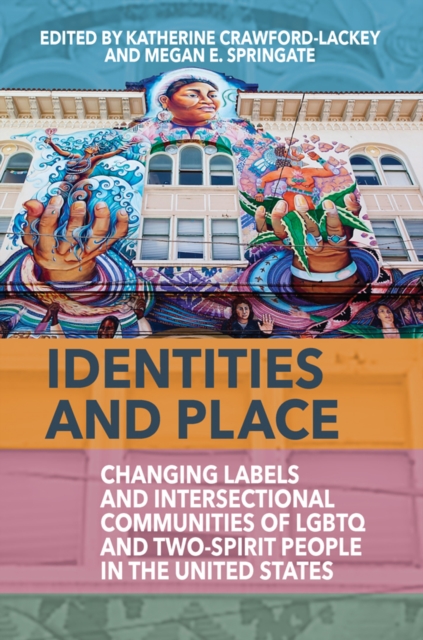
Identities and Place
With a focus on historic sites, this volume explores the recent
history of non- heteronormative Americans from the early twentieth
century onward and the places associated with these communities.
Authors explore how queer identities are connected with specific
places: places where people gather, socialize, protest, mourn, and
celebrate. The focus is deeper look at how sexually variant and
gender non-conforming Americans constructed identity, created
communities, and fought to have rights recognized by the
government. Each chapter is accompanied by prompts and activities
that invite readers to think critically and immerse themselves in
the subject matter while working collaboratively with others.
eBook
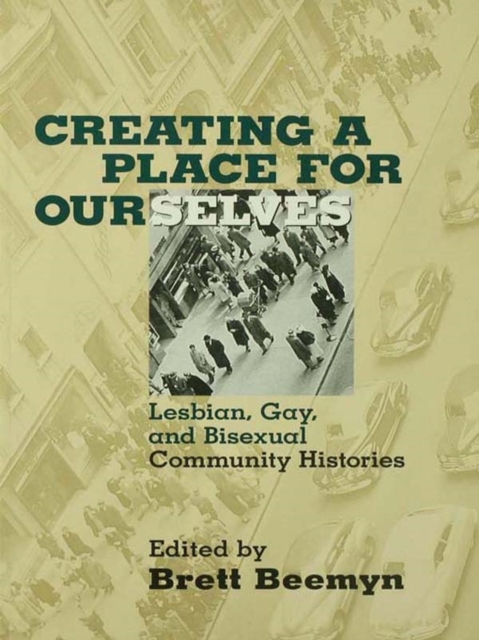
Creating A Place For Ourselves
Creating a Place For Ourselves is a groundbreaking collection of essays that examines gay life in the United States before Stonewall and the gay liberation movement. Along with examining areas with large gay communities such as New York, San Francisco and Fire Island, the contributors also consider the thriving gay populations in cities like Detroit, Buffalo, Washington, D.C., Birmingham and Flint, demonstrating that gay communities are truly everywhere. Contributors: Brett Beemyn, Nan Alamilla Boyd, George Chauncey, Madeline Davis, Allen Drexel, John Howard, David Johnson, Liz Kennedy, Joan Nestle, Esther Newton, Tim Retzloff, Marc Stein, Roey Thorpe.
eBook

Enablers and inhibitors to the utilization of healthcare services by members of the LGBTQ+ community in Accra, Ghana
Background
Globally, lesbian, gay, bisexual, transgender and queer (LGBTQ+) individuals experience higher rates of mental health disorders, sexually transmitted infections and substance abuse compared to their heterosexual counterparts. This implies that this special population requires tailored healthcare services. However, their practice is criminalized in most countries and abhorred by many, including some health professionals leading to isolation and poor health-seeking behaviors. We explored the enablers and inhibitors to the utilization of healthcare services by members of the LGBTQ+ community in Accra, Ghana.
Methods
In this cross-sectional study. We collected qualitative data through snowballing sampling technique. Fifteen (15) self-reported persons claiming to be sexually different and being members of the LGBTQ+ community in Accra were recruited for this study. The participants were involved in an in-depth interview using a pre-tested interview guide and the interviews were recorded and transcribed verbatim. We adopted Braun and Clarks’ reflexive thematic analysis approach in analyzing the data with the aid of NVivo 10.0
Results
The results identified the facilitators of health seeking as community-friendly health services, affordable and accessible services, and provider-awareness of LGBTQ+ community members’ status. Specifically, privacy, anonymity, confidentiality, inclusivity, positive attitudes, welcoming and supportive environment, and gender-appropriate communication, were identified as community friendly attributes that enhance health-seeking. On the barriers militating access to health care, the following factors were identified: negative provider attitude, financial constraints, and stigmatization among health providers. Participants frequently recounted instances where provider attitudes made them feel dismissed, disrespected, or judged. Instances of discrimination, accusations, poor healthcare largely based on ignorance of unique health needs related to LGBTQ+ and judgmental attitudes of health providers were identified as major barriers to health seeking.
Conclusion
Positive provider attitudes and LGBTQ+ community-friendly health services promote health-seeking behavior among LGBTQ+ individuals. However, members of the LGBTQ+ community in Ghana are stigmatized by health providers and most health workers are ignorant about the special needs of the LGBTQ+ persons. We recommend that in-service training units of hospitals and health training institutions need to provide comprehensive education to health workers particularly nurses and doctors as well as other professionals on the unique health needs of LGBTQ+ persons as well as inclusive care that addresses the needs of members of the LGBTQ+ community.
Journal Article

EXPERIENCES AND CHALLENGES OF LGBTQ+ INDIVIDUALS LIVING WITH INFLAMMATORY BOWEL DISEASE (IBD): INSIGHTS FROM FOCUS GROUPS OF A U.S. SAMPLE
BACKGROUND LGBTQ+ individuals face increased stigma, discrimination, and inequities, which are further compounded by challenges of living with IBD. This study aims to elicit concepts around IBD care experiences for the LGBTQ+ community, with the overall purpose of improving current and future clinical care, research practices, and community outreach. METHODS In summer of 2024, our tertiary IBD center conducted seven focus groups via video conferencing with participants from across the United States. We identified individuals with an IBD diagnosis and self-reported LGBTQ+ sexual orientation and gender identity (SOGI) from the electronic health record and invited them via email or phone to participate in video focus groups. All participants completed an online survey to confirm SOGI, IBD diagnosis, basic demographics, and IBD status. An experienced qualitative researcher moderated the discussions using a semi-structured focus group guide. The general topic flow covered participants’ IBD care experience, how they felt SOGI influenced their care, how IBD impacted social and romantic interactions, and their recommendations for involving the LGBTQ+ community in IBD research. Results were analyzed using a Framework approach, a general inductive method based in Grounded Theory. RESULTS We invited 850 eligible individuals, and 76 individuals responded. 48/76 participated and completed 1 of 7 focus groups. Most reported a lengthy history with IBD, with symptoms beginning in adolescence, often coinciding with delayed or misdiagnosis, ineffective treatment and confusion. IBD symptoms and ineffective treatment—coupled with struggling with SOGI or disclosing identity—compounded the stressors of each. Participants reported a wide range of IBD treatment approaches attempted, often with significant time before satisfactory symptom relief. They attributed this to insurance “cheapness,” lack of support or understanding of complementary therapies, significant femme discrimination, and invasive, aggressive, dismissive, incongruous and/or uninviting care. While they often reported challenges with their families of origin around both early IBD symptoms and SOGI, many found support in “chosen families”- romantic partnerships and social networks. They reported significant emotional labor and fatigue in explaining their conditions and identities to providers and others. They strongly feel health care providers need to openly seek and disseminate education and dialogue about IBD patient goals, identities, and trauma-informed care. CONCLUSION LGBTQ+ individuals living with IBD face unique challenges in managing their condition and navigating their identities, including delays in diagnosis, ineffective treatments, insurance limitations, and lack of supportive care. Future interventions should aim to address these challenges to improve IBD care for this population.
Journal Article

A SCOPING REVIEW OF LGBTQ+ MULTIGENERATIONAL PROGRAMMING: GAPS AND OPPORTUNITIES
Abstract
Extensive research has revealed disparities in health, housing, employment, and economics among LGBTQ+ older adults (Emlet, 2016). However, the LGBTQ+ community has a long-standing tradition of multigenerational support that can potentially alleviate some of these challenges. Innovative caregiving models and non-traditional support systems involving multigenerational networks have emerged during crises such as the AIDS epidemic of the 1980s and 1990s and the recent COVID-19 pandemic (Cahill & Valadéz, 2013; Hafford-Letchfield et al., 2022). Nevertheless, despite the growing attention to LGBTQ+ multigenerational programs, the current state of scholarly research in this area remains uncertain. To address this gap, this scoping review aims to map the literature on intergenerational interventions for the LGBTQ+ community. This study includes peer-reviewed research in English with various study designs related to different categories of intervention, program, or activity that involve LGBTQ+ participants from more than one generation. To ensure accurate and reliable results, we conducted a comprehensive search on seven databases: PsycINFO, PubMed, Web of Science, Scopus, Sociological Abstract, Embase, and CINAHL. After deleting duplicates, 130 peer-reviewed articles were identified. Preliminary findings from the scoping review reveal historical moments when research on multigenerational programming surged, which aligns with pivotal crisis moments in the LGBTQ+ community. It also underscores emerging trends in multigenerational programming, including critical inquiry about what constitutes “multigenerational” and deeper commitment to inclusion of communities of color and transgender communities. These findings provide important insights for practitioners, policymakers, and researchers to strengthen services and support for LGBTQ+ older adults.
Journal Article

Going all the way? LGBTQ people’s receptiveness to gay-themed advertising in a Belgian context
Purpose
Through investigating how Belgian LGBTQ people evaluate gay-themed print and television advertising in mainstream media, the purpose of this study is to explore how gay-themed advertising strategies are evaluated in relation to context.
Design/methodology/approach
Qualitative in-depth interviews were conducted with 17 Flemish self-identified lesbian, gay male and bisexual people.
Findings
Findings of this research demonstrate the importance of the situated context in which LGBTQ people receive and evaluate gay-themed advertisements. By offering a common stock of social knowledge and experience, context creates a framework against which LGBTQ people evaluate gay-themed advertisements. In this specific research that was conducted in a Western-European LGBTQ-friendly society (Belgium), critical evaluations of gay-washing and the dirty laundry effect were found. The positive evaluations of explicit gay-themed and inclusive advertisements also highlighted the importance of advertising an inclusive society.
Research limitations/implications
In considering how gay-themed advertising evaluations relate to context and lived experiences, this research contributes to current knowledge on gay-themed advertising and its reception within LGBTQ groups.
Practical implications
This research offers valuable insights to marketers on how to target sexual minorities in LGBTQ (un)friendly societies.
Social implications
Findings highlight the social importance of minority-oriented advertising. Not only can such advertising promote civic inclusion and social recognition of minority groups, it also has the potential to play a key role in the construction and normalisation of identities.
Originality/value
In an effort to reinvigorate current marketing debates on gay-themed advertising, this study builds on theoretical insights gained via reception research and LGBTQ studies. In doing so, this research yields a more nuanced and contextualised understanding of LGBTQ people’s engagement with various gay-themed advertisements. Considering within a Western European society the relevance of context when researching gay-themed advertisement reception, the results add to primarily US-based research on this topic.
Journal Article

Defiant Bodies
In the Anglophone Caribbean, international queer human rights
activists strategically located within and outside of the region
have dominated interventions seeking to address issues affecting
people across the region; a trend that is premised on an idea that
the Caribbean is extremely homophobic and transphobic, resulting in
violence and death for people who defy dominant sexual and gender
boundaries. Human rights activists continue to utilize
international financial and political resources to influence these
interventions and the region's engagement on issues of homophobia,
transphobia, discrimination, and the HIV/AIDS epidemic. This focus,
however, elides the deeply complex nature of queerness across
different spaces and places, and fails to fully account for the
nuances of queer sexual and gender politics and community making
across the Caribbean. Defiant Bodies: Making Queer Community in
the Anglophone Caribbean problematizes the neocolonial and
homoimperial nature of queer human rights activism in in four
Anglophone Caribbean nations -- Barbados, Guyana, Jamaica, and
Trinidad and Tobago -- and thinks critically about the limits of
human rights as a tool for seeking queer liberation. It also offers
critical insight into the ways that queer people negotiate, resist,
and disrupt homophobia, transphobia, and discrimination by
mobilizing \"on the ground\" and creating transgressive communities
within the region.
eBook

Seeking Sanctuary
Seeking Sanctuary brings together poignant life stories
from fourteen lesbian, gay, bisexual and transgender (LGBT)
migrants, refugees and asylum seekers living in Johannesburg. The
stories, diverse in scope, chronicle each narrator's arduous
journey to South Africa, and their corresponding movement towards
self-love and self-acceptance. The narrators reveal their personal
battles to reconcile their faith with their sexuality and gender
identity, often in the face of violent persecution, and how they
have carved out spaces of hope and belonging in their new home
country. In these intimate testimonies, the narrators' resilience
in the midst of uncertain futures reveal the myriad ways in which
LGBT Africans push back against unjust and unequal systems.
Seeking Sanctuary makes a critical intervention by showing
the complex interplay between homophobia and xenophobia in South
Africa, and of the state of sexual orientation and gender identity
(SOGI) rights in Africa. By shedding light on the fraught
connections between sexuality, faith and migration, this
ground-breaking project also provides a model for religious
communities who are working towards justice, diversity and
inclusion.
Seeking Sanctuary brings together poignant life stories
from fourteen lesbian, gay, bisexual and transgender (LGBT)
migrants, refugees and asylum seekers living in Johannesburg. The
stories, diverse in scope, chronicle each narrator's arduous
journey to South Africa, and their corresponding movement towards
self-love and self-acceptance. The narrators reveal their personal
battles to reconcile their faith with their sexuality and gender
identity, often in the face of violent persecution, and how they
have carved out spaces of hope and belonging in their new home
country. In these intimate testimonies, the narrators' resilience
in the midst of uncertain futures reveal the myriad ways in which
LGBT Africans push back against unjust and unequal systems.
Seeking Sanctuary makes a critical intervention by showing
the complex interplay between homophobia and xenophobia in South
Africa, and of the state of sexual orientation and gender identity
(SOGI) rights in Africa. By shedding light on the fraught
connections between sexuality, faith and migration, this
ground-breaking project also provides a model for religious
communities who are working towards justice, diversity and
inclusion.
eBook
