
Catalogue Search | MBRL


Are you sure you want to remove the book from the shelf?

{{itemTitle}}
68,512
result(s) for
"LIFE (PHILOSOPHY)"
Sort by:


The why of things
Why was there a meltdown at the Fukushima power plant? Why do some people get cancer and not others? Why is global warming happening? Why does one person get depressed in the face of life's vicissitudes while another finds resilience?
Questions like these -- questions of causality -- form the basis of modern scientific inquiry, posing profound intellectual and methodological challenges for researchers in the physical, natural, biomedical, and social sciences. In this groundbreaking book, noted psychiatrist and author Peter Rabins offers a conceptual framework for analyzing daunting questions of causality. Navigating a lively intellectual voyage between the shoals of strict reductionism and relativism, Rabins maps a three-facet model of causality and applies it to a variety of questions in science, medicine, economics, and more.
Throughout this book, Rabins situates his argument within relevant scientific contexts, such as quantum mechanics, cybernetics, chaos theory, and epigenetics. A renowned communicator of complex concepts and scientific ideas, Rabins helps readers stretch their minds beyond the realm of popular literary tipping points, blinks, and freakonomic explanations of the world.
eBook

Action versus contemplation : why an ancient debate still matters
\"This book is about the tension and potential balance between the active and contemplative lives--between the \"vita activa\" and the \"vita contemplativa\"--ideals that have been debated since antiquity. The message of this book is that deep human needs call forth both possibilities.\"--Provided by publisher.
Book

Vital Matters
Locating materialism within the larger history of ideas,Vital Mattersexamines how and why eighteenth-century scientists, philosophers, writers, and artists questioned nature and its animating principles.
eBook

A brief history of creation : science and the search for the origin of life
An essential history of Western scientific studies into the origins of life examines historical discoveries in the contexts of philosophical debates, political change, and evolving understandings about the complexities of biology.
BOOK

Antonio López garcía's everyday urban worlds
Antonio López García's Everyday Urban Worlds: A Philosophy of Painting is the first book to give the famed Spanish artist the critical attention he deserves.Born in Tomelloso in 1936 and still living in the Spanish capital today, Antonio López has long cultivated a reputation for impressive urban scenes--but it is urban time that is his real.
eBook

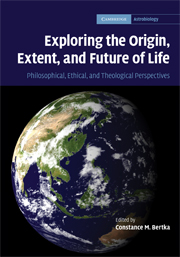
Exploring the Origin, Extent, and Future of Life
Where did we come from? Are we alone? Where are we going? These are the questions that define the field of astrobiology. New discoveries about life on Earth, the increasing numbers of extrasolar planets being identified, and the technologies being developed to locate and characterize Earth-like planets around other stars are continually challenging our views of nature and our connection to the rest of the universe. In this book, philosophers, historians, ethicists, and theologians provide the perspectives of their fields on the research and discoveries of astrobiology. A valuable resource for graduate students and researchers, the book provides an introduction to astrobiology, and explores subjects such as the implications of current origin of life research, the possible discovery of extraterrestrial microbial life, and the possibility of altering the environment of Mars.
eBook
