
Catalogue Search | MBRL


Are you sure you want to remove the book from the shelf?

{{itemTitle}}
615
result(s) for
"LITERARY CRITICISM / European / Spanish "
Sort by:

Aspectos Actuales Del Hispanismo Mundial
The two volumes gather the most important findings of the nine sessions held at the Asociación Internacional de Hispanistas (AIH) conference in Münster, Germany, in 2016.The contributions focus, for example, on convergences and divergences between the holy and profane in medieval literature, on the constitution and construction of the \"I\" in.
eBook
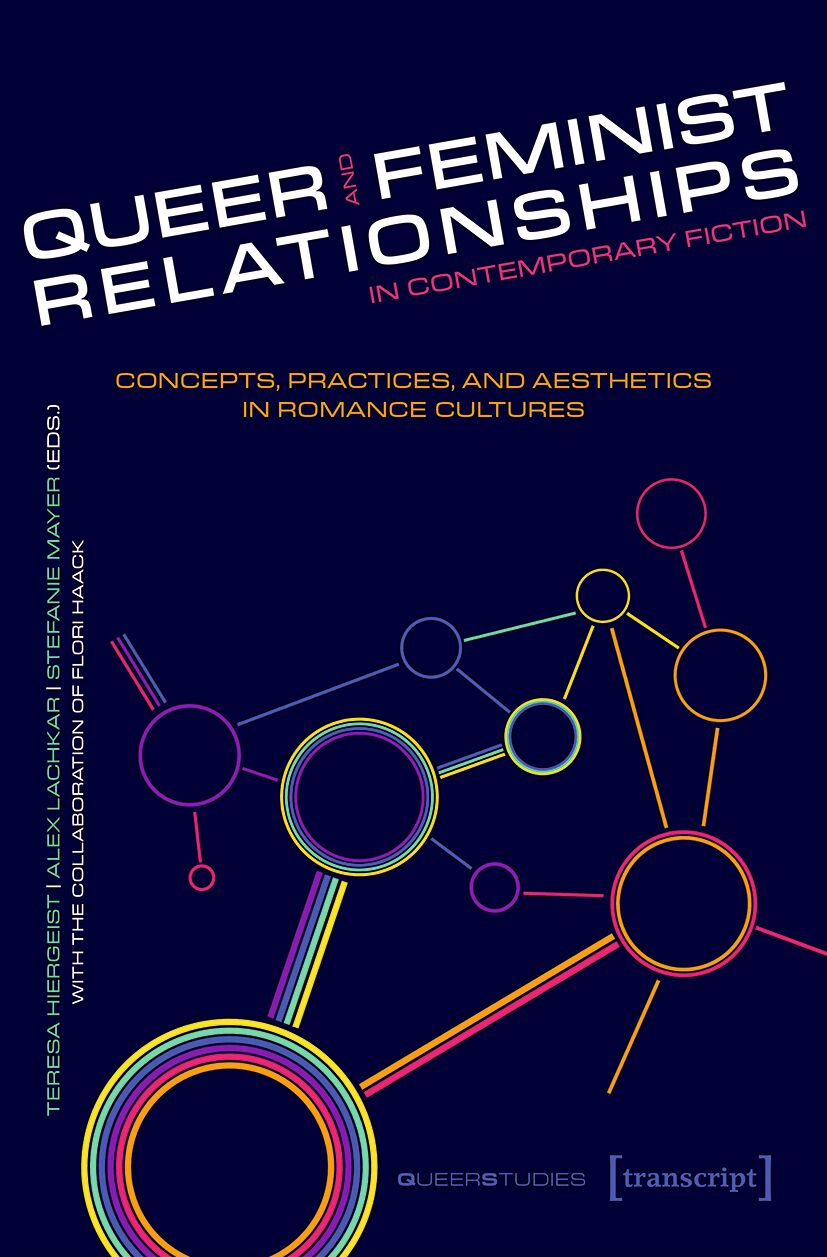
Queer and Feminist Relationships in Contemporary Fiction
Relationships play a crucial role in feminist and queer fictions of the 21st century, whether we think of the connection among the artists and between them and their audience or the interaction of the characters or different modes of writing. The contributors to this volume analyze and map these friendly, amorous, sexual, political and artistic contacts within and around contemporary fictions of Romance cultures. They show how these works question, challenge and rethink circulating concepts of relationships and implement them aesthetically. This volume integrates contributions from feminist, queer and decolonial studies just as sociology of art.
eBook
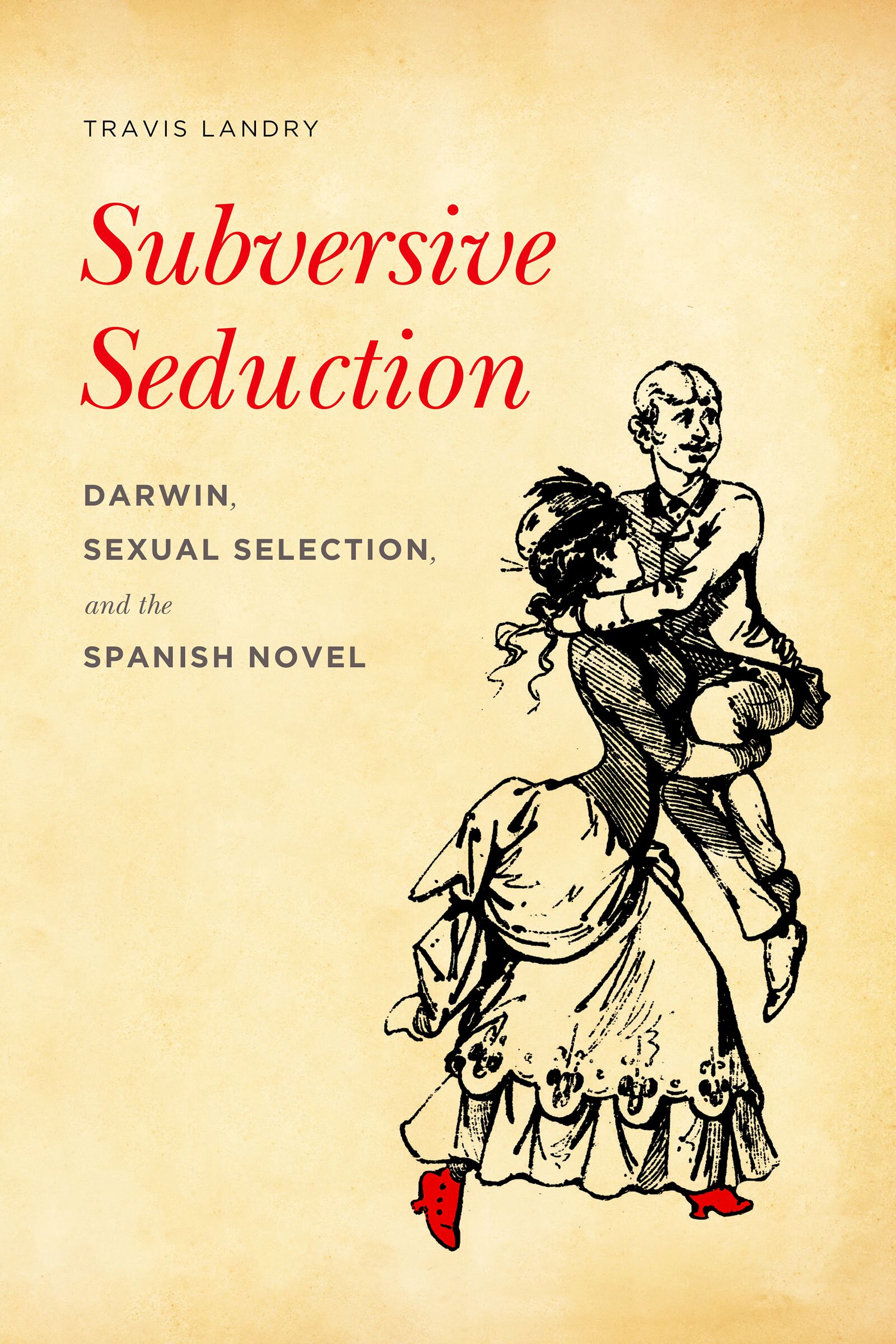
Subversive Seduction
Male-male rivalry and female passive choice, the two principal tenets of Darwinian sexual selection, raise important ethical questions in The Descent of Man--and in the decades since--about the subjugation of women. If female choice is a key component of evolutionary success, what impact does the constraint of women's choices have on society? The elaborate courtship plots of 19th century Spanish novels, with their fixation on suitors and selectors, rivalry, and seduction, were attempts to grapple with the question of female agency in a patriarchal society. By reading Darwin through the lens of the Spanish realist novel and vice versa, Travis Landry brings new insights to our understanding of both: while Darwin's theories have often been seen as biologically deterministic, Landry asserts that Darwin's theory of sexual selection was characterized by an open ended dynamic whose oxymoronic emphasis on \"passive\" female choice carries the potential for revolutionary change in the status of women.
eBook
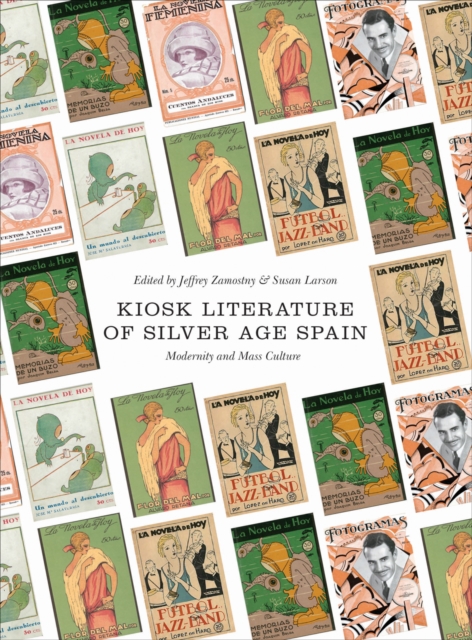
Kiosk Literature of Silver Age Spain
The 'Silver Age' of Spain ran from 1898 to 1939 and was characterized by intense urbanization, widespread class struggle and mobility and a boom in mass culture. This book offers the most detailed scholarly analysis of kiosk literature, one of the mass culture's manifestations, examined through the lens of contemporary interdisciplinary theories.
eBook

The War Trumpet
The epic poems written during the rise of Portugal and Spain on the global stage often dealt with topics quite unimaginable to the likes of Virgil or Homer. These poems reveal the astounding opportunities for upward social mobility and self-promotion afforded by broader access to print and the vast amount of knowledge and material wealth accrued through maritime exploration. Iberian poets of the period were quite cognizant of their ventures into uncharted territory, and that awareness informed their literary journeys.
The War Trumpet features nine substantial essays that expand our understanding of Iberian Renaissance epic poetry by posing questions seldom raised in relation to poems such as La Araucana , Os Lusíadas , Carlo famoso , El Bernardo , Arauco Domado, Espejo de paciencia , and Felicissima Victoria , among others. Particularly compelling are questions concerned with early modern understandings of the natural world, the practice of poetic imitation, the discipline of cartography, or the reception of Petrarchism in the newly established viceroyalties of the New World. Fostering a greater appreciation of the intersection between poetry, war, and exploration, The War Trumpet sheds light on the transformative changes that took place during the period of Iberian expansion.
eBook

Being Portuguese in Spanish
Among the many consequences of Spain’s annexation of Portugal from 1580 to 1640 was an increase in the number of Portuguese authors writing in Spanish. One can trace this practice as far back as the medieval period, although it was through Gil Vicente, Jorge de Montemayor, and others that Spanish-language texts entered the mainstream of literary expression in Portugal. Proficiency in both languages gave Portuguese authors increased mobility throughout the empire. For those with literary aspirations, Spanish offered more opportunities to publish and greater readership, which may be why it is nearly impossible to find a Portuguese author who did not participate in this trend during the dual monarchy. Over the centuries these authors and their works have been erroneously defined in terms of economic opportunism, questions of language loyalty, and other reductive categories. Within this large group, however, is a subcategory of authors who used their writings in Spanish to imagine, explore, and celebrate their Portuguese heritage. Manuel de Faria e Sousa, Ângela de Azevedo, Jacinto Cordeiro, António de Sousa de Macedo, and Violante do Céu, among many others, offer a uniform yet complex answer to what it means to be from Portugal, constructing and claiming their Portuguese identity from within a Castilianized existence. Whereas all texts produced in Iberia during the early modern period reflect the distinct social, political, and cultural realities sweeping across the peninsula to some degree, Portuguese literature written in Spanish offers a unique vantage point from which to see these converging landscapes. Being Portuguese in Spanish explores the cultural cross-pollination that defined the era and reappraises a body of works that uniquely addresses the intersection of language, literature, politics, and identity.
eBook

Don Quixote and Catholicism
Four hundred years since its publication, Miguel de Cervantes’s Don Quixote continues to inspire and to challenge its readers. The universal and timeless appeal of the novel, however, has distanced its hero from its author and its author from his own life and the time in which he lived. The discussion of the novel’s Catholic identity, therefore, is based on a reading that returns Cervantes’s hero to Cervantes’s text and Cervantes to the events that most shaped his life. The authors and texts McGrath cites, as well as his arguments and interpretations, are mediated by his religious sensibility. Consequently, he proposes that his study represents one way of interpreting Don Quixote and acts as a complement to other approaches. It is McGrath’s assertion that the religiosity and spirituality of Cervantes’s masterpiece illustrate that Don Quixote is inseparable from the teachings of Catholic orthodoxy. Furthermore, he argues that Cervantes’s spirituality is as diverse as early modern Catholicism. McGrath does not believe that the novel is primarily a religious or even a serious text, and he considers his arguments through the lens of Cervantine irony, satire, and multiperspectivism. As a Roman Catholic who is a Hispanist, McGrath proposes to reclaim Cervantes’s Catholicity from the interpretive tradition that ascribes a predominantly Erasmian reading of the novel. When the totality of biographical and sociohistorical events and influences that shaped Cervantes’s religiosity are considered, the result is a new appreciation of the novel’s moral didactic and spiritual orientation.
eBook
Juan de Mairena
Antonio Machado's Juan de Mairena is a singular work that bridges poetic and philosophical traditions, crafting an imaginative space where art, pedagogy, and metaphysics converge. As much an exploration of the Spanish soul as it is a reflection of the poet himself, this work reveals Machado's profound preoccupation with identity, otherness, and the essence of human experience. Through the voice of the fictional professor Juan de Mairena and his teacher Abel Martín, Machado delves into questions of being, time, and Spain's cultural heritage, presenting a tapestry of aphorisms, dialogues, and musings that blend irony, introspection, and wit. This translation, including excerpts from The Apocryphal Songbooks, introduces English readers to the depth and complexity of Machado's intellectual and artistic achievement. The book offers more than a literary experience; it serves as an intimate dialogue with Machado's inner world, colored by the tragedies and reflections of his life. Mairena becomes not just a mouthpiece for the poet's philosophical inclinations but a \"complementary\" self, allowing Machado to explore ideas he might not have expressed directly. This duality of creator and persona, coupled with Machado's blend of existential musings and Spanish cultural critique, creates a work that is at once deeply personal and broadly resonant. As this translation demonstrates, Juan de Mairena is not merely a product of its time but a timeless inquiry into the nature of human thought, creativity, and the ineffable connections between them. This title is part of UC Press's Voices Revived program, which commemorates University of California Press's mission to seek out and cultivate the brightest minds and give them voice, reach, and impact. Drawing on a backlist dating to 1893, Voices Revived makes high-quality, peer-reviewed scholarship accessible once
again using print-on-demand technology. This title was originally published in 1963. Many titles in the Voices Revived program are also newly available as ebooks, offered at a discounted price to support wider access to scholarly work.
eBook

Bilingual Legacies
Bilingual Legacies examines fatherhood in the work of four canonical Spanish authors born in Barcelona and raised during the dictatorship of Francisco Franco. Drawing on the autobiographical texts of Juan Goytisolo, Carlos Barral, Terenci Moix, and Clara Janes, the book explores how these authors understood gender roles and paternal figures as well as how they positioned themselves in relation to Spanish and Catalan literary traditions.Anna Casas Aguilar contends that through their presentation of father figures, these authors subvert static ideas surrounding fatherhood. She argues that this diversity was crucial in opening the door to revised gender models in Spain during the democratic period. Moving beyond the shadow of the dictator, Casas Aguilar shows how these writers distinguished between the patriarchal \"father of the nation\" and their own paternal figures. In doing so, Bilingual Legacies sheds light on the complexity of Spanish conceptions of gender, language, and family and illustrates how notions of masculinity, authorship, and canon are interrelated.
eBook

Trail of Miracles
Trail of Miracles: Stories from a Pilgrimage in Northeast Brazil by Candace Slater offers a vivid literary ethnography of devotion, memory, and community in Juazeiro do Norte, a city renowned for its annual pilgrimage honoring Padre Cícero Romão Batista. Unlike most Catholic pilgrimages, Juazeiro draws more than a million people each year in honor of a priest never canonized as a saint. Through the miracle stories told by residents and pilgrims, Slater reveals how Padre Cícero's figure continues to embody poverty, resilience, and traditional values in Northeast Brazil--while also traveling south with migrants seeking work in Brazil's industrial centers. These narratives are not only testimonies of faith but also documents of social survival, enmeshed in hierarchies of patronage and infused with centuries-old hagiographic traditions. Slater approaches her subject as both listener and writer, foregrounding her methods and the challenges of ethnography. Drawing on over 150 hours of recorded stories from more than 700 individuals, she examines how residents privatize Padre Cícero's miracles as personal memories while pilgrims fashion them into communal \"lives\" that serve as master legends. In doing so, she highlights how oral traditions adapt across contexts, sustaining belief and identity amid poverty and rapid change. Trail of Miracles is at once a work of folklore, anthropology, and literary analysis, offering an unparalleled window into the symbolic power of Padre Cícero for millions of Brazilians. It illuminates the ways in which storytelling sustains faith, negotiates hardship, and binds individuals into a shared, if contested, sense of belonging. This title is part of UC Press's Voices Revived program, which commemorates University of California Press's mission to seek out and cultivate the brightest minds and give them voice, reach, and
impact. Drawing on a backlist dating to 1893, Voices Revived makes high-quality, peer-reviewed scholarship accessible once again using print-on-demand technology. This title was originally published in 1986. Many titles in the Voices Revived program are also newly available as ebooks, offered at a discounted price to support wider access to scholarly work.
eBook