
Catalogue Search | MBRL


Are you sure you want to remove the book from the shelf?

{{itemTitle}}
3,360
result(s) for
"LITERARY CRITICISM / Humor."
Sort by:

No Joke
Humor is the most celebrated of all Jewish responses to modernity. In this book, Ruth Wisse evokes and applauds the genius of spontaneous Jewish joking--as well as the brilliance of comic masterworks by writers like Heinrich Heine, Sholem Aleichem, Isaac Babel, S. Y. Agnon, Isaac Bashevis Singer, and Philip Roth. At the same time, Wisse draws attention to the precarious conditions that call Jewish humor into being--and the price it may exact from its practitioners and audience.
Wisse broadly traces modern Jewish humor around the world, teasing out its implications as she explores memorable and telling examples from German, Yiddish, English, Russian, and Hebrew. Among other topics, the book looks at how Jewish humor channeled Jewish learning and wordsmanship into new avenues of creativity, brought relief to liberal non-Jews in repressive societies, and enriched popular culture in the United States.
Even as it invites readers to consider the pleasures and profits of Jewish humor, the book asks difficult but fascinating questions: Can the excess and extreme self-ridicule of Jewish humor go too far and backfire in the process? And is \"leave 'em laughing\" the wisest motto for a people that others have intended to sweep off the stage of history?
eBook
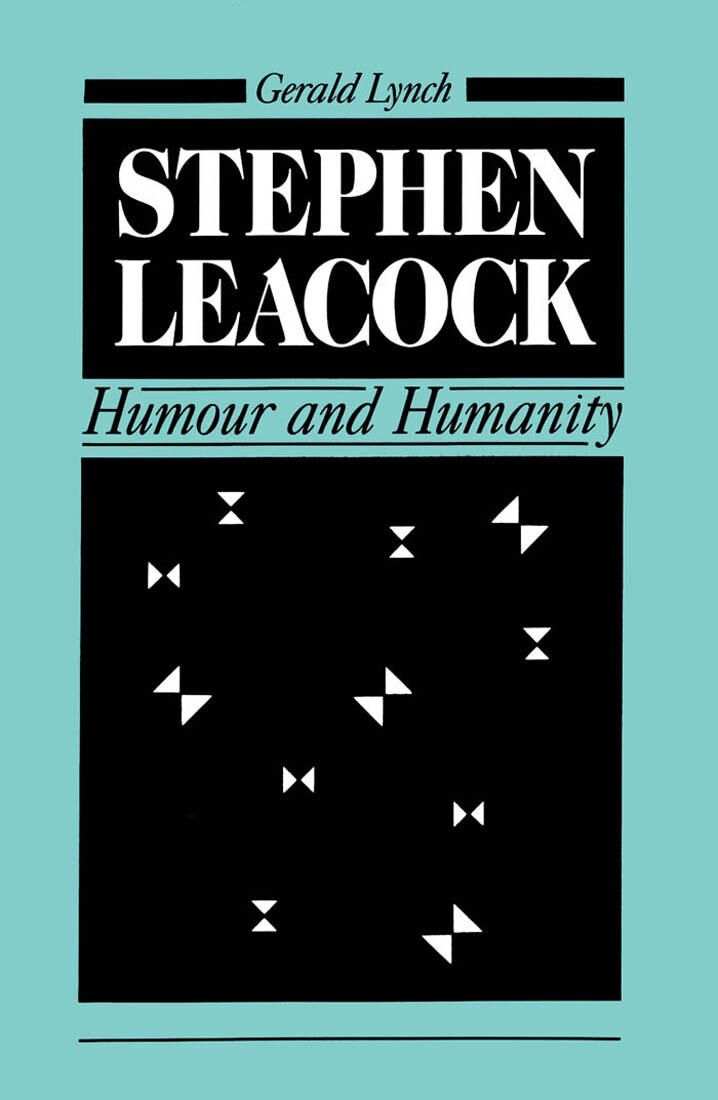
Stephen Leacock
From the preface: \"Stephen Leacock is still often regarded as a writer of lightweight amusements and unchallenging satire, as an author without an imaginative centre who lacked a vision of sufficient power and clarity to sustain a lifetime of serious writing. According to this view, which has been too easily received, Leacock squandered an early, promising talent (though he was in fact, middle-aged when he published Sunshine Sketches of a Little Town in 1912), and consequently his writings, like his legendary Lord Ronald, \"rode madly off in all directions.\" After years of chasing down Leacock's numerous literary mounts, I can assert that none of this is true. Leacock's writing emerges from a centre that is the confluence of the two traditions of humanism and toryism, traditions that found in Leacock fertile ground for the propagation of such qualities as tolerance of human fallibility and acceptance of social responsibility. What is remarkable with respect to Leacock's literary output is that even his furthest-flung, seemingly inconsequential humourous pieces move in relation to this tory-humanist centre.\" Lynch invites us to accompany him on an odyssey through Leacock's two main works, Sunshine Sketches and Arcadian Adventures of the Idle Rich ... He aspires to enlighten the open-minded reader, and is highly successful in doing so.\" Elspeth Cameron, Coordinator of Canadian Literature and Language Program, New College, University of Toronto
eBook
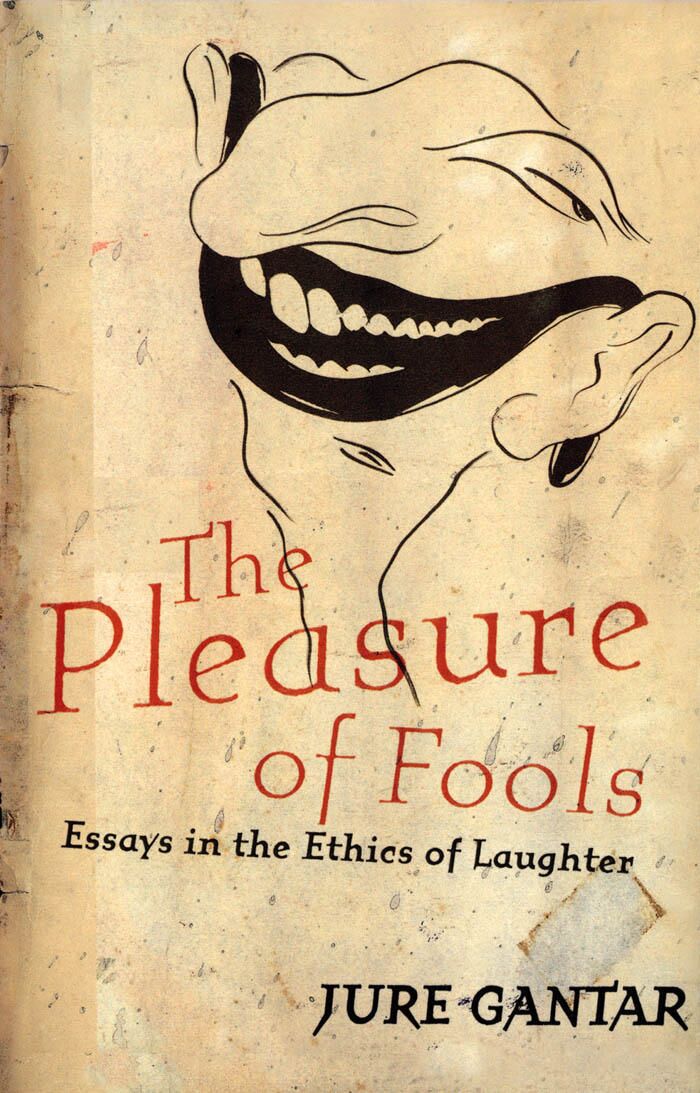
Pleasure of Fools
The crucial question is not whether or not there is offensive laughter but whether or not all laughter offends. Almost everyone has felt the bitter stab of malicious laughter and knows that laughter can be cruel, but it is more difficult to decide if there is also laughter that can never insult. Through a reading of Aristophanes, Rabelais, Molière, Fielding, and Rostand, Victorian nonsense poetry, and the philosophical texts of Plato, Dante, and More, Gantar explores the reasons for critics' prejudice against comedy, the specific position of laughter in various utopian societies, and self-deprecating laughter and the role of the comedian as its primary producer. His conclusions contradict basic postmodern thought and contribute to current debates on the epistemological nature of criticism.
eBook
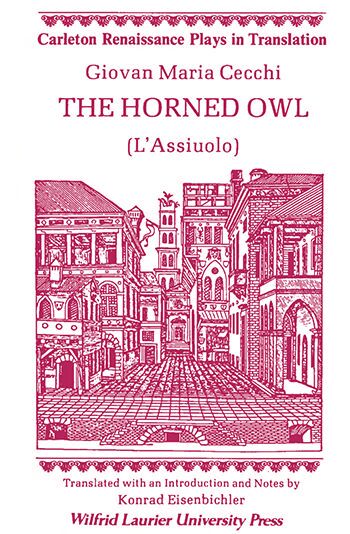
The Horned Owl
Giovan Maria Cecchi (1517–1587) was the most prolific and popular of sixteenth-century Florentine daramatists. His best-known play, L’Assiuolo (The Horned Owl), brings to the stage the amorous adventure of two students at the university of Pisa who fall in love with the same married lady. Through a servant’s ruse they both succeed in gratifying their senses and in establishing a love affair that will see them through their undergraduate career.
eBook

Humour in Chinese Life and Letters
This book offers scholarly and accessible insights into how and why Chinese societies, past and present, approach humour in personal life and in the public sphere. It addresses the etymological difficulties of “humour” as a concept in Chinese language and understanding and explores connections and contrasts with Western “humour-styles”. Periods discussed range from earliest times to the beginning of the twentieth century, covering many different forms of humour, verbal, visual and behavioural. The book brings together internationally respected scholars in Chinese Studies with other specialists to explore humour through modes of enquiry in Cultural and political history, Linguistics, Literature, Drama and History and Philosophy of Science. The unifying focus of the book is humour and laughter in their multitudinous forms of expression in Chinese tradition and culture. Chapters vary in enquiry methods but are written (and fully annotated) in a common style designed to be accessible to the generalist reader as well as the specialist. The book will appeal to anyone taking an intelligent interest in China’s history and culture. Readers more generally interested in humour and laughter -- not well-understood forms of human behaviour -- will also find the book casts light on significant differences in their concepts and practice between cultures. This is a well-informed and scholarly book that will satisfy both specialist and non-specialist readers.
eBook

The Senses of Humor
Why do modern Americans believe in something called a sense of humor and how did they come to that belief? Daniel Wickberg traces the cultural history of the concept from its British origins as a way to explore new conceptions of the self and social order in modern America. More than simply the history of an idea, Wickberg's study provides new insights into a peculiarly modern cultural sensibility.
The expression \"sense of humor\" was first coined in the 1840s and the idea that such a sense was a personality trait to be valued developed only in the 1870s. What is the relationship between Medieval humoral medicine and this distinctively modern idea of the sense of humor? What has it meant in the past 125 years to declare that someone lacks a sense of humor? How is the joke, as a twentieth-century quasi-literary form, different from the traditional folktale? Wickberg addresses these questions, among others, using the history of ideas to throw new light on the way contemporary Americans think and speak.
The context of Wickberg's analysis is Anglo-American; the specifically British meanings of humor and laughter from the sixteenth century forward provide the framework for understanding American cultural values in the nineteenth and twentieth centuries. The genealogy of the sense of humor is, like the study of keywords, an avenue into a significant aspect of the cultural history of modernity. Drawing on a wide range of sources and disciplinary perspectives, Wickberg's analysis challenges many of the prevailing views of modern American culture and suggests a new model for cultural historians.
eBook

Southern Frontier Humor
Since its inception in the early 1830s, southern frontier humor (also known as the humor of the Old Southwest) has had enduring appeal. The onset of the new millennium precipitated an impressive rejuvenation of scholarly interest.Beyond Southern Frontier Humor: Prospects and Possibilitiesrepresents the next step in this revival, providing a series of essays with fresh perspectives and contexts.
First the book shows the importance of Henry Junius Nott, a writer virtually unknown and forgotten who mined many of the principal subjects, themes, tropes, and character types associated with southern frontier humor, followed by an essay addressing how this humor genre and its ideological impact helped to stimulate a national cultural revolution. Several essays focus on the genre's legacy to the post-Civil War era, exploring intersections between southern frontier humor and southern local color writers--Joel Chandler Harris, Charles W. Chesnutt, and Sherwood Bonner. Mark Twain's African American dialect piece \"A True Story,\" though employing some of the conventions of southern frontier humor, is reexamined as a transitional text, showing his shift to broader concerns, particularly in race portraiture.Essays also examine the evolution of the trickster from the Jack Tales to Hooper's Simon Suggs to similar mountebanks in novels of John Kennedy Toole, Mark Childress, and Clyde Edgerton and transnational contexts, the latter exploring parallels between southern frontier humor and the Jamaican Anansi tales. Finally, the genre is situated contextually, using contemporary critical discourses, which are applied to G. W. Harris's Sut Lovingood and to various frontier hunting stories.
eBook
Stephen Leacock
From the preface: \"Stephen Leacock is still often regarded as a writer of lightweight amusements and unchallenging satire, as an author without an imaginative centre who lacked a vision of sufficient power and clarity to sustain a lifetime of serious writing. According to this view, which has been too easily received, Leacock squandered an early, promising talent (though he was in fact, middle-aged when he published Sunshine Sketches of a Little Town in 1912), and consequently his writings, like his legendary Lord Ronald, \"rode madly off in all directions.\" After years of chasing down Leacock's numerous literary mounts, I can assert that none of this is true. Leacock's writing emerges from a centre that is the confluence of the two traditions of humanism and toryism, traditions that found in Leacock fertile ground for the propagation of such qualities as tolerance of human fallibility and acceptance of social responsibility. What is remarkable with respect to Leacock's literary output is that even his furthest-flung, seemingly inconsequential humourous pieces move in relation to this tory-humanist centre.\" Lynch invites us to accompany him on an odyssey through Leacock's two main works, Sunshine Sketches and Arcadian Adventures of the Idle Rich ... He aspires to enlighten the open-minded reader, and is highly successful in doing so.\" Elspeth Cameron, Coordinator of Canadian Literature and Language Program, New College, University of Toronto
eBook
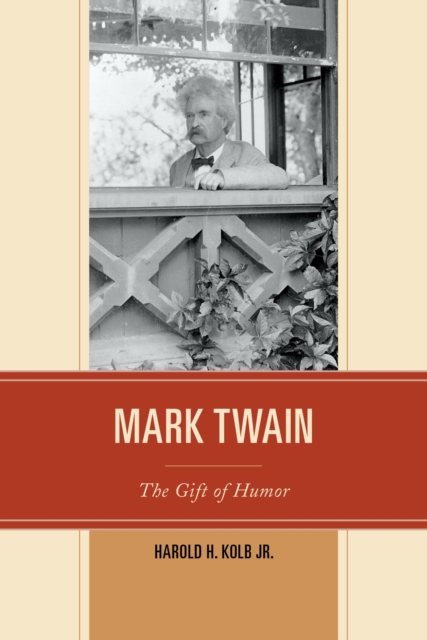
Mark twain
Mark Twain is America's—perhaps the world's—best known humorous writer. Yet many commentators in his time and our own have thought of humor as merely an attractive surface feature rather than a crucial part of both the meaning and the structure of Twain's writings. This book begins with a discussion of humor, and then demonstrates how Twain's artistic strategies, his remarkable achievements, and even his philosophy were bound together in his conception of humor, and how this conception developed across a forty-five year career. Kolb shows that Twain is a writer whose lifelong mode of perception is essentially humorous, a writer who sees the world in the sharp clash of contrast, whose native language is exaggeration, and whose vision unravels and reorganizes our perceptions. Humor, in all its mercurial complexity, is at the center of Mark Twain's talent, his successes, and his limitations. It is as a humorist—amiably comic, sharply satiric, grimly ironic, simultaneously humorous and serious—that he is best understood.
eBook
