
Catalogue Search | MBRL


Are you sure you want to remove the book from the shelf?

{{itemTitle}}
929
result(s) for
"LITERARY CRITICISM / Middle Eastern"
Sort by:

Trials of Arab Modernity
Challenging prevalent conceptualizations of modernity--which treat it either as a Western ideology imposed by colonialism or as a universal narrative of progress and innovation--this study instead offers close readings of the simultaneous performances and contestations of modernity staged in works by authors such as Rifa'a al-Tahtawi, Ahmad Faris al-Shidyaq, Tayeb Salih, Hanan al-Shaykh, Hamdi Abu Golayyel, and Ahmad Alaidy. In dialogue with affect theory, deconstruction, and psychoanalysis, the book reveals these trials to be a violent and ongoing confrontation with and within modernity. In pointed and witty prose, El-Ariss bridges the gap between Nahda (the so-called Arab project of Enlightenment) and postcolonial and postmodern fiction.
eBook
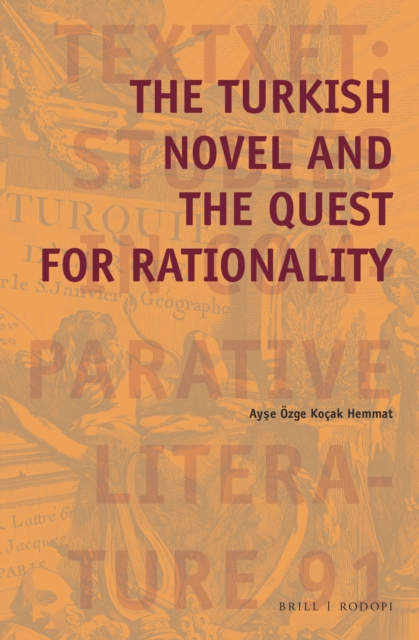
The Turkish Novel and the Quest for Rationality
The Turkish Novel and the Quest for Rationality offers an alternative genealogy of the emergence and development of the Turkish novel by situating the genre in an intellectual framework motivated by conceptions of reason and rationality in the Turkish modernization project.
eBook

The Female Suffering Body
Although there is a history of rich, complex, and variegated representations of female illness in Western literature over the last two centuries, the sick female body has traditionally remained outside the Arab literary imagination. Hamdar takes on this historical absence in The Female Suffering Body by exploring how both literary and cultural perspectives on female physical illness and disability in the Arab world have transformed in the modern period. In doing so, she examines a range of both canonical and hitherto marginalized Arab writers, including Mahmoud Taymur, Yusuf al-Sibai, Ghassan Kanafani, Naguib Mahfouz, Ziyad Qassim, Colette Khoury, Hanan al-Shaykh, Alia Mamdouh, Salwa Bakr, Hassan Daoud, and Betool Khedair. Hamdar finds that, over the course of sixty years, female physical illness and disability has moved from the margins of Arabic literature—where it was largely the subject of shame, disgust, or revulsion—to the center, as a new wave of female writers have sought to give voice to the \"female suffering body.\"
eBook
Noscendi Nilum Cupido
What significations did Egypt have for the Romans a century after Actium and afterwards? How did Greek imperial authors respond to the Roman fascination with the Nile? This book explores Egypt's aftermath beyond the hostility of Augustan rhetoric, and Greek and Roman topoi of Egyptian \"barbarism.\" Set against history and material culture, Julio-Claudian, Flavian, Antonine, and Severan authors reveal a multivalent Egypt that defines Rome's increasingly diffuse identity while remaining a tertium quid between Roman Selfhood and foreign Otherness. Vespasian's Alexandrian uprising, his recognition of Egypt as his power basis, and his patronage of Isis re-conceptualize Egypt past the ideology of Augustan conquest. The imperialistic exhilaration and moral angst attending Rome's Flavian cosmopolitanism find an expressive means in the geographically and semantically nebulous Nile. The rapprochement with Egypt continues in the second and early third centuries. The \"Hellenic\" Antonines and the African-Syrian Severans expand perceptions of geography and identity within an increasingly decentralized and diverse empire. In the political and cultural discourses of this period, the capacious symbolics of Egypt validate the empire's religious and ethnic pluralism.
eBook
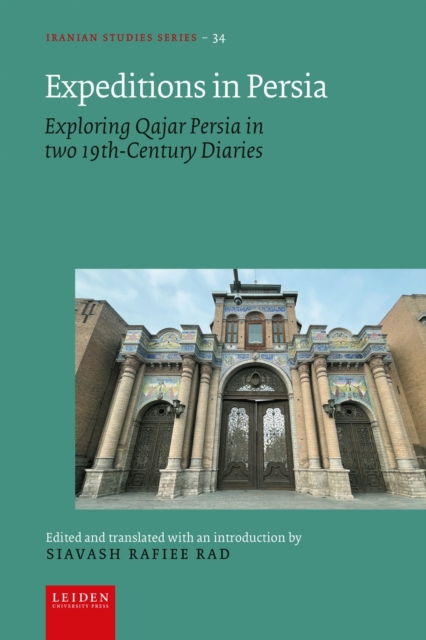
Expeditions in Persia
Expeditions in Persia: Exploring Qajar Persia in two 19th-Century Diaries unveils the intricacies of 19th-century Persian expeditions through two complementary travelogues. The first account, with an anonymous author (attributed to Sir John Malcolm), offers a detailed diplomatic and historical perspective on the journey through Persia during an East India Company mission led by Sir John Malcolm. The second travelogue, written by Mirz-leh, an Iranian intellectual and later diplomat, chronicles a separate expedition commissioned by Sir William Ouseley, the brother of Sir Gore Ouseley. It enriches the narrative with vivid descriptions of Persia's societies, geography, and architecture, offering a deeply cultural and immersive experience. Together, these accounts weave a comprehensive and multifaceted portrait of early 19th-century Persia, blending Eastern and Western viewpoints to create a captivating exploration of the region's history, culture, and landscapes.
eBook

The Arab Nahdah
To understand today's Arab thinking, you need to go back to the beginnings of modernity: the nahdah or Arab renaissance of the 19th and early 20th centuries. Abdulrazzak Patel enhances our understanding of the nahdah and its intellectuals, looking back to its origins in the 1700s and taking into account important internal factors alongside external forces. He explores the key factors that contributed to the rise and development of the nahdah, he introduces the humanist movement of the period that was the driving force behind much of the linguistic, literary and educational activity. Drawing on intellectual history, literary history and postcolonial studies, he argues that the nahdah was the product of native development and foreign assistance and that nahdah reformist thought was hybrid in nature. Overall, this study highlights the complexity of the movement and offers a more pluralist history of the period.
eBook

Emporialism
This book examines what Amr Kamal calls the phenomenon of
emporialism , or the convergence between the spaces and
imaginaries of empires and emporia in the context of a modern
Mediterranean divided among the British, French, and Ottoman
empires. By \"emporia,\" Kamal refers to the commercial network of
nineteenth-century department stores, which gained prominence after
the Suez Canal project. Taking as a focal point French and Egyptian
department stores, the author examines emporialism as a set of
phenomenological experiences, discursive and social praxes, and
mechanisms of control and resistance, born from the intersection of
modernity, colonialism, and mass consumption. Drawing on archival
evidence, Kamal reads iconographic and literary representations of
emporia in English, French, Arabic, and Hebrew, from the nineteenth
century to the present, addressing works by Émile Zola, Huda
Shaarawi, Jacqueline Kahanoff, and others. Emporialism, Kamal
argues, served to rewrite the history of the Mediterranean, to
reinvent national belonging, and to interrogate issues of modernity
and social justice.
eBook
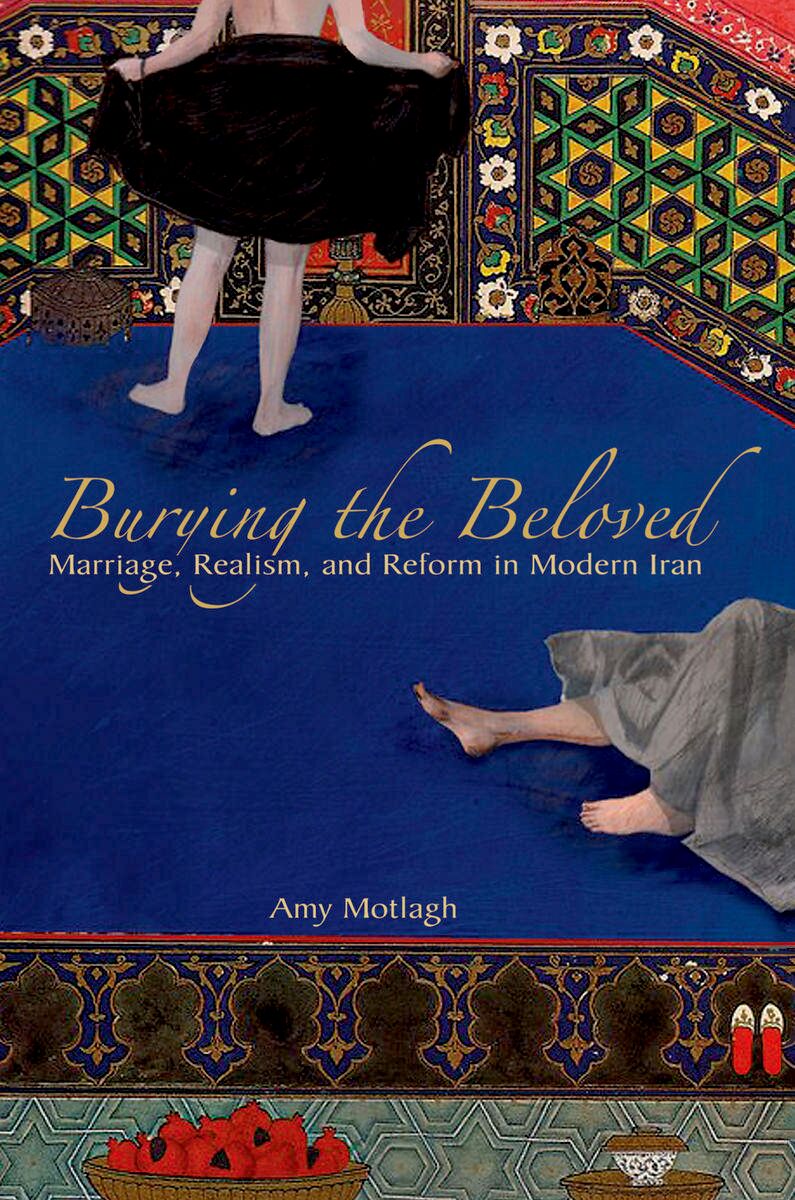
Burying the Beloved
Burying the Beloved traces the relationship between the law and literature in Iran to reveal the profound ambiguities at the heart of Iranian ideas of modernity regarding women's rights and social status. The book reveals how novels mediate legal reforms and examines how authors have used realism to challenge and re-imagine notions of \"the real.\" It examines seminal works that foreground acute anxieties about female subjectivity in an Iran negotiating its modernity from the Constitutional Revolution of 1905 up to and beyond the Islamic Revolution of 1979. By focusing on marriage as the central metaphor through which both law and fiction read gender, Motlagh critically engages and highlights the difficulties that arise as gender norms and laws change over time. She examines the recurrent foregrounding of marriage at five critical periods of legal reform, documenting how texts were understood both at first publication and as their importance changed over time.
eBook
Counterrealism and Indo-Anglian Fiction
What do R.K. Narayan, G.V. Desani, Anita Desai, Zulfikar Ghose, Suniti Namjoshi, and Salman Rushdie have in common? They represent Indian writing in English over five decades. Vilified by many cultural nationalists for not writing in native languages, they nonetheless present a critique of the historical and cultural conditions that promoted and sustained writing in English. They also have in common a counterrealist aesthetic that asks its own social, political, and textual questions. This book is about the need to look at the tradition of Indian writing in English from the perspective of counterrealism. The departure from the conventions of mimetic writing not only challenges the limits of realism but also enables Indo-Anglian authors to access formative areas of colonial experience. Kanaganayakam analyzes the fiction of writers who work in this vibrant Indo-Anglian tradition and demonstrates patterns of continuity and change during the last five decades. Each chapter draws attention to what is distinctive about the artifice in each author while pointing to the features that connect them. The book concludes with a study of contemporary writing and its commitment to non-mimetic forms.
eBook

Prophetic Translation
Considers the changing role of literary translation in Egypt from the 1910s to the 1940sIn this novel and pioneering study Maya I. Kesrouany explores the move from Qur'anic to secular approaches to literature in early 20th-century Egyptian literary translations, asking what we can learn from that period and the promise that translation held for the Egyptian writers of fiction at that time. Through their early adaptations, these writers crafted a prophetic, secular vocation for the narrator that gave access to a world of linguistic creation and interpretation unavailable to the common reader or the religious cleric. This book looks at the writers' claim to secular prophecy as it manifests itself in the adapted narrative voice of their translations to suggest an original sense of literary resistance to colonial oppression and occupation in the early Arabic novel.
eBook