
Catalogue Search | MBRL


Are you sure you want to remove the book from the shelf?

{{itemTitle}}
1,598
result(s) for
"LITERARY CRITICISM / Subjects "
Sort by:
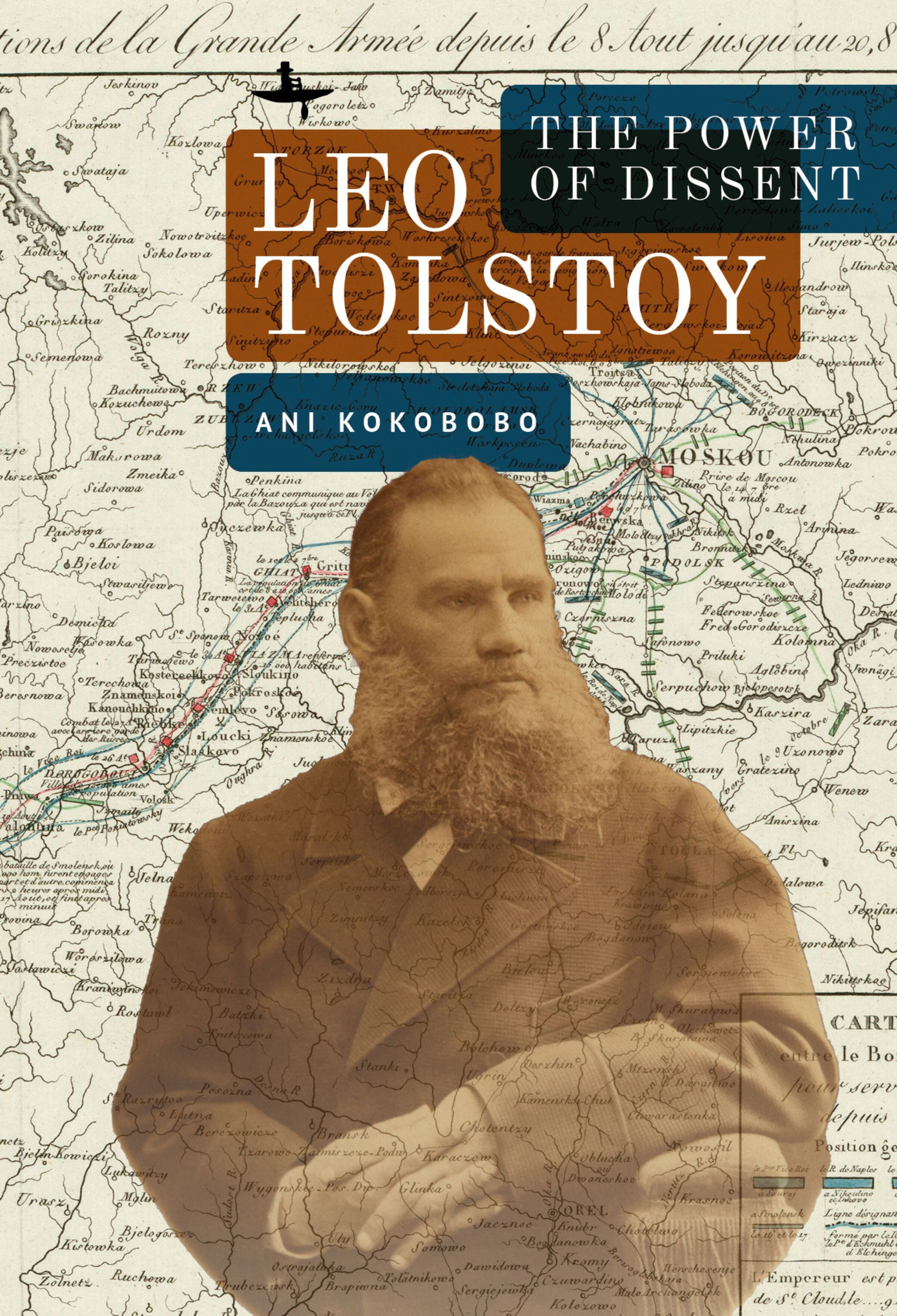
Leo Tolstoy
The Tolstoy that emerges from this volume is a thinker who resists easy answers, explores contradictions, and seeks deeper reconciliation. This collection presents him as an open-ended conversation partner rather than a moral authority, grappling urgently with dilemmas of identity, human relationships, colonial violence, and integrity. The Tolstoy I have always sought—and hope is foregrounded here—is one whose meanings remain open, engaging in dialogue with both our present and an unknown future. From his time, he speaks to today’s most pressing issues. In an era of polarization and simplistic narratives, Tolstoy offers a methodology of dissent and independent thought. This is Tolstoy the dissenter, whose voice is extraordinarily valuable for our time.
eBook
Das grenzwesen Mensch: vormoderne Naturphilosophie und Literatur im Dialog mit postmoderner Gendertheorie
With its new subtitle, Romance Literatures of the World, the book series mimesis presents an innovative and integral understanding of the Romance world and Romance Studies from the perspective of literary studies and cultural theory. It takes account of the fact that the fascinating development of Romance literatures and cultures both in Europe and beyond has set in motion worldwide dynamics which continue the great traditions of the Romance world and open up new horizons for them. mimesis works from a transareal understanding of Romance Studies which integrates Romance literatures and cultures both within and outside Europe and which transcends the national and disciplinary boundaries which often conceal the interactions between different traditions and developments in Europe and the Americas, in Africa and Asia. In the archipelago of Romance Studies, mimesis reveals how the representation of reality in the Romance literatures of the world opens the door to a multilingual cosmos of diverse logics.
eBook

Satire, Comedy and Tragedy
This book provides a closereading of the satiric, comic, and tragic plot structures of TristramShandy and then traces the themes that inform Laurence Sterne's greatest novel to his letters, sermons, and other writings. The book also argues for a writing-to-learn approach to teaching Sterne's recurring themes.
eBook

Censored
When Henry Vizetelly was imprisoned in 1889 for publishing the novels of Émile Zola in English, the problem was not just Zola's French candour about sex - it was that Vizetelly's books were cheap, and ordinary people could read them. Censored exposes the role that power plays in censorship. In twenty-five chapters focusing on a wide range of texts, including the Bible, slave narratives, modernist classics, comic books, and Chicana/o literature, Matthew Fellion and Katherine Inglis chart the forces that have driven censorship in the United Kingdom and the United States for over six hundred years, from fears of civil unrest and corruptible youth to the oppression of various groups - religious and political dissidents, same-sex lovers, the working class, immigrants, women, racialized people, and those who have been incarcerated or enslaved. The authors also consider the weight of speech, and when restraints might be justified. Rich with illustrations that bring to life the personalities and the books that feature in its stories, Censored takes readers behind the scenes into the courtroom battles, legislative debates, public campaigns, and private exchanges that have shaped the course of literature. A vital reminder that the freedom of speech has always been fragile and never enjoyed equally by all, Censored offers lessons from the past to guard against threats to literature in a new political era.
eBook

Spacing (in) Diaspora
This work attempts to counteract the essentialism of originary thinking in the contemporary era by providing a new reading of a relatively understudied corpus of literature from a ambivalently stereotyped diasporic group, in order to rethink and problematise the concept of diaspora as a spatial concept. As work situated in the Law-in-Literature movement, beyond the disciplinary boundaries of scholarship, this book aims to construct a 'literary jurisprudence' of diaspora space, deconstructing space in order to question what it means to be 'settled' in literary refractions of the lawscape by drawing on refractions of case law in a corpus of texts by Romani authors. These texts are used as hermeutic framings to draw unique spatio-temporal landscapes through which the reader can explore the refractive, reflective, interpretative conditions of legality as a crucible in which to theorise law.The radical intent of this work, therefore, is to deconstruct jurisprudential spatial order in order to theorize diaspora space, in the context of the Roma Diaspora. This work will offer readers new possibilities to re-imagine diaspora through law and literature and provides an innovative critical interdisciplinary analysis of the shaping of space.
eBook
Translating Jazz Into Poetry
The Anglia Book Series (ANGB) offers a selection of high quality work on all areas and aspects of English philology. It publishes book-length studies and essay collections on English language and linguistics, on English and American literature and culture from the Middle Ages to the present, on the new English literatures, as well as on general and comparative literary studies, including aspects of cultural and literary theory. _x000D_.
eBook


An Irish-Jewish Politician, Joyce's Dublin, and Ulysses
A forgotten historical figure and his influence on the
writing of James Joyce
In this book, Neil Davison argues that Albert Altman (1853 ‒
1903), a Dublin-based businessman and Irish nationalist, influenced
James Joyce's creation of the character of Leopold Bloom, as well
as Ulysses 's broader themes surrounding race, nationalism,
and empire. Using extensive archival research, Davison reveals
parallels between the lives of Altman and Bloom, including how the
experience of double marginalization-which Altman felt as both a
Jew in Ireland and an Irishman in the British Empire-is a major
idea explored in Joyce's work.
Altman, a successful salt and coal merchant, was involved in
municipal politics over issues of Home Rule and labor, and
frequently appeared in the press over the two decades of Joyce's
youth. His prominence, Davison shows, made him a familiar name in
the Home Rule circles with which Joyce and his father most
identified. The book concludes by tracing the influence of Altman's
career on the Dubliners story \"Ivy Day in the Committee
Room,\" as well as throughout the whole of Ulysses . Through
Altman's biography, Davison recovers a forgotten life story that
illuminates Irish and Jewish identity and culture in Joyce's
Dublin.
A volume in the Florida James Joyce Series, edited by Sebastian
D. G. Knowles
eBook

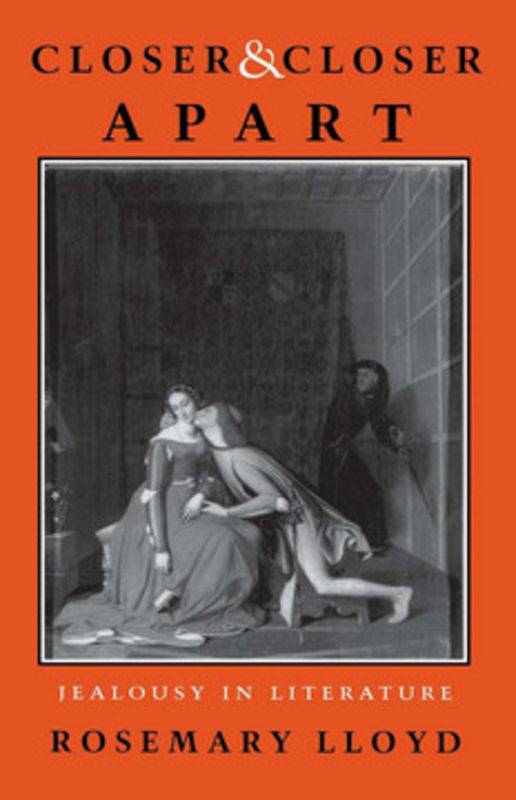
Closer and Closer Apart
Envy, Rosemary Lloyd says, involves what one would like to have
but does not; jealousy, what one has but fears losing. Lloyd
demonstrates in Closer and Closer Apart how the passion
unleashed by jealousy can illuminate such concepts as self and
other, gender and society. Jealousy, in her view, exerts a powerful
attraction in literature, partly because it distorts the
individual's perceptions of the other in highly productive ways,
and partly because it serves as paradigms for reading and for
storytelling.
In this accessible and elegantly crafted book, Lloyd explores
sexual jealousy more as a literary devise than as a literary theme.
She draws her examples from novels, plays, and poetry spanning many
years and from many countries, mainly nineteenth- and
twentieth-century France and England but also Russia, Poland,
Germany, Italy, the United States, Canada, and Australia. Among the
writers she treats are Proust, Tolstoy, Dostoyevsky, Charlotte
Brontë, Trollope, Barthes, and Baudelaire.
After discussing various portraits of the jealous lover, Lloyd
asks to what extent the literary experience of jealousy has been
colored by conventional images of male and female roles. She also
examines the ways in which the jealous lover deals with the
\"other\"-whether beloved or rival. Finally, she looks at jealousy as
a desire for control, represented through images of incorporation
and possession.
eBook