
Catalogue Search | MBRL


Are you sure you want to remove the book from the shelf?

{{itemTitle}}
776
result(s) for
"LabVIEW"
Sort by:

Real-time Motion Control of Robot Using Kinect
The goal of Industry 4.0 is to maximize efficiency and reduce human efforts. Artificial Intelligence, Cloud Computing, Robotics, Mobile Technologies and many other technological advances generate Industry 4.0. Humanoid robots resemble humans and their primary goal is to perform any task programmed by the user. Our goal is to create a portable and safer system that can be used in any dynamic environment to control the robot and avoid any sort of complexity. With the rapid technological advances, there is no need to worry about unemployment since it requires a technical expert in the field to control the robot. This paper discusses how this control system processes gesture data along with a brief discussion of certain useful applications.
Journal Article

Design and Implementation of a Real-Time Smart Home Management System Considering Energy Saving
One of the most challenging problems related to the operation of smart microgrids is the optimal home energy management scheme with multiple and conflicting objectives. Moreover, there is a noticeable increase in homes equipped with renewable energy sources (RESs), where the coordination of loads and generation can achieve extra savings and minimize peak loads. In this paper, a solar-powered smart home with optimal energy management is designed in an affordable and secure manner, allowing the owner to control the home from remote and local sites using their smartphones and PCs. The Raspberry Pi 4 B is used as the brain of the proposed smart home automation management system (HAMS). It is used to collect the data from the existing sensors and store them, and then take the decision. The home is monitored using a graphical interface that monitors room temperature, humidity, smoke, and lighting through a set of sensors, as well as PIR sensors to monitor the people movement. This action enables remote control of all home appliances in a safe and emission-free manner. This target is reached using Cayenne, which is an IoT platform, in addition to building some codes related to some appliances and sensors not supported in Cayenne from scratch. Convenience for people with disabilities is considered by using the Amazon Echo Dot (Alexa) to control home appliances and the charging point by voice, implementing the associated code for connecting the Raspberry pi with Alexa from scratch, and simulating the system on LabVIEW. To reach the optimal operation and reduce the operating costs, an optimization framework for the home energy management system (HEMS) is proposed. The operating costs for the day amounted to approximately 16.039 €. There is a decrease in the operating costs by about 23.13%. The consumption decreased after using the smart HAMS by 18.161 kWh. The results of the optimization also show that the least area that can be used to install solar panels to produce the desired energy with the lowest cost is about 118.1039 m2, which is about 23.62% of the total surface area of the home in which the study was conducted. The obtained results prove the effectiveness of the proposed system in terms of automation, security, safety, and low operating costs.
Journal Article
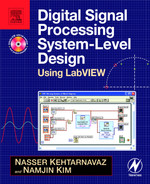
Digital Signal Processing System-Level Design Using LabVIEW
LabVIEW (Laboratory Virtual Instrumentation Engineering Workbench) developed by National Instruments is a graphical programming environment.Its ease of use allows engineers and students to streamline the creation of code visually, leaving time traditionally spent on debugging for true comprehension of DSP.
eBook

Labview for IoT Applications
The Internet of Things (IoT) represents a paradigm shift, ushering in an era of technological innovation characterised by an array of novel services. IoT applications, with their potential to harmoniously merge the cyber and physical worlds, are nearly boundless. However, despite the extensive efforts put forth by standardisation bodies, alliances, industries, and the research community, a myriad of challenges remains to be addressed for IoT to reach its maximum potential. This paper presents a possible solution by merging the advantages of the LabView development medium with the lightweight communication provided by the MQTT protocol.
Journal Article
Labview and Remotexy Integration for Quadrotor Stabilization and Control
Nowadays, Small quadcopters have made significant advancements in recent years, thanks to the development of control systems, the availability of sensors, and affordable and reliable materials for their production. Additionally, programs have been developed to model and analyze these aircraft before production. The professional applications of quadcopters are seemingly endless due to their many advantages. The aim of this research is to build a quadcopter and test its stability utilizing Arduino Mega, IMU sensor (Inertial Measurement Unit) and MPU-6050 in LabVIEW environment. The objective is to select the suitable PID parameters and create a remote-control program that can be operated using a smartphone and RemoteXY app on Android OS.
Journal Article

Light intensity measurement using LabVIEW graphical programming environment
Lighting and light distribution have a crucial influence on factors such as performance and occupational safety.This paper aims to create a virtual instrument (VI), developed around the Arduino Uno development platform, designed to measure the light intensity using the BPW34 sensitive silicon PIN photodiode. The reverse-biased photodiode can be used as a light detector by monitoring the current flowing through it. Coupled to a 10Kohm resistor and considering the specifications of the BPW34 model, a simple relationship is offered between lux (light intensity) and the voltage across the resistance. The virtual instrument reads this voltage and converts it to a light intensity value in Lux. There is also an alarming function if the light intensity exceeds the set value. The VI also shows basic statistics like Max, Mean, and Min light intensity values.
Journal Article

Multichannel Detection of Acoustic Emissions and Localization of the Source with External and Internal Sensors for Partial Discharge Monitoring of Power Transformers
The detection of acoustic emissions with multiple channels and different kinds of sensors (external ultrasound electronic sensors and internal optical fiber sensors) for monitoring power transformers is presented. The source localization based on the times of arrival was previously studied, comparing different strategies for solving the location equations and the most efficient strategy in terms of computational and complexity costs versus performance was selected for analyzing the error propagation. The errors of the acoustic emission source location (localization process) are evaluated from the errors of the times of arrival (detection process). A hybrid programming architecture is proposed to optimize both stages of detection and location. It is formed by a virtual instrumentation system for the acquisition, detection and noise reduction of multiple acoustic channels and an algorithms-oriented programming system for the implementation of the localization techniques (back-propagation and multiple-source separation algorithms could also be implemented in this system). The communication between both systems is performed by a packet transfer protocol that allows continuous operation (e.g., on-line monitoring) and remote operation (e.g., a local monitoring and a remote analysis and diagnosis). For the first time, delay errors are modeled and error propagation is applied with this error source and localization algorithms. The 1% mean delay error propagation gives an accuracy of 9.5 mm (dispersion) and a maximum offset of 4 mm (<1% in both cases) in the AE source localization process. This increases proportionally for more severe errors (up to 5% reported). In the case of a multi-channel internal fiber-optic detection system, the resulting location error with a delay error of 2% is negligible when selecting the most repeated calculated position. These aim at determining the PD area of activity with a precision of better than 1% (<10 mm in 110 cm).
Journal Article
Solar-powered vibration sensing based on TENG
In recent years, the triboelectric nanogenerator (TENG) has become an emerging sensing element with simple fabrication and low-cost advantages. The contact separation design of the TENG dual plates has a natural oscillator structure, which responds well to mechanical vibration. The voltage value changes generated by the TENG during vibration can serve as a signal source for sensing. In this paper, a new type of vibration sensing system is designed based on TENG, which uses the capacitor’s voltage from TENG to characterize the relative vibration intensity. It can realize the functions of vibration exceeding threshold alarm, real-time data transmission, LabVIEW terminal display, and data saving. At the same time, the solar energy is combined with the battery to realize the all-weather self-power supply of the vibration sensing system. This terminal will have a wide range of applications in vibration scenarios and hopefully promote embedded technology development.
Journal Article
PID control simulation for heating power control to maintain temperature stability in the passive cooling system simulation facility
The on-off control system used to regulate the heater power in the passive cooling system simulation facility produces a suboptimal system response characterized by overshoot and large steady-state error. A Proportional Integral Derivative (PID) control system can be used to develop a heating power control system with a more optimal response. Simulation using LabVIEW can be conducted to determine the PID tuning parameters that yield the most optimal system response for controlling the heater power in the passive cooling system simulation facility. The simulation can be carried out using LabVIEW by modelling the heater tank in the LabVIEW program’s block diagram. The simulation will be performed with setpoint temperatures 50°C, 60°C, 70°C and 80°C. Based on the simulation, PID parameter values such as Kp, Ti, and Td will be obtained, providing the most optimal system response for each setpoint.
Journal Article

Chaos-based engineering applications with a 3D chaotic system without equilibrium points
There has recently been an increase in the number of new chaotic system designs and chaos-based engineering applications. In this study, since homoclinic and heteroclinic orbits did not exist and analyses like Shilnikov method could not be used, a 3D chaotic system without equilibrium points was included and thus different engineering applications especially for encryption studies were realized. The 3D chaotic system without equilibrium points represents a new different phenomenon and an almost unexplored field of research. First of all, chaotic system without equilibrium points was examined as the basis and electronic circuit application of the chaotic system was realized and oscilloscope outputs of phase portraits were obtained. Later, chaotic system without equilibrium points was modelled on Labview Field Programmable Gate Array (FPGA) and then FPGA chip statistics, phase portraits and oscilloscope outputs were derived. With another study, VHDL and RK-4 algorithm were used and a new FPGA-based chaotic oscillators design was achieved. Results of Labview-based design on FPGA- and VHDL-based design were compared. Results of chaotic oscillator units designed here were gained via Xilinx ISE Simulator. Finally, a new chaos-based RNG design was achieved and internationally accepted FIPS-140-1 and NIST-800-22 randomness tests were run. Furthermore, video encryption application and security analyses were carried out with the RNG designed here.
Journal Article