
Catalogue Search | MBRL


Are you sure you want to remove the book from the shelf?

{{itemTitle}}
446
result(s) for
"Labor -- United States -- History -- 19th century"
Sort by:


The Long Gilded Age
From the end of the nineteenth century through the first decades of the twentieth, the United States experienced unprecedented structural change. Advances in communication and manufacturing technology brought about a revolution for major industries such as railroads, coal, and steel. The still-growing nation established economic, political, and cultural entanglements with forces overseas. Local strikes in manufacturing, urban transit, and construction placed labor issues front and center in political campaigns, legislative corridors, church pulpits, and newspapers of the era.
The Long Gilded Ageconsiders the interlocking roles of politics, labor, and internationalism in the ideologies and institutions that emerged at the turn of the twentieth century. Presenting a new twist on central themes of American labor and working-class history, Leon Fink examines how the American conceptualization of free labor played out in iconic industrial strikes, and how \"freedom\" in the workplace became overwhelmingly tilted toward individual property rights at the expense of larger community standards. He investigates the legal and intellectual centers of progressive thought, situating American policy actions within an international context. In particular, he traces the development of American socialism, which appealed to a young generation by virtue of its very un-American roots and influences.
The Long Gilded Ageoffers both a transnational and comparative look at a formative era in American political development, placing this tumultuous period within a worldwide confrontation between the capitalist marketplace and social transformation.
eBook


Idle Threats
The 19th century witnessed an explosion of writing about unproductivity, with the exploits of various idlers, loafers, and gentlemen of refinement capturing the imagination o fa country that was deeply ambivalent about its work ethic. Idle Threats documents this American obsession with unproductivity and its potentials, while offering an explanation of the profound significance of idle practices for literary and cultural production.While this fascination with unproductivity memorably defined literary characters from Rip Van Winkle to Bartleby to George Hurstwood, it also reverberated deeply through the entire culture, both as a seductive ideal and as a potentially corrosive threat to upright, industrious American men. Drawing on an impressive array of archival material and multifaceted literary and cultural sources, Idle Threats connects the question of unproductivity to other discourses concerning manhood, the value of art, the allure of the frontier, the usefulness of knowledge,the meaning of individuality, and the experience of time, space, and history. Andrew Lyndon Knighton offers a new way of thinking about the largely unacknowledged productivity of the unproductive, revealing the incalculable and sometimes surprising ways in which American modernity transformed the relationship between subjects and that which is most intimate to them: their own activity.
eBook

American lucifers : the dark history of artificial light, 1750-1865
\"American lucifers tracks how struggles to produce light transformed American history, beginning with the rise of the American whale fishery in the 1750s and culminating in the emergence, around the Civil War, of the petroleum industry and its primary product, kerosene. Between this shift from oil harvested from whales to oil extracted from rocks, American light was substantially derived from a substance called camphene, a highly explosive liquid mixture of spirits of turpentine and highly distilled alcohol, generally extracted from North Carolina pines by enslaved workers. Over the course of this narrative, Jeremy Zallen reveals the centrality of slavery to labor in gasworks, coal mines, guano islands, and factories that made illumination possible. Moreover, though the lights they created may have offered a veneer of progress and convenience, they also made it possible for industry to extract workers' and slaves' labor around the clock. The availability of these illuminants extended men's working days to the point that women and children were expected to shoulder all domestic labor as a matter of course\"-- Provided by publisher.
Book

Young America
The National Reform Association (NRA) was an antebellum land reform movement inspired by the shared dream of a future shaped by egalitarian homesteads. Mark A. Lause's Young America argues that it was these working people's interest in equitable access to the country's most obvious asset--land--that led them to advocate a federal homestead act granting land to the landless, state legislation to prohibit the foreclosure of family farms, and antimonopolistic limitations on land ownership._x000B_Rooting the movement in contemporary economic structures and social ideology, Young America examines this urban and working-class \"agrarianism,\" demonstrating how the political preoccupations of this movement transformed socialism by drawing its adherents from communitarian preoccupations into political action. The alliance of the NRA's land reformers and radical abolitionists led unprecedented numbers to petition Congress and established the foundations of what became the new Republican Party, promising \"Free Soil, Free Labor, Free Men.\" _x000B__x000B_
eBook


Antislavery discourse and nineteenth-century American literature : incendiary pictures
Antislavery Discourse and Nineteenth-Century American Literature examines the relationship between antislavery texts and emerging representations of \"free labor\" in mid-nineteenth-century America.
eBook

Slavery and forced migration in the antebellum South
\"American slavery in the antebellum period was characterized by a massive wave of forced migration as millions of slaves were moved across state lines to the expanding Southwest, scattered locally, and sold or hired out in towns and cities across the South. This book sheds new light on domestic forced migration by examining the experiences of American-born slave migrants from a comparative perspective. Juxtaposing and contrasting the experiences of long-distance, local, and urban slave migrants, it analyzes how different migrant groups anticipated, reacted to, and experienced forced removal, as well as how they adapted to their new homes\"-- Provided by publisher.
Book
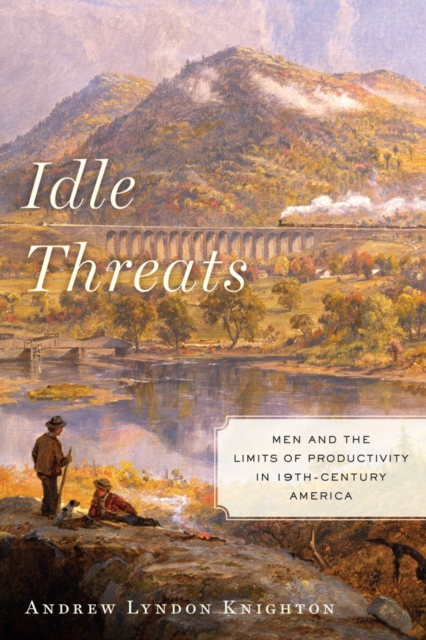
Idle threats : men and the limits of productivity in 19th-century America
The 19th century witnessed an explosion of writing about unproductivity, with the exploits of various idlers, loafers, and \"gentlemen of refinement\" capturing the imagination of a country that was deeply ambivalent about its work ethic. Idle Threats documents this American obsession with unproductivity and its potentials, while offering an explanation of the profound significance of idle practices for literary and cultural production. While this fascination with unproductivity memorably defined literary characters from Rip Van Winkle to Bartleby to George Hurstwood, it also reverberated deeply through the entire culture, both as a seductive ideal and as a potentially corrosive threat to upright, industrious American men. Drawing on an impressive array of archival material and multifaceted literary and cultural sources, Idle Threats connects the question of unproductivity to other discourses concerning manhood, the value of art, the allure of the frontier, the usefulness of knowledge,the meaning of individuality, and the experience of time, space, and history. Andrew Lyndon Knighton offers a new way of thinking about the largely unacknowledged \"productivity of the unproductive,\" revealing the incalculable and sometimes surprising ways in which American modernity transformed the relationship between subjects and that which is most intimate to them: their own activity.
eBook