
Catalogue Search | MBRL


Are you sure you want to remove the book from the shelf?

{{itemTitle}}
21,105
result(s) for
"Labor activism"
Sort by:

Organizing Professionals
Amidst unprecedented levels of union organizing in higher education, Gary Rhoades combines the perspectives of a scholar and labor movement activist and leader to provide a comprehensive analysis of organizing campaigns and collective bargaining agreements for faculty (contingent and tenure-track), graduate students, and postdoc employees. Academic employees are organizing and negotiating for respect for workers, their work, and the public value of higher education. Rhoades analyzes how academic employees are shifting the imbalance of power between labor and management, reducing the internal professional stratification between segments of the academic workforce, and intersecting workplace issues with broader issues of equality, public value, and social justice, and in the process organizing and negotiating for a new, more progressive academy.
eBook

Like, Share, Lead: The Impact of Social Media on Authority and Legitimacy in the Labor Movement
This article draws on the theories of Max Weber to explore how social media can redefine organization and hierarchy in the contemporary labor movement. Through a mixed-methods approach combining quantitative analysis of social media posts and in-depth interviews with key grassroots activists in Denmark, the article highlights how the personal, affective, and participatory nature of social media challenges traditional union legitimacy. The findings suggest that as affect and individual narratives become increasingly powerful tools for the labor movement, unions must explore ways to incorporate these new modes of communication. This includes a deep understanding of the interplay between different forms of legitimacy on digital platforms, and how these can complement each other rather than compete in the pursuit of labor rights and democratic organization. This study contributes to a broader discussion on the impact of digital platforms on organizations, offering a unique perspective on the intersection of technology and power.
Journal Article

Gendered Work, Skill, and Women's Labor Activism in Romanian Tobacco Factories from the 1920s to the 1960s
In this article, I choose struggles over skill development as an entry point to uncovering features of women's labor activism in state-owned tobacco factories in Romania, from the 1920s to the early 1960s. I look at the processes that constructed women tobacco workers, especially those at the Tobacco Manufactory in the city of Cluj, as non-skilled workers, and examine the forms of labor activism in the tobacco industry that challenged those constructs. I describe how women's work at the Cluj Tobacco Manufactory, from the mid-1920s to the mid-1950s, was shaped by successive waves of production intensification and rationalization, demonstrating that these reorganizations affected female workers more than they affected their male coworkers. I point out that although they were considered non-skilled laborers, female tobacco workers exercised an amount of control over their work and were important contributors to their families’ maintenance. I show that spanning two different political regimes, matters of skill were at the core of labor activism. For female workers, in the interwar period, labor activism in male-dominated organizations and structures entailed skill-mediated political strategies that emphasized experience and shopfloor status besides skill. By the 1950s, labor activism encompassed engaging in confrontational politics over seasoned women workers’ lack of access to skill training programs. I show that both in the late 1920s and in the early 1950s, illiteracy and women's more limited access to formal schooling in general shaped new experiences of participation in labor politics.
Journal Article
Renegotiating Skills, Wages, and the Right to Work: On the Gender of Labor Activism around Rationalization in the Bulgarian Tobacco Industry in the Early 1930s
Starting from the early 1930s, structural changes in the Bulgarian tobacco industry, prompted by the advent of the world economic crisis and German economic expansionism into Southeastern Europe, led to a deep restructuring of the labor processes, known in the terminology of the time as rationalization, in the Bulgarian tobacco industry. The introduction of the tonga rationalization technology had a deskilling and deeply gendered effect on the industry, making a significant number of skilled male workers redundant, disproportionately decreasing average male wages and leading, in turn, to a further feminization of an already majority-female workforce. The introduction of the new system provoked a strong response from the organized labor movement, which used a variety of tactics to fight against the new technology: from strikes to petitions to tripartite negotiations. Organized labor's reaction was deeply gendered, an aspect that only becomes truly visible if, in addition to gender and skill, we employ the analytical lens of scale. By following trade union policies on the local, national, and international levels, the article goes beyond the carefully crafted gender-neutral language in official documents to reveal tensions between the conservative attitudes of rank-and-file activists and the official trade union agenda. This is especially evident in communist labor politics, where Bulgarian trade union policies on the local and national levels provoked an intervention on the part of the Profintern between 1930 and 1931. The movement's internal contradictions resulted in a polyvalent, ambiguous, and non-linear trade union policy formed through the clash of and negotiations between local activists’ conservative notions of gendered work and family roles and the radical gender program of international communism.
Journal Article
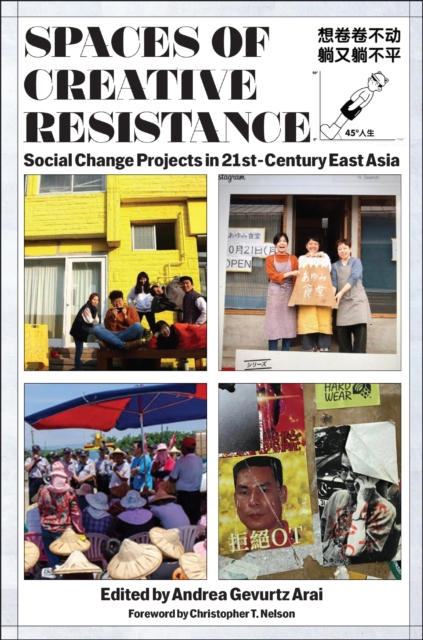
Spaces of Creative Resistance
Spaces of Creative Resistance: Social Change Projects in Twenty-First-Century East Asia brings together an exciting cross-regional interdisciplinary group of scholars, scholar activists, artists, and others for a collection that addresses the last two decades' hollowing out of social connections, socioeconomic income gaps, and general precarity.
eBook

Leveraging Reputational Risk: Sustainable Sourcing Campaigns for Improving Labour Standards in Production Networks
Ethical or 'socially sustainable' sourcing mechanisms mandating labour standards among the suppliers and subcontractors that organisations source goods and services from are becoming more common. The issue of how labour activist groups such as trade unions can encourage organisations to adopt and strengthen these mechanisms within domestic production networks is largely unexplored. Using three cases of domestic sustainable sourcing campaigns developed by unions in Britain, the strategies used by labour activists, the characteristics of the organisations targeted and the motivations of lead firms for improving sourcing practices are analysed. The article makes a significant contribution by demonstrating that organisational susceptibility to reputational risk is a key factor influencing the capacity of activist groups to convince and compel their targets to improve sourcing practices. It argues that different types of organisations are susceptible to reputational damage in different ways, that risk events provide opportunities for unions to strengthen their leverage against target organisations, and that the multidimensional nature of corporate reputation needs to be better considered for understanding how campaigns are framed and executed.
Journal Article

Labour Activism and Social Movement Unionism in the Gig Economy. Food Delivery Workers Struggles in Italy
This article aims to explore the forms of collective actions that are emerging in new sectors of digital capitalism. In particular, it enquires into the mobilisation of food delivery workers that has been developing since 2016 in four Italian cities: Milan, Turin, Bologna and Florence. Despite the high level of precarisation and atomisation that characterise this subset of gig economy jobs, the so-called riders were able to organise into self-organised workers' collectives, which not only gave rise to many protest events, but also drew the attention of the institutions and the media. What are the conditions and the strategies that made this possible? And, more broadly, what does this case tell us about the possibility of labour activism in gig economy work? We argue that the high level of activation of food delivery workers is to be related to their capability to provide resources for reconstructing social ties among workers and, in turn, for translating them into political engagement and contentious action. This is realised through the combination of three factors that will be scrutinised in the paper. The analysis points out that although precarisation creates significant obstacles to organisation and mobilisation, collective action does actually take place also in the gig economy, in certain conditions.
Journal Article

Feminization of Resistance: Reclaiming the Affective and the Indefinite as Counter-Strategy in Academic Labor Activism
‘Feminization’ is used either quantitatively to indicate an increased female labor market participation or qualitatively to refer to labor devaluation and to types of work that supposedly require “feminine” skillsets. This article cautiously hews to the qualitative interpretations but suggests an affirmative reconstruction of the concept in the context of collective action. It argues that contemporary grassroots academic labor movements rely more explicitly on collective emotions and aim at building long-term bases of solidarity, instead of performative activism and mass mobilizations. This ‘affective turn’ in academic labor activism is argued to signal a “feminization of resistance”, characterized by a pronounced propensity for affective and relational groundwork. This argument is substantiated in view of the Network for Decent Work in Academia (NGAWiss), a nation-wide precarious researchers’ network in Germany, and the New Faculty Majority (NFM), an adjunct advocacy group in the US. The aim is twofold: first, the article contributes to a better understanding of contemporary labor activism by elucidating the precarious collective’s incremental achievements, often ignored by the outcome-oriented labor movement literature. Second, by reframing it as a mode of affective resistance, the article extends the analytical scope of the term “feminization”.
Journal Article

Towards a new web of rules
PurposeThe purpose of this paper is to review “institutional experimentation” for protecting workers in response to the contraction of the standard employment relationship and the corresponding rise of “non-standard” forms of paid work.Design/methodology/approachThe paper draws on the existing research and knowledge base of the authors as well as a thorough review of the extant literature relating to: non-standard employment contracts; sources of labour supply engaging in non-standard work; exogenous pressures on the employment relationship; intermediaries that separate the management from the control of labour; and entities that subvert the employment relationship.FindingsPost-war industrial relations scholars characterised the traditional regulatory model of collective bargaining and the standard employment contract as a “web of rules”. As work relations have become more market mediated, new institutional arrangements have developed to govern these relations and regulate the terms of engagement. The paper argues that these are indicative of an emergent “patchwork of rules” which are instructive for scholars, policymakers, workers’ representatives and employers seeking solutions to the contraction of the traditional regulatory model.Research limitations/implicationsWhile the review of the institutional experimentation is potentially instructive for developing solutions to gaps in labour regulation, a drawback of this approach is that there are limits to the realisation of policy transfer. Some of the initiatives discussed in the paper may be more effective than others for protecting workers on non-standard contracts, but further research is necessary to test their effectiveness including in different contexts.Social implicationsThe findings indicate that a task ahead for the representatives of government, labour and business is to determine how to adapt the emergent patchwork of rules to protect workers from the new vulnerabilities created by, for example, employer extraction and exploitation of their individual bio data, social media data and, not far off, their personal genome sequence.Originality/valueThe paper addresses calls to examine the “institutional intersections” that have informed the changing ways that work is conducted and regulated. These intersections transcend international, national, sectoral and local units of analysis, as well as supply chains, fissured organisational dynamics, intermediaries and online platforms. The analysis also encompasses the broad range of stakeholders including businesses, labour and community groups, nongovernmental organisations and online communities that have influenced changing institutional approaches to employment protection.
Journal Article

THE PAST IS MADE BY WALKING: Labor Activism and Historical Production in Postcolonial Guadeloupe
The act of walking represents an important (yet underexamined) element of political protest and collective action, as well as an increasingly common form of historical commemoration. In this article I examine the development of a series of \"memory walks\" by labor activists in the French Caribbean island of Guadeloupe. I argue that these peripatetic practices constitute a particular spatial, kinesthetic, and sensorial form of historical and archival production. Along the way, I consider what these events reveal about postcolonial forms of archival production and the importance of historical praxis to the formation of political subjectivities.
Journal Article