
Catalogue Search | MBRL


Are you sure you want to remove the book from the shelf?

{{itemTitle}}
16,635
result(s) for
"Laboratories history."
Sort by:

The matter factory : a history of the chemical laboratory
Offers a novel approach to the history of chemistry, showing how the development of the laboratory also helped to shape modern scientific practice, and explores the history of the chemical museum, which is now almost extinct.
Book

A Brave New Animal for a Brave New World: The British Laboratory Animals Bureau and the Constitution of International Standards of Laboratory Animal Production and Use, circa 1947–1968
In 1947 the Medical Research Council of Britain established the Laboratory Animals Bureau in order to develop national standards of animal production that would enable commercial producers better to provide for the needs of laboratory animal users. Under the directorship of William Lane-Petter, the bureau expanded well beyond this remit, pioneering a new discipline of “laboratory animal science” and becoming internationally known as a producer of pathogenically and genetically standardized laboratory animals. The work of this organization, later renamed the Laboratory Animals Centre, and of Lane-Petter did much to systematize worldwide standards for laboratory animal production and provision—for example, by prompting the formation of the International Committee on Laboratory Animals. This essay reconstructs how the bureau became an internationally recognized center of expertise and argues that standardization discourses within science are inherently internationalizing. It traces the dynamic co-constitution of standard laboratory animals alongside that of the identities of the users, producers, and regulators of laboratory animals. This process is shown to have brought into being a transnational community with shared conceptual understandings and material practices grounded in the materiality of the laboratory animal, conceived as an instrumental technology.
Journal Article

The innovators : how a group of hackers, geniuses, and geeks created the digital revolution
\"Following his blockbuster biography of Steve Jobs, The Innovators is Walter Isaacson's revealing story of the people who created the computer and the Internet. It is destined to be the standard history of the digital revolution and an indispensable guide to how innovation really happens. What were the talents that allowed certain inventors and entrepreneurs to turn their visionary ideas into disruptive realities? What led to their creative leaps? Why did some succeed and others fail? In his masterly saga, Isaacson begins with Ada Lovelace, Lord Byron's daughter, who pioneered computer programming in the 1840s. He explores the fascinating personalities that created our current digital revolution, such as Vannevar Bush, Alan Turing, John von Neumann, J.C.R. Licklider, Doug Engelbart, Robert Noyce, Bill Gates, Steve Wozniak, Steve Jobs, Tim Berners-Lee, and Larry Page. This is the story of how their minds worked and what made them so inventive. It's also a narrative of how their ability to collaborate and master the art of teamwork made them even more creative. For an era that seeks to foster innovation, creativity, and teamwork, The Innovators shows how they happen\"-- Provided by publisher.
Book
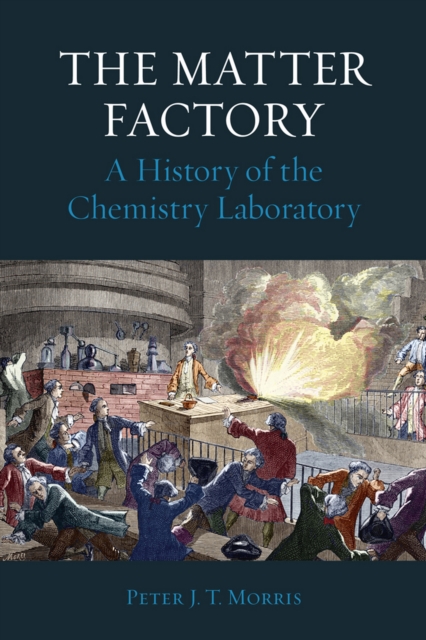
The matter factory : a history of the chemistry laboratory
White coats, Bunsen burners, beakers, flasks, and pipettes-the furnishings of the chemistry laboratory are familiar to most of us from our school days, but just how did these items come to be the crucial tools of science? Examining the history of the laboratory, Peter J. T. Morris offers a unique way to look at the history of chemistry itself, showing how the development of the laboratory helped shape modern chemistry. Chemists, Morris shows, are one of the leading drivers of innovation in laboratory design and technology. He tells of fascinating lineages of invention and innovation, for instance, how the introduction of coal gas into Robert Wilhelm Bunsen's laboratory led to the eponymous burner, which in turn led to the development of atomic spectroscopy. Comparing laboratories across eras, from the furnace-centered labs that survived until the late eighteenth century to the cleanrooms of today, he shows how the overlooked aspects of science-the architectural design and innovative tools that have facilitated its practice-have had a profound impact on what science has been able to do and, ultimately, what we have been able to understand.
eBook

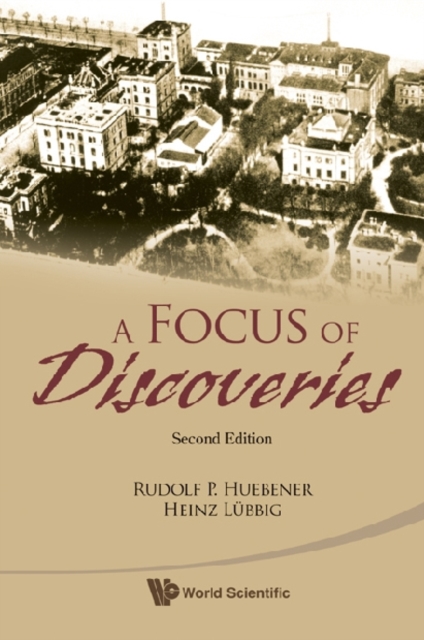
A Focus of discoveries
On the special occasion of the 125th anniversary in 2012 of the PTB and its predecessor PTR, this second edition is presented (in CD) with a new chapter on the current impact of quantum standards. In 1887, the Physikalisch-Technische Bundesanstalt (PTB) was originally founded as the Physikalisch-Technische Reichsanstalt (PTR) in Berlin in order to promote basic research in physics. It subsequently developed into the largest research center worldwide as a place where scientists could concentrate exclusively on their research subject, and served as a model for similar institutes established in other countries.
eBook

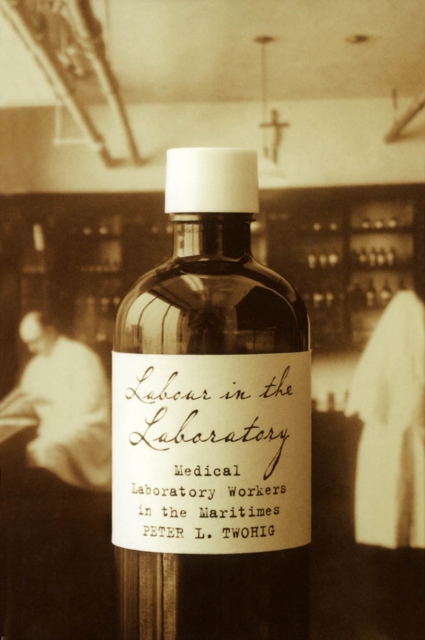
Labour in the laboratory: medical laboratory workers in the maritimes, 1900-1950
A portrait of the rise of Canada's third largest health care profession, this text shows that the history of healthcare looks different when seen from the perspective of workers other than physicians or nurses.
eBook

The imperial laboratory : experimental physiology and clinical medicine in post-Crimean Russia
Following a humiliating defeat in the Crimean War, the Russian Empire found herself exposed due to major deficiencies in her infrastructure. To gain from European scientific, technical and educational advancements, the Russian Government began to permit studies abroad and relaxed censorship, which brought a new flood of literature into the country. These measures enormously facilitated the growth of Russian science, medicine and education in the late nineteenth century, taking the Empire into a fascinating era of laboratory research, a new cultural and intellectual tradition. The Imperial Laboratory tells the story of the lives and studies of the leading Russian and German clinician-experimenters who played critical roles in the integration of physics and chemistry into physiology and clinical medicine. A principal theme is the major transformations undergone in military medicine and education. Using a wide range of Russian and German primary sources, this book offers a unique English-language insight into Russian physiology and medicine that will be of interest to both historians and doctors, as well as anyone interested in Russian science and culture.
Book

The American College of Surgeons, Minimum Standards for Hospitals, and the Provision of High-Quality Laboratory Services
- The first major project of the American College of Surgeons (Chicago, Illinois), founded in 1913, was implementing Minimum Standards for Hospitals. The 1918 standard (1) established medical staff organizations in hospitals; (2) restricted membership to licensed practitioners in good standing; (3) mandated that the medical staff work with hospital administration to develop and adopt regulations and policies governing their professional work; (4) required standardized, accessible medical records; and (5) required availability of diagnostic and therapeutic facilities. One hundred years ago, these were radical expectations.
- To describe the origin, \"marketing,\" and voluntary adoption of the 1918 standards, and to describe how the evolution of those standards profoundly affected laboratory medicine after 1926.
- Available primary and secondary historical sources were reviewed.
- The college had no legal mandate, so it used a highly consultative approach, funded by its membership and the Carnegie Foundation (New York, New York), to establish the Minimum Standards, followed by a nonthreatening mechanism to determine which hospitals met them. Simultaneously, the college educated the public to fuel their expectations. Compliance by more than 100-bed hospitals in the United States and Canada, although entirely voluntary, rose from negligible when first implemented in 1918 to more than 90% in only a few years. From 1922 to 1926, the American Society for Clinical Pathology (Chicago, Illinois) worked creatively with the college to establish Minimum Standards for \"adequate\" laboratory services.
- The birth and implementation of this program exemplifies how a consultative approach with full engagement of grassroots stakeholders facilitated a voluntary, rapid, sweeping North America-wide change-management process. This program eventually evolved into the Joint Commission (Oakbrook Terrace, Illinois).
Journal Article