
Catalogue Search | MBRL


Are you sure you want to remove the book from the shelf?

{{itemTitle}}
39,684
result(s) for
"Laboratory Safety"
Sort by:

A Mixed Reality-Based Chemistry Experiment Learning System to Facilitate Chemical Laboratory Safety Education
It is difficult for students to learn the concepts of chemical laboratory safety education from actual experiences because the traditional teaching model prohibits students from performing dangerous operations. Therefore, this study develops a novel mixed reality-based chemistry experiment learning system (MRCELS) to allow learners to conduct inquiry-based experimental operations in an environment integrating virtual and physical space by using a free and safe way so that chemical laboratory safety problems that usually occur in actual chemical laboratories that may hurt learners can be avoided. A total of 36 Grade 11 students from a girl’s high school in Taipei City, Taiwan, were recruited to participate in the experiment. A total of 17 students were randomly assigned to the experimental group using the MRCELS to conduct chemical laboratory safety education, while the remaining 19 students were randomly assigned to the control group taught by a teacher in a physical-chemical laboratory. The research results show that the learning effectiveness of experimental group learners in chemical laboratory safety education is significantly superior to that of the control group. Besides, experimental and control groups significantly improved their attitudes toward laboratory safety after the instruction experiment, but no significant differences existed between them. Both groups of learners showed high satisfaction with the learning model they used, but no significant differences existed between them. Encouragingly, according to the interview results, learners preferred to adopt the MRCELS to support learning. They stated that the immersion experience in operating the chemical experiments through the MRCELS could enhance their awareness of hazardous operations and the development of laboratory safety concepts. The developed MRCELS contributes an effective and innovative learning model to chemical laboratory safety education.
Journal Article
Prepare and Protect
Biological safety is a critical requirement when working with or around infectious disease agents.To prevent exposures and keep staff and patients safe, laboratories and health care facilities rely on personal protective equipment, standard operating procedures (SOPs), and engineering controls.
eBook
Responsible research with biological select agents and toxins
The effort to understand and combat infectious diseases has, during the centuries, produced many key advances in science and medicine-including the development of vaccines, drugs, and other treatments. A subset of this research is conducted with agents that, like anthrax, not only pose a severe threat to the health of humans, plants, and animals but can also be used for ill-intended purposes. Such agents have been listed by the government as biological select agents and toxins. The 2001 anthrax letter attacks prompted the creation of new regulations aimed at increasing security for research with dangerous pathogens. The outcome of the anthrax letter investigation has raised concern about whether these measures are adequate.
Responsible Research with Biological Select Agents and Toxins evaluates both the physical security of select agent laboratories and personnel reliability measures designed to ensure the trustworthiness of those with access to biological select agents and toxins. The book offers a set of guiding principles and recommended changes to minimize security risk and facilitate the productivity of research. The book recommends fostering a culture of trust and responsibility in the laboratory, engaging the community in oversight of the Select Agent Program, and enhancing the operation of the Select Agent Program.
eBook
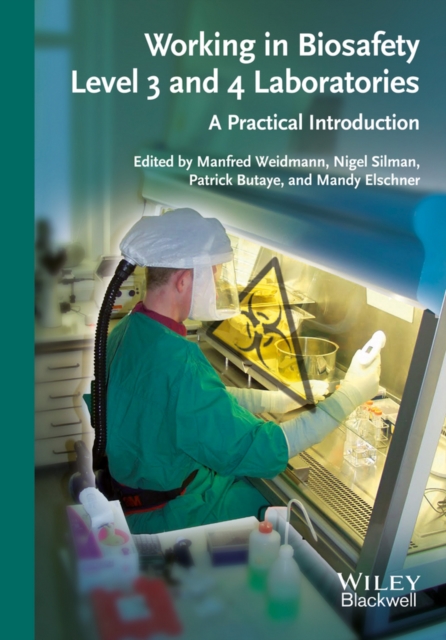
Working in Biosafety Level 3 and 4 Laboratories : A Practical Introduction
The first training manual for new staff working in BSL3/4 labs. This guide is based on a course developed in 2007 by the EU COST action group 28b which serves as a standard for many courses BSL3/4 training courses worldwide. The four-day course consists of lectures and practical training with the lecturers covering all the different possibilities of organising a BSL-3/4 lab including the adaptation to the local requirements of biosafety, safety at work, and social regulations. This book covers bio-containment, hazard criteria and categorisation of microbes, technical specifications of BSL-3 laboratories and ABSL-3 laboratories, personal protective gear, shipping BSL-3 and BSL-4 organisms according to UN and IATA regulations, efficacy of inactivation procedures, fumigation, learning from a history of lab accidents, handling samples that arrive for diagnostic testing and bridging the gap between the requirements of bio-containment and diagnostics. Course participants can not only use the book for their actual training event but it will remain a useful reference throughout their career in BSL3/4 labs. Mandy C. Elschner is a researcher at the Friedrich-Loeffler-Institute, Federal Research Institute for Animal Health, Institute for Bacterial Infections and Zoonoses, Jena, Germany. She leads the working group ?BSL 3-agents? and is the head of the Reference Laboratories for Glanders and Anthrax. She obtained her academic degree at the University of Leipzig and authored and co-authored in 25 national and international publications. Patrick Butaye is a senior researcher active at the Veterinary and Agrochemical Research center and a professor at the University of Ghent, Faculty of Veterinary medicine. He obtained his academic degrees at the University of Ghent. He authored and co-authored in more than 70 international scientific publications. Manfred Weidmann is a senior scientist at the Department of Virology of the University Medical Center Göttingen Germany. He obtained his degree from the Johannes-Gutenberg University of Mainz working on the pathogenesis of Clostridium difficille. Ever since he has worked on developing rapid diagnostic tools for the detection of arboviruses and haemorrhagic fever viruses in cooperation with partners from third world countries. He obtained the 2003 Abbot Diagnostic Award. He authored and co-authored 28 international scientific publications. Nigel Silman is the Strategic Coordinator for Research Development at the Health Protection Agencys? Centre for Emergency Preparedness Response at Porton Down in the UK. He is the HPA research lead for Diagnostics and Detection and also responsible for the scientific overview of specialist reference and contract microbiology services for a range of exotic emerging infectious diseases. He has authored and co-authored 26 international scientific publications.
eBook
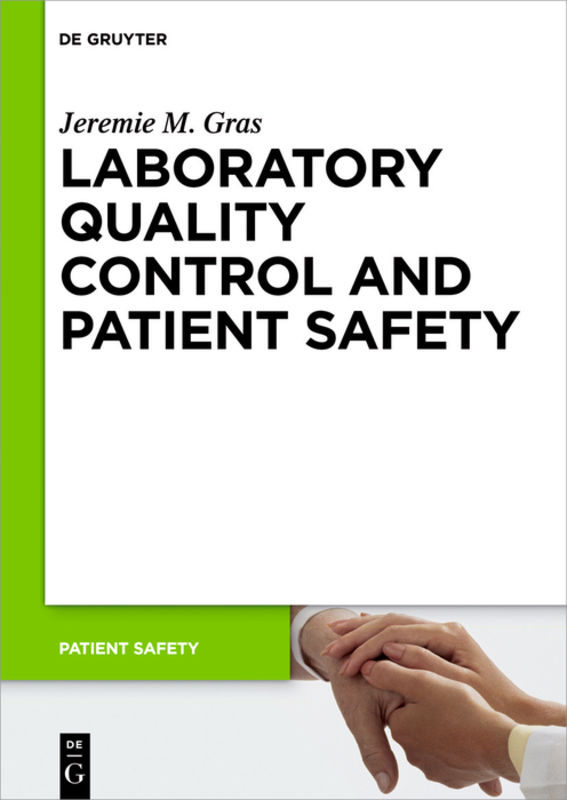
Laboratory quality control and patient safety
Every clinical laboratory devotes considerable resources to Quality Control. Recently, the advent of concepts such as Analytical Goals, Biological Variation, Six Sigma and Risk Management has generated a renewed interest in the way to perform QC. However, laboratory QC practices remain highly non-standardized and a lot of QC questions are left unanswered. The objective of this book is to propose a roadmap for the application of an integrated QC protocol that ensures the safety of patient results in the everyday lab routine.
eBook
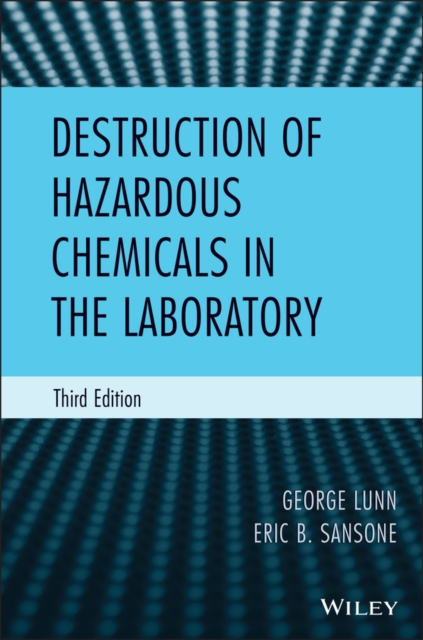
Destruction of hazardous chemicals in the laboratory
The fully updated reference on degrading and disposing of hazardous chemicals in the laboratory When it's time for laboratory technicians to get rid of hazardous materials, they can't simply dump them in the trash. Detailed procedures need to be followed to safely degrade and dispose of hazardous chemicals-from bulk quantities of material to accidental spills. This new edition of Destruction of Hazardous Chemicals in the Laboratory includes validated methods for safely degrading specific compounds, such as nitrosamines and aflatoxins, as well as general strategies that are applicable to all organic compounds. In addition, promising emerging technologies, such as advanced oxidation procedures, that are applicable to the destruction of hazardous compounds in the laboratory are discussed. Practical details are provided so these procedures can be readily implemented in the laboratory, often by technicians, without the use of exotic reagents or special equipment. Methods for the destruction of pharmaceuticals have been placed in a new and greatly expanded section, and many new monographs, including some on dealing with toxins derived from biological agents, are included. Destruction of Hazardous Chemicals in the Laboratory, Third Edition integrates all the available validated procedures for the safe destruction of hazardous chemicals in the laboratory into one complete volume. No comparable text in this field provides such a wealth of in-depth coverage on such an important topic. Together with books on the hazardous properties of chemicals and general precautionary procedures, this practical guide should form the nucleus of any library concerned with chemical safety.
eBook
Exploring Differences in Student Learning and Behavior Between Real-life and Virtual Reality Chemistry Laboratories
Recent global events and educational trends have led schools to heavily rely on digital media to educate their students. Science classes, in particular, stand to lose substantial learning opportunities without the ability to provide physical laboratory experiences. Virtual reality (VR) technology has the potential to resolve this issue, but little is known if VR environments can produce similar results to real-life (RL) science learning environments. This 2 × 1, between-subjects study compares students’ learning results and safety behaviors in VR and RL chemistry laboratories. The study attempts to identify differences in learning experience (i.e., general chemistry content, experiment comprehension, laboratory safety knowledge) and laboratory safety behavior. Results indicate learning general content knowledge, laboratory skills, and procedure-related safety behaviors were comparable between RL and VR conditions, but clean-up behaviors were less frequent in VR. Also, the exploratory, risk-free nature of VR environments may have allowed the learners to elaborate and reflect more on general chemistry content and laboratory safety knowledge than in the RL environment.
Journal Article

Visual communication design in laboratory safety effectiveness and optimization of warning signs
This study proposes a comprehensive framework for evaluating and optimizing laboratory warning sign systems, grounded in the principles of visual communication design, cognitive psychology, and safety management. A mixed-methods experimental design involving 120 participants was employed, integrating eye-tracking analysis, comprehension and memory assessments, and behavioral response evaluations. The results identified key factors contributing to the effectiveness of warning signs, including color contrast ratio, symbol standardization, and information hierarchy. A validated optimization procedure was developed, emphasizing visual detectability, information organization, and contextual relevance. It led to significant improvements in attention capture (35.9%), hazard detection accuracy (42.3%), and procedural compliance (37.8%). Evidence-based design specifications for laboratory warning signs were established to balance standardization requirements with the need for contextual adaptation across diverse laboratory environments. These specifications were further validated through a case study conducted at Fujian University of Technology, demonstrating the effective translation of theoretical frameworks into enhanced safety communication practices.
Journal Article
