
Catalogue Search | MBRL


Are you sure you want to remove the book from the shelf?

{{itemTitle}}
87,523
result(s) for
"Laboratory models"
Sort by:


Animal models and human reproduction
Our knowledge of reproductive biology has increased enormously in recent years on cellular, molecular, and genetic levels, leading to significant breakthroughs that have directly benefitted in vitro fertilization (IVF) and other assisted reproductive technologies (ART) in humans and animal systems. Animal Models and Human Reproduction presents a comprehensive reference that reflects the latest scientific research being done in human reproductive biology utilizing domestic animal models. Chapters on canine, equine, cow, pig, frog, and mouse models of reproduction reflect frontier research in placental biology, ovarian function and fertility, non-coding RNAs in gametogenesis, oocyte and embryo metabolism, fertilization, cryopreservation, signal transduction pathways, chromatin dynamics, epigenetics, reproductive aging, and inflammation. Chapters on non-human primate models also highlight recent advancements into such issues as human in vitro fertilization (IVF) and assisted reproductive technologies (ART). This book offers animal scientists, reproductive biology scientists, clinicians and practitioners, invaluable insights into a wide range of issues at the forefront of human reproductive health.
eBook

Fundamental Neuropathology for Pathologists and Toxicologists
This book offers pathologists, toxicologists, other medical professionals, and students an introduction to the discipline and techniques of neuropathology – including chemical and environmental, biological, medical, and regulatory details important for performing an analysis of toxicant-induced neurodiseases. In addition to a section on fundamentals, the book provides detailed coverage of current practices (bioassays, molecular analysis, and nervous system pathology) and practical aspects (data interpretation, regulatory considerations, and tips for preparing reports).
eBook
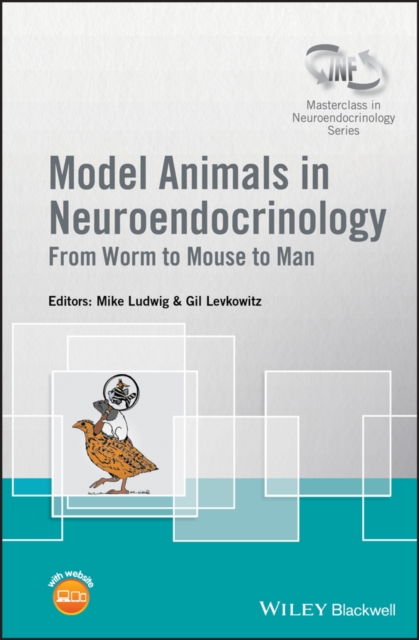
Model Animals in Neuroendocrinology
Model Animals in Neuroendocrinology: From Worm to Mouse to Man offers a masterclass on the opportunities that different model animals offer to the basic understanding of neuroendocrine functions and mechanisms of action and the implications of this understanding. The authors review recent advances in the field emanating from studies involving a variety of animal models, molecular genetics, imaging technologies, and behavior assays. These studies helped unravel mechanisms underlying the development and function of neuroendocrine systems. The book highlights how studies in a variety of model animals, including, invertebrates, fish, birds, rodents and mammals has contributed to our understanding of neuroendocrinology. Model Animals in Neuroendocrinology provides students, scientists and practitioners with a contemporary account of what can be learnt about the functions of neuroendocrine systems from studies across animal taxonomy. This is the seventh volume in the Masterclass in Neuroendocrinology Series, a co-publication between Wiley and the INF (International Neuroendocrine Federation) that aims to illustrate highest standards and encourage the use of the latest technologies in basic and clinical research and hopes to provide inspiration for further exploration into the exciting field of neuroendocrinology.
eBook

intelligent movement machine
This book offers a fundamental new theory of motor cortex organization: the rendering of the movement repertoire onto the cortex. The action repertoire of an animal is highly dimensional, whereas the cortical sheet is two-dimensional. Rendering the action space onto the cortex therefore results in a complex pattern, explaining the otherwise inexplicable details of motor cortex organization. This book includes a complete history of motor cortex research from its discovery to the present, a discussion of the major issues in motor cortex research, and an account of recent experiments that led to the book's “action map” view. Though focused on motor cortex, the book includes a range of topics from an explanation of how primates put food in their mouths, to the origins of social behavior such as smiling and laughing, to the mysterious link between movement disorders and autism.
eBook

Seamount Subduction and Megathrust Seismicity: The Interplay Between Geometry and Friction
Subducting seamounts are recognized as one of the key features influencing megathrust earthquakes. However, whether they trigger or arrest ruptures remains debated. Here, we use analog models to study the influence of a single seamount on megathrust earthquakes, separating the effect of topography from that of friction. Four different model configurations have been developed (i.e., flat interface, high and low friction seamount, low friction patch). In our models, the seamount reduces recurrence time, interseismic coupling, and fault strength, suggesting that it acts as a barrier: 80% of the ruptures concentrate in flat regions that surround the seamount and only smaller magnitude earthquakes nucleate above it. The low‐friction zone, which mimics the fluid accumulation or the establishment of fracture systems in natural cases, seems to be the most efficient in arresting rupture propagation in our experimental setting. Plain Language Summary Seamounts ‐ extinct volcanoes ‐ are ubiquitous features of the seafloor of subducting plates. During their descent toward the mantle, seamounts are squeezed between the overriding‐ and subducting plates, creating a geometrical and mechanical discontinuity that is thought to control the largest earthquakes that occur on Earth. It is not known, however, whether they trigger or arrest earthquakes, as a variety of observations have been used to support one or the other hypothesis. Here, we tackle this subject using scaled laboratory models that allow reproduction of large earthquakes. Our models support a scenario where subducting seamounts primarily arrest rupture propagation, limiting therefore expected maximum magnitudes. Our models also suggest that subducting seamounts might influence the recurrence time of large earthquakes by decreasing their frequency. Key Points We investigated the effect of seamount subduction on megathrust earthquakes by isolating the role of geometry from that of friction Seamounts act primarily as barriers to earthquake propagation, promoting small ruptures and decreasing seismic coupling Reduced friction displays maximum barrier efficiency, a configuration likely associated with fluids or fracture systems in nature
Journal Article
Inverse Grading Emerges From Particle‐Scale Migration Under Seasonal Freeze‐Thaw Forcing: Evidence From Multi‐Year Monitoring and Physical Modeling
Inverse grading, where coarse particles overlay finer materials, is common on talus slopes, yet its progressive formation under realistic conditions is rarely quantified. We integrate multi‐year field observations with controlled freeze‐thaw experiments to elucidate the processes driving particle migration that result in inverse grading and slope creep. Data from a talus slope in Northeast China show spatially varied downslope movements (2.0–19 mm/a), seasonal uplift during freezing, and net subsidence upon thawing. Laboratory models reveal systematic sorting: small particles move downward and downslope through expanded pores, while large particles shift and rotate with minimal descent. This vertical mobility contrast (small vs. large displaced by factors of 11–15) results in inverse grading over time. Depth‐dependent displacement shows differential deformation, with surface layers moving more than deeper layers. Our findings demonstrate that seasonal particle‐scale variations consistently drive talus restructuring, linking granular dynamics to landscape deformation and enhancing risk assessments in cold regions.
Journal Article

Diffusion-free Dynamics in Rotating Spherical Shell Convection Driven by Internal Heating and Cooling
The bulk properties of convection in stellar and giant planet interiors are often assumed to be independent of the molecular diffusivities, which are very small. By contrast, simulations of this process in rotating spherical shells, which are typically driven by conductive boundary heat fluxes, generally yield results that depend on the diffusivity. This makes it challenging to extrapolate these simulation results to real objects. However, laboratory models and Cartesian-box simulations suggest that diffusion-free dynamics are more readily obtained if convection is driven using prescribed internal heating and cooling instead of boundary fluxes. Here, we apply this methodology to simulations of Boussinesq, hydrodynamic rotating spherical shell convection. We find that this setup unambiguously yields diffusion-free behavior for some bulk properties of the convection, such as the radial temperature contrast and the convective heat transport. Moreover, the transition from prograde to retrograde equatorial zonal flow is diffusion free and only depends on the convective Rossby number. The diffusivity dependence of other bulk properties is regime dependent. In simulations that are rotationally constrained, the convective velocities and the strength and structure of the zonal flow are diffusion dependent, although the zonal flow appears to approach a diffusion-free state for sufficiently high supercriticality. In simulations that are either uninfluenced by rotation or influenced by rotation only at large scales, diffusion-free convective velocities and zonal flows are obtained. The result that many aspects of our idealized simulations are diffusion free has promising implications for the development of realistic stellar and giant planet convection models that can access diffusion-free regimes.
Journal Article

A quantitative framework reveals traditional laboratory growth is a highly accurate model of human oral infection
Bacterial behavior and virulence during human infection is difficult to study and largely unknown, as our vast knowledge of infection microbiology is primarily derived from studies using in vitro and animal models. Here, we characterize the physiology of Porphyromonas gingivalis, a periodontal pathogen, in its native environment using 93 published metatranscriptomic datasets from periodontally healthy and diseased individuals. P. gingivalis transcripts were more abundant in samples from periodontally diseased patients but only above 0.1% relative abundance in one-third of diseased samples. During human infection, P. gingivalis highly expressed genes encoding virulence factors such as fimbriae and gingipains (proteases) and genes involved in growth and metabolism, indicating that P. gingivalis is actively growing during disease. A quantitative framework for assessing the accuracy of model systems showed that 96% of P. gingivalis genes were expressed similarly in periodontitis and in vitro midlogarithmic growth, while significantly fewer genes were expressed similarly in periodontitis and in vitro stationary phase cultures (72%) or in a murine abscess infection model (85%). This high conservation in gene expression between periodontitis and logarithmic laboratory growth is driven by overall low variance in P. gingivalis gene expression, relative to other pathogens including Pseudomonas aeruginosa and Staphylococcus aureus. Together, this study presents strong evidence for the use of simple test tube growth as the gold standard model for studying P. gingivalis biology, providing biological relevance for the thousands of laboratory experiments performed with logarithmic phase P. gingivalis. Furthermore, this work highlights the need to quantitatively assess the accuracy of model systems.
Journal Article

Physicochemical Attributes of Tomatoes after Different Forms of Harvesting and Transportation for Industrial Processing
The mechanized harvesting and transportation of tomatoes can significantly impact their physicochemical characteristics, affecting quality and industrial processing efficiency. This study aimed to evaluate the effects of harvesting methods and transportation conditions on the firmness, titratable acidity (TA), total soluble solids (TSS - °Brix), pH, and percentage of loss of fresh mass (LFM) of tomatoes intended for industrial use.
The mechanized harvesting and transportation of tomatoes can significantly impact their physicochemical characteristics, affecting quality and industrial processing efficiency. This study aimed to evaluate the effects of harvesting methods and transportation conditions on the firmness, TA, TSS (°Brix), pH, and percentage of LFM in tomatoes intended for industrial use.
Mechanized harvesting reduced tomato firmness, TA, pH, and increased mass loss. Manual harvesting resulted in 29.7% greater firmness than mechanical harvesting. The vibration effects varied depending on the floor and direction within the container, but container type did not significantly influence tomato quality. The position of the fruit in the transport medium affected firmness, with tomatoes at the rear exhibiting greater firmness and lower quality loss. Depth was negatively correlated with firmness, LFM, TA, and pH. The LFM increased with longer unloading times.
The findings highlight the need for improved handling and logistics strategies in the tomato production chain to reduce quality deterioration during harvesting and transportation. Effective interventions can minimize economic losses and increase industrial processing efficiency. Additionally, the results of this study suggest that laboratory models that use equipment such as shakers can replicate these effects for other bulk-transported crops, including fresh fruits and tubers.
Journal Article