
Catalogue Search | MBRL


Are you sure you want to remove the book from the shelf?

{{itemTitle}}
25,648
result(s) for
"Laborer"
Sort by:

Migrant Youth, Transnational Families, and the State
Each year, more than half a million migrant children journey from countries around the globe and enter the United States with no lawful immigration status; many of them have no parent or legal guardian to provide care and custody. Yet little is known about their experiences in a nation that may simultaneously shelter children while initiating proceedings to deport them, nor about their safety or well-being if repatriated. Migrant Youth, Transnational Families, and the State examines the draconian immigration policies that detain unaccompanied migrant children and draws on U.S. historical, political, legal, and institutional practices to contextualize the lives of children and youth as they move through federal detention facilities, immigration and family courts, federal foster care programs, and their communities across the United States and Central America.Through interviews with children and their families, attorneys, social workers, policy-makers, law enforcement, and diplomats, anthropologist Lauren Heidbrink foregrounds the voices of migrant children and youth who must navigate the legal and emotional terrain of U.S. immigration policy. Cast as victims by humanitarian organizations and delinquents by law enforcement, these unauthorized minors challenge Western constructions of child dependence and family structure. Heidbrink illuminates the enduring effects of immigration enforcement on its young charges, their families, and the state, ultimately questioning whose interests drive decisions about the care and custody of migrant youth.
eBook

They Saved the Crops
At the outset of World War II, California agriculture seemed to be on the cusp of change. Many Californians, reacting to the ravages of the Great Depression, called for a radical reorientation of the highly exploitative labor relations that had allowed the state to become such a productive farming frontier. But with the importation of the first braceros-\"guest workers\" from Mexico hired on an \"emergency\" basis after the United States entered the war-an even more intense struggle ensued over how agriculture would be conducted in the state. Esteemed geographer Don Mitchell argues that by delineating the need for cheap, flexible farm labor as a problem and solving it via the importation of relatively disempowered migrant workers, an alliance of growers and government actors committed the United States to an agricultural system that is, in important respects, still with us. They Saved the Crops is a theoretically rich and stylistically innovative account of grower rapaciousness, worker militancy, rampant corruption, and bureaucratic bias. Mitchell shows that growers, workers, and officials confronted a series of problems that shaped-and were shaped by-the landscape itself. For growers, the problem was finding the right kind of labor at the right price at the right time. Workers struggled for survival and attempted to win power in the face of economic exploitation and unremitting violence. Bureaucrats tried to harness political power to meet the demands of, as one put it, \"the people whom we serve.\" Drawing on a deep well of empirical materials from archives up and down the state, Mitchell's account promises to be the definitive book about California agriculture in the turbulent decades of the mid-twentieth century.
eBook

Labor and the locavore
In the blizzard of attention around the virtues of local food production, food writers and activists place environmental protection, animal welfare, and saving small farms at the forefront of their attention. Yet amid this turn to wholesome and responsible food choices, the lives and working conditions of farmworkers are often an afterthought. Labor and the Locavore focuses on one of the most vibrant local food economies in the country, the Hudson Valley that supplies New York restaurants and farmers markets. Based on more than a decade's in-depth interviews with workers, farmers, and others, Gray's examination clearly shows how the currency of agrarian values serves to mask the labor concerns of an already hidden workforce. She also explores the historical roots of farmworkers' predicaments and examines the ethnic shift from Black to Latino workers. With an analysis that can be applied to local food concerns around the country, this book challenges the reader to consider how the mentality of the alternative food movements implies a comprehensive food ethic that addresses workers' concerns.
eBook

Monopsony in Motion
What happens if an employer cuts wages by one cent? Much of labor economics is built on the assumption that all the workers will quit immediately. Here, Alan Manning mounts a systematic challenge to the standard model of perfect competition. Monopsony in Motion stands apart by analyzing labor markets from the real-world perspective that employers have significant market (or monopsony) power over their workers. Arguing that this power derives from frictions in the labor market that make it time-consuming and costly for workers to change jobs, Manning re-examines much of labor economics based on this alternative and equally plausible assumption. The book addresses the theoretical implications of monopsony and presents a wealth of empirical evidence. Our understanding of the distribution of wages, unemployment, and human capital can all be improved by recognizing that employers have some monopsony power over their workers. Also considered are policy issues including the minimum wage, equal pay legislation, and caps on working hours. In a monopsonistic labor market, concludes Manning, the \"free\" market can no longer be sustained as an ideal and labor economists need to be more open-minded in their evaluation of labor market policies. Monopsony in Motion will represent for some a new fundamental text in the advanced study of labor economics, and for others, an invaluable alternative perspective that henceforth must be taken into account in any serious consideration of the subject.
eBook

Hirelings
InHirelings, Jennifer Dorsey recreates the social and economic milieu of Maryland's Eastern Shore at a time when black slavery and black freedom existed side by side. She follows a generation of manumitted African Americans and their freeborn children and grandchildren through the process of inventing new identities, associations, and communities in the early nineteenth century. Free Africans and their descendants had lived in Maryland since the seventeenth century, but before the American Revolution they were always few in number and lacking in economic resources or political leverage. By contrast, manumitted and freeborn African Americans in the early republic refashioned the Eastern Shore's economy and society, earning their livings as wage laborers while establishing thriving African American communities.
As free workers in a slave society, these African Americans contested the legitimacy of the slave system even while they remained dependent laborers. They limited white planters' authority over their time and labor by reuniting their families in autonomous households, settling into free black neighborhoods, negotiating labor contracts that suited the needs of their households, and worshipping in the African Methodist Episcopal Church. Some moved to the cities, but many others migrated between employers as a strategy for meeting their needs and thwarting employers' control. They demonstrated that independent and free African American communities could thrive on their own terms. In all of these actions the free black workers of the Eastern Shore played a pivotal role in ongoing debates about the merits of a free labor system.
eBook

To March for Others
In 1966, members of the Student Nonviolent Coordinating Committee, an African American civil rights group with Southern roots, joined Cesar Chavez and the United Farm Workers union on its 250-mile march from Delano to Sacramento, California, to protest the exploitation of agricultural workers. SNCC was not the only black organization to support the UFW: later on, the NAACP, the National Urban League, the Southern Christian Leadership Conference, and the Black Panther Party backed UFW strikes and boycotts against California agribusiness throughout the late 1960s and early 1970s.
To March for Othersexplores the reasons why black activists, who were committed to their own fight for equality during this period, crossed racial, socioeconomic, geographic, and ideological divides to align themselves with a union of predominantly Mexican American farm workers in rural California. Lauren Araiza considers the history, ideology, and political engagement of these five civil rights organizations, representing a broad spectrum of African American activism, and compares their attitudes and approaches to multiracial coalitions. Through their various relationships with the UFW, Araiza examines the dynamics of race, class, labor, and politics in twentieth-century freedom movements. The lessons in this eloquent and provocative study apply to a broader understanding of political and ethnic coalition building in the contemporary United States.
eBook

Sweet tyranny
In this innovative grassroots to global study, Kathleen Mapes explores how the sugar beet industry transformed the rural Midwest through the introduction of large factories, contract farming, and foreign migrant labor. Sweet Tyranny calls into question the traditional portrait of the rural Midwest as a classless and homogenous place untouched by industrialization and imperialism. Identifying rural areas as centers for modern American industrialism, Mapes contributes to the ongoing expansion of labor history from urban factory workers to rural migrant workers. She engages with a full range of people involved in this industry, including midwestern family farmers, industrialists, eastern European and Mexican immigrants, child laborers, rural reformers, Washington politicos, and colonial interests. _x000B__x000B_Engagingly written, this book demonstrates that capitalism was not solely a force from above but was influenced by the people below who defended their interests in an ever-expanding market of imperialist capitalism. The fact that the United States acquired its own sugar producing empire at the very moment that its domestic sugar beet industry was coming into its own, as well as the fact that the domestic sugar beet industry came to depend on immigrant workers as the basis of its field labor force, magnified the local and global ties as well as the political battles that ensued. As such, the issue of how Americans would satiate their growing demand for sweetness--whether with beet sugar grown at home or with cane sugar raised in colonies abroad--became part of a much larger debate about the path of industrial agriculture, the shape of American imperialism, and the future of immigration.
eBook
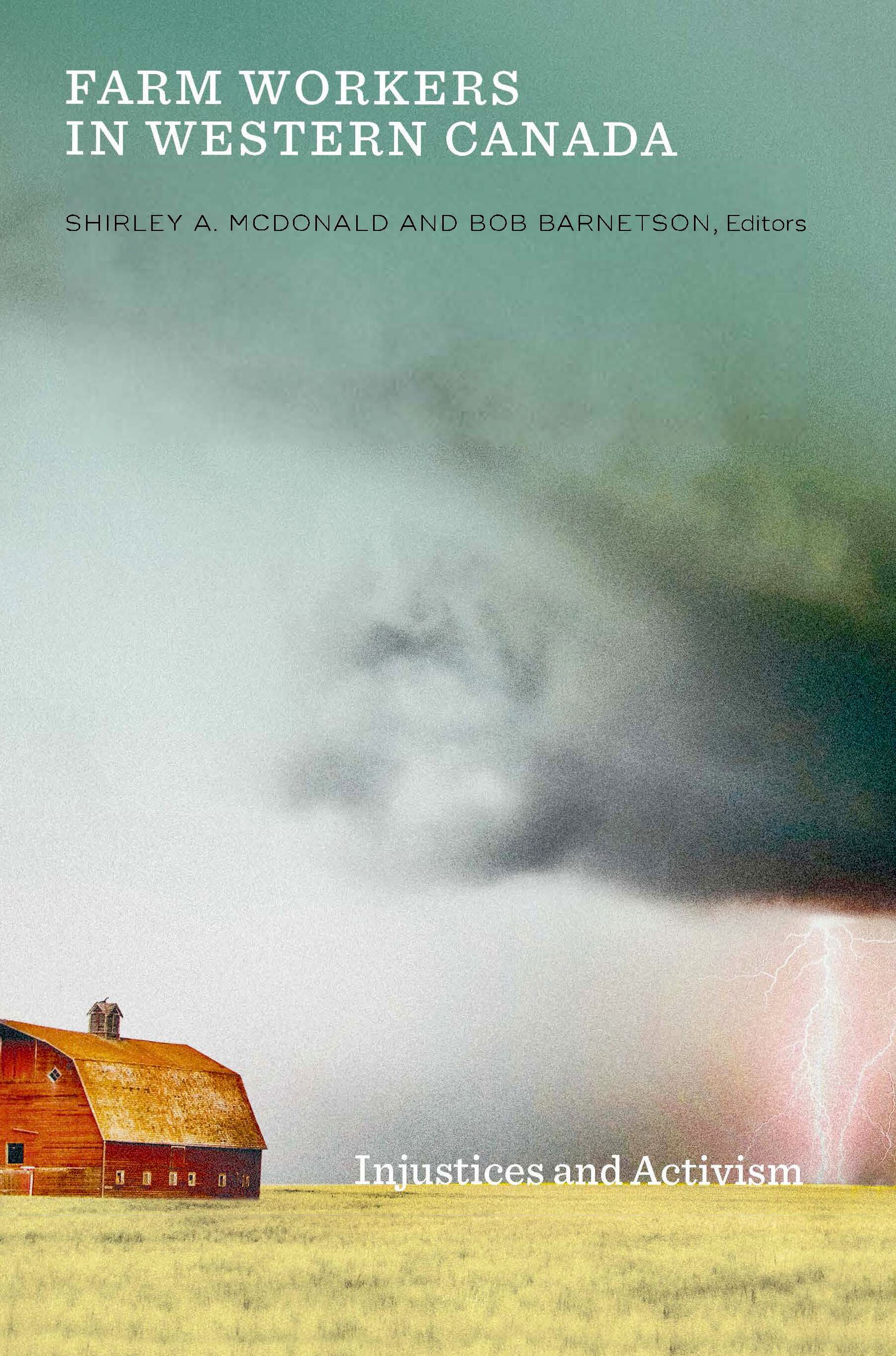
Farm Workers in Western Canada
Bill 6, the government of Alberta's contentious farm workers' safety legislation, sparked public debate as no other legislation has done in recent years. The Enhanced Protection for Farm and Ranch Workers Act provides a right to work safely and a compensation system for those killed or injured at work, similar to other provinces. In nine essays, contributors to Farm Workers in Western Canada place this legislation in context. They look at the origins, work conditions, and precarious lives of farm workers in terms of larger historical forces such as colonialism, land rights, and racism. They also examine how the rights and privileges of farm workers, including seasonal and temporary foreign workers, conflict with those of their employers, and reveal the barriers many face by being excluded from most statutory employment laws, sometimes in violation of the Canadian Charter of Rights and Freedoms. Contributors: Gianna Argento, Bob Barnetson, Michael J. Broadway, Jill Bucklaschuk, Delna Contractor, Darlene A. Dunlop, Brynna Hambly (Takasugi), Zane Hamm, Paul Kennett, Jennifer Koshan, C.F. Andrew Lau, J. Graham Martinelli, Shirley A. McDonald, Robin C. McIntyre, Nelson Medeiros, Kerry Preibisch, Heidi Rolfe, Patricia Tomic, Ricardo Trumper, and Kay Elizabeth Turner.
eBook

Sal si puedes (escape if you can)
In the summer of 1968 Peter Matthiessen met Cesar Chavez for the first time. They were the same age: forty-one. Matthiessen lived in New York City, while Chavez lived in the Central Valley farm town of Delano, where the grape strike was unfolding. This book is Matthiessen's panoramic yet finely detailed account of the three years he spent working and traveling with Chavez, including to Sal Si Puedes, the San Jose barrio where Chavez began his organizing. Matthiessen provides a candid look into the many sides of this enigmatic and charismatic leader who lived by the laws of nonviolence. Sal Si Puedes is less reportage than living history. In its pages a whole era comes alive: the Chicano, Black Power, and antiwar movements; the browning of the labor movement; Chavez's fasts; the nationwide boycott of California grapes. When Chavez died in 1993, tens of thousands gathered at his funeral. It was a clear sign of how beloved he was and how important his life had been. A new foreword by Marc Grossman considers the significance of Chavez's legacy for our time. As well as serving as an indispensable guide to the 1960s, this book rejuvenates the extraordinary vitality of Chavez's life and spirit, giving his message a renewed and much-needed urgency.
eBook

The last best place? : gender, family, and migration in the new West
Southwest Montana is beautiful country, evoking mythologies of freedom and escape long associated with the West. Partly because of its burgeoning presence in popular culture, film, and literature, including William Kittredge's anthology The Last Best Place, the scarcely populated region has witnessed an influx of wealthy, white migrants over the last few decades. But another, largely invisible and unstudied type of migration is also present. Though Mexican migrants have worked on Montana's ranches and farms since the 1920s, increasing numbers of migrant families—both documented and undocumented—are moving to the area to support its growing construction and service sectors. The Last Best Place? asks us to consider the multiple racial and class-related barriers that Mexican migrants must negotiate in the unique context of Montana's rural gentrification. These daily life struggles and inter-group power dynamics are deftly examined through extensive interviews and ethnography, as are the ways gender structures inequalities within migrant families and communities. But Leah Schmalzbauer's research extends even farther to highlight the power of place and demonstrate how Montana's geography and rurality intersect with race, class, gender, family, illegality, and transnationalism to affect migrants' well-being and aspirations. Though the New West is just one among many new destinations, it forces us to recognize that the geographic subjectivities and intricacies of these destinations must be taken into account to understand the full complexity of migrant life.
eBook