
Catalogue Search | MBRL


Are you sure you want to remove the book from the shelf?

{{itemTitle}}
840
result(s) for
"Lake Baikal"
Sort by:


Impact of precipitation and evaporation change on flood runoff over Lake Baikal catchment
This paper addresses the nexus of climate change and variability, soil moisture and surface runoff over the Lake Baikal catchment. Water level and distribution of dissolved and suspended matter over Lake Baikal are strongly affected by river inflow during rain-driven floods. In this study, we evaluate river flow changes at 44 streamflow gauges as well as related precipitation, evaporation, potential evaporation and soil moisture obtained from the ERA5-Land dataset. Based on Sen’s slope trend estimator, Mann–Kendall non-parametric test, and using dominance analysis, we estimated the influence of meteorological parameters on river flow during 1979–2019. We found a significant correlation between the precipitation elasticity of river flow and catchment characteristics. Half of the gauges in the eastern part of the Selenga River basin showed a significant decreasing trend of average and maximum river flow (up to −2.9%/year). No changes in the central volume date of flood flow have been found. The reduction in rainfall amount explains more than 60% of runoff decrease. A decrease in evaporation is observed in areas where precipitation decrease is higher than 0.8%/year. Catchments, where the precipitation trends are not as substantial, are associated with increasing evaporation as a result of the increasing potential evaporation. Negative precipitation trends are accompanied by negative trends of soil moisture. Finally, the study reveals the sensitivity of catchments with steep slopes located in humid areas to precipitation change.
Journal Article


Wildfires as a Source of PAHs in Surface Waters of Background Areas (Lake Baikal, Russia)
Polycyclic aromatic hydrocarbons (PAHs) were detected in different types of PAH-containing samples collected in Lake Baikal during wildfires in the adjacent areas. The set of studied samples included the following: (i) water from the upper layer (5 m); (ii) water from the surface microlayer; (iii) water from the lake tributaries; (iv) water from deep layers (400 m); and (v) aerosol from the near-water layer. Ten PAHs were detected in the water samples: naphthalene, 1-methylnaphthalene, 2-methylnaphthalene acenaphthylene, acenaphthene, fluorene, phenanthrene, fluoranthene, pyrene, and chrysene. The total PAH concentrations (ƩPAHs) were detected in a wide range from 9.3 to 160 ng/L, characterizing by seasonal, intersessional, and spatial variability. In September 2016, the ƩPAH concentration in the southern basin of the lake reached 610 ng/L in the upper water layer due to an increase in fluorene, phenanthrene, fluoranthene, and pyrene in the composition of the PAHs. In June 2019, ƩPAHs in the water from the northern basin of the lake reached 290 ng/L, with the naphthalene and phenanthrene concentrations up to 170 ng/L and 92 ng/L, respectively. The calculation of back trajectories of the atmospheric transport near Lake Baikal, satellite images, and ƩPAH concentrations in the surface water microlayer of 150 to 960 ng/L confirm the impact of wildfires on Lake Baikal, with which the seasonal increase in the ƩPAH concentrations was associated in 2016 and 2019. The toxicity of PAHs detected in the water of the lake in extreme situations was characterized by the total value of the toxic equivalent for PAHs ranging from 0.17 to 0.22 ng/L, and a possible ecological risk of the impact on biota was assessed as moderate.
Journal Article


Study of Aerosol Nano- and Submicron Particle Compositions in the Atmosphere of Lake Baikal During Natural Fire Events and Their Interaction with Water Surface
In 1996, Lake Baikal was declared a UNESCO World Heritage Site. It contains nearly 25% of the world’s fresh surface water. In recent years, anthropogenic impacts on the ecosystem of Lake Baikal have been increasing due to the development of industry in the region, expansion of the tourist infrastructure, and recreational areas of the coastal zone of the lake. In addition, an increase in the frequency of forest fires has already led to irreversible destructive processes in some areas of the lake. This project investigates the behavior of anthropogenic and natural atmospheric aerosols during forest fires that swept large areas of Siberia and their potential transportation onto Lake Baikal surface. It was found that quite substantial nano-size and submicron aerosol fluxes could reach the water surface and alter ecosystem of the lake. Such outcome is especially important as the amount of pollutants transported through the air–water interface during bush fire events is almost one order of magnitude higher as compared to the fire free scenario.
Journal Article

Blood Parameters of the Siberian Roach Rutilus rutilus Affected by Haff Disease from Lake Kotokelskoe (Lake Baikal Basin, Russia)
Blood parameters of Siberian roach affected by Haff disease from Lake Kotokelskoe (Lake Baikal basin) are presented for the first time. In 2008, the lake experienced an ecological catastrophe: an outbreak of Haff disease occurred for the first time in Eastern Siberia. After the onset of toxicosis, the individuals showed signs of dyserythropoiesis and disturbances in leukopoiesis—degenerative changes in erythrocytes and leukocytes, the development of anemia, inflammatory processes, and a decrease in the number of lymphoid cells, initiated by a combination of negative environmental factors, including, probably, the impact of cyanobacterial products. A comparison of the hematological parameters of roach from the transformed lake with those of roach from a healthy area (Chivyrkuisky Bay of Lake Baikal) 6 years after the outbreak of Haff disease showed the presence of destabilization processes in the immune and hematopoietic systems.
Journal Article
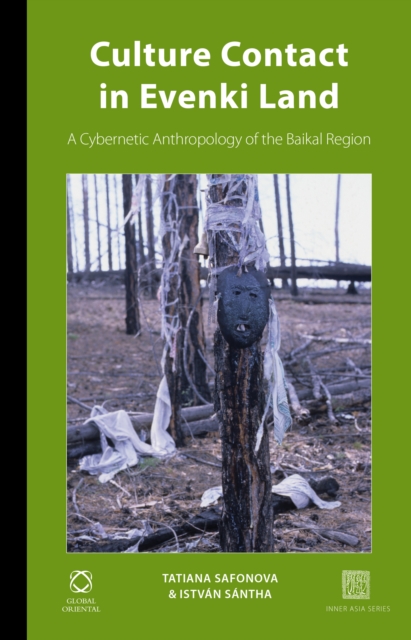
Culture Contact in Evenki Land
This anthropological monograph contains the results of recent fieldwork conducted among the Evenki people in East Siberia, Russian Federation. It is an ethnography of a Siberian people that will be welcomed by professional social anthropologists as well as by specialists in Russian and Siberian Studies.
eBook
Observed trends of climate and land cover changes in Lake Baikal basin
Land cover and vegetation in Lake Baikal basin (LBB) are considered to be highly susceptible to climate change. However, there is less information on the change trends in both climate and land cover in LBB and thus less understanding of the watershed sensitivity and adaptability to climate change. Here we identified the spatial and temporal patterns of changes in climate (from 1979 to 2016), land cover, and vegetation (from 2000 to 2010) in the LBB. During the past 40 years, there was a little increase in precipitation while air temperature has increased by 1.4 °C. During the past 10 years, land cover has changed significantly. Herein grassland, water bodies, permanent snow, and ice decreased by 485.40 km2, 161.55 km2 and 2.83 km2, respectively. However, forest and wetland increased by 111.40 km2 and 202.90 km2, respectively. About 83.67 km2 area of water bodies has been converted into the wetland. Also, there was a significant change in Normalized Difference Vegetation Index (NDVI), the NDVI maximum value was 1 in 2000, decreased to 0.9 in 2010. Evidently, it was in the mountainous areas and in the river basin that the vegetation shifted. Our findings have implications for predicting the safety of water resources and water eco-environment in LBB under global change.
Journal Article

The First Data on Harpacticoid Copepod Diversity of the Deep-Water Zone of Lake Baikal (Siberia, Russia)
Lake Baikal (LB) is the only freshwater ancient lake on Earth where animals inhabit all bathymetric zones down to the deepest sites (approximately 1640 m). However, there is very little data on the composition of their abyssal harpacticoid fauna. On the basis of the samples collected in LB in 2010–2017 at a depth of 270–1632 m, analysis of the fauna composition and species diversity of harpacticoids in the deep-water zone is presented. Studies were conducted in all parts of the lake, including areas of a hydrothermal, oil–methane seeps, and mud volcanoes. Nineteen Baikal endemic morphological species of the genera Bryocamptus, Attheyella, and Moraria (Baikalomoraria) were found. A brief description of the taxa morphology is presented. The genus Bryocamptus was the richest by species number at the studied sites, and Bryocamptus smirnovi Borutzky was the most frequent. The most diverse (8 species) was the fauna of the Saint Petersburg methane seep. Studies have shown that the taxonomic diversity of harpacticoid copepods in the deep-water zone of LB is lower than in its littoral zone. According to two non-parametric species estimators (Chao 2 and Jackknife 1), a 1.5-fold increase of species richness of harpacticoids of the LB abyssal is expected.
Journal Article