
Catalogue Search | MBRL


Are you sure you want to remove the book from the shelf?

{{itemTitle}}
293
result(s) for
"Lake Chad"
Sort by:

Lake drying and livelihood dynamics in Lake Chad: Unravelling the mechanisms, contexts and responses
This article examines lake drying and livelihood dynamics in the context of multiple Stressors through a case study of the \"Small Lake Chad\" in the Republic of Chad. Livelihoods research in regions experiencing persistent lake water fluctuations has largely focused on the wellbeing and security of lakeshore dwellers. Little is known about the mechanisms through which lake drying shapes livelihood drawbacks and opportunities, and whether locally evolved responses are enhancing livelihoods. Here we address these gaps using empirical, mixed-methods field research couched within the framework of livelihoods and human well-being contexts. The analysis demonstrates that limited opportunities outside agriculture, the influx of mixed ethnic migrants and the increasing spate of violence all enhance livelihood challenges. Livelihood opportunities centre on the renewal effects of seasonal flood pulses on lake waters and the learning opportunities triggered by past droughts. Although drying has spurred new adaptive behaviours predicated on seasonality, traditional predictive factors and the availability of assets, responses have remained largely reactive. The article points to where lake drying fits amongst changes in the wider socioeconomic landscape in which people live, and suggests that awareness of the particularities of the mechanisms that connect lake drying to livelihoods can offer insights into the ways local people might be assisted by governments and development actors.
Journal Article

Climate Change, Security, and the Resource Nexus: Case Study of Northern Nigeria and Lake Chad
This paper analyses the impacts of climate change and its implications for human security for the regions of Northern Nigeria and Lake Chad. The introduction identifies a gap between evidence on global environmental change and interactions on the ground; it positions the scope for a deeper understanding of the climate–security–resource nexus in Northern Nigeria and Lake Chad and consequences for the implementation of SDGs (Sustainable Development Goals). The section on methods describes the nexus concept and justifies adopting it. As a result of analysing the region, the paper sheds light on the conflict pathways triggered by failures in land grazing policy, which is further evidenced by a short comparison with Northern Kenya. A potentially novel contribution is discussed in terms of scaling up collaboration and green markets for the future of Lake Chad, along with an integrated agricultural nexus policy, both of which are ambitious in the spirit of mission-oriented policies and delivering on the SDGs.
Journal Article

Effect of single and multi-site calibration techniques on hydrological model performance, parameter estimation and predictive uncertainty: a case study in the Logone catchment, Lake Chad basin
Understanding hydrological processes at catchment scale through the use of hydrological model parameters is essential for enhancing water resource management. Given the difficulty of using lump parameters to calibrate distributed catchment hydrological models in spatially heterogeneous catchments, a multiple calibration technique was adopted to enhance model calibration in this study. Different calibration techniques were used to calibrate the Soil and Water Assessment Tool (SWAT) model at different locations along the Logone river channel. These were: single-site calibration (SSC); sequential calibration (SC); and simultaneous multi-site calibration (SMSC). Results indicate that it is possible to reveal differences in hydrological behavior between the upstream and downstream parts of the catchment using different parameter values. Using all calibration techniques, model performance indicators were mostly above the minimum threshold of 0.60 and 0.65 for Nash Sutcliff Efficiency (NSE) and coefficient of determination (R2) respectively, at both daily and monthly time-steps. Model uncertainty analysis showed that more than 60% of observed streamflow values were bracketed within the 95% prediction uncertainty (95PPU) band after calibration and validation. Furthermore, results indicated that the SC technique out-performed the other two methods (SSC and SMSC). It was also observed that although the SMSC technique uses streamflow data from all gauging stations during calibration and validation, thereby taking into account the catchment spatial variability, the choice of each calibration method will depend on the application and spatial scale of implementation of the modelling results in the catchment.
Journal Article

Parametrization of groundwater quality of the Quaternary aquifer in N’Djamena (Chad), Lake Chad Basin: application of numerical and multivariate analyses
The urban groundwater of the Quaternary aquifer of the Lake Chad basin in N’Djamena has been subject to many hydrochemical studies. However, the results are often not presented in a way that enables water quality managers to make an appropriate decisions, which restrict development and poverty reduction efforts. The objective of the present study was to contribute the improved management of the local groundwater resources. A total of 85 groundwater samples were interpreted using hydrochemical techniques associated with integrated numerical indices and multivariate statistical analysis. The hydrochemical results coupled with the relative residence time of water have shown that the chemical composition of these waters is linked to geogenic and anthropogenic factors and to their proximity to the Chari-Logone rivers. These investigations showed that the groundwater quality in N’Djamena is characterized by a high spatial variability. This study also assessed the suitability of groundwater for user needs and identified areas which are more/less favorable for a specific use. The evaluation of water quality and its suitability for human consumption is also a problem of optimizing data acquisition strategy, and this study used the correlation between water quality index (WQI) and electrical conductivity (EC) to orientate future data acquisition strategies. This parametrization can assist the decision makers and water management professionals in evaluating groundwater availability and setting up a robust water quality management plan in areas with similar hydrogeological and climatic conditions.
Journal Article

Water Resources, Forced Migration and Tensions with Host Communities in the Nigerian Part of the Lake Chad Basin
The Lake Chad region is facing a nexus of interconnected problems including fragility, violent conflict, forced displacement, and scarcity of water and other resources, further aggravated by climate change. Focusing on northeast Nigeria, this study aims to answer the following questions: (1) What role does access to water and farming play in out-migration and return in northeast Nigeria? (2) What is the potential of tensions between internally displaced persons (IDPs) and host communities? Data for this study were collected between March and May 2019 by interviewing 304 local residents and IDPs in northeast Nigeria, as well as experts on migration, environmental, humanitarian and conflict-related issues in research centers and governmental institutions in Abuja. Given the pronounced water scarcity in the region, the results show that between 47% and 95% of rural community members interviewed in northeast Nigeria would be willing to migrate in cases of water scarcity. At the time of study, only 2.5% to 7% of respondents had migrated previously in response to water scarcity, indicating that insecurity and conflict were, however, more relevant drivers of displacement. Regarding our second research question, we find a potential for tensions between IDPs and host communities, as 85% of the interviewed host community members oppose the presence of the IDPs. Hence, measures are needed to improve relations between the two groups. In order to avoid a future scenario where water scarcity becomes a significant driver of migration, efficient management of water resources is paramount. Such action would not only address the issue of migration, but also strengthen the resilience of communities in northern Nigeria.
Journal Article

Geochemistry of the Lake Chad Tributaries Under Strongly Varying Hydro-climatic Conditions
The Lake Chad Basin (LCB) is one of the main endorheic basins in the world and has undergone large-level and surface variations during the last decades, particularly during the Sahelian dry period in the 1970s and the 1980s. The Chari–Logone River system covers 25% of the LCB but accounts for up to 82% of the Lake Chad water supply. The aim of this study is to investigate the dissolved phase transported by the Chari–Logone system, in order (1) to elucidate the origin and the behavior of major elements and the weathering processes in the watershed; (2) to estimate the total dissolved flux, its variability over the last decades and the driving factors. To do so, samples were collected monthly between January 2013 and November 2016 at three representative sites of the basin: in the Chari River in “Chagoua,” in the Logone River in “Ngueli” just before the confluence of both rivers, and at a downstream site in “Douguia,” 30 km after the confluence. Concentrations in major elements displayed significant seasonal variations in the Chari and Logone waters. At the seasonal time scale, the comparison between the concentrations of chemical elements and the flow rates showed a hysteresis loop. This hysteresis behavior corresponds to a variable contribution over time of two water bodies, fast surface water, and slow groundwater, the latter carrying higher concentrations and Ca/Na ratio, which may result from the contribution of pedogenic carbonate weathering to the dominant signature of silicate weathering. At the annual time scale, similar average concentrations are observed in the Chari and Logone Rivers, despite contrasted annual runoff. In addition, an interannual stability of ionic concentrations was observed in the Chari–Logone River during the flood regime, both during the years covered by our monitoring (2013–2016) and during the pre-drought period (1969, 1972 and 1973). This situation corresponds to a chemostatic behavior, where the annual river discharge is the main factor controlling the interannual variation of chemical fluxes.
Journal Article

Hydrological Evaluation of Lake Chad Basin Using Space Borne and Hydrological Model Observations
Sustainable water resource management requires the assessment of hydrological changes in response to climate fluctuations and anthropogenic activities in any given area. A quantitative estimation of water balance entities is important to understand the variations within a basin. Water resources in remote areas with little infrastructure and technological knowhow suffer from poor documentation, rendering water management difficult and unreliable. This study analyzes the changes in the hydrological behavior of the Lake Chad basin with extreme climatic and environmental conditions that hinder the collection of field observations. Total water storage (TWS) from the Gravity Recovery and Climate Experiment (GRACE), lake level variations from satellite altimetry, and water fluxes and soil moisture from Global Land Data Assimilation System (GLDAS) were used to study the spatiotemporal variability of the hydrological parameters of the Lake Chad basin. The estimated TWS varies in a similar pattern as the lake water level. TWS in the basin area is governed by the lake’s surface water. The subsurface water volume changes were derived by combining the altimetric lake volume with the TWS over the drainage basin. The results were compared with groundwater outputs from WaterGAP Global Hydrology Model (WGHM), with both showing a somewhat similar pattern. These results could provide an insight to the availability of water resources in the Lake Chad basin for current and future management purposes.
Journal Article

Groundwater recharge by Sahelian rivers—consequences for agricultural development: example from the lower Komadugu Yobe River (Eastern Niger, Lake Chad Basin)
In the Sahel region, temporary rivers and ponds constitute green spaces of welfare where sustainable development requires parsimonious management of water resources. The Komadugu Yobe valley in Eastern Niger is presented here as an example case of recent agricultural development based on irrigated pepper cropping. Piezometric maps indicate there that the river recharges the upper Quaternary aquifer. A simplified numerical model allows to quantify the exchanges between the river and the aquifer, based mainly on exploration geophysics data and three piezometric records, covering between 1 and 3 years of our 4 years modeling period. Recharge at the valley axis is modeled with a linear river coefficient constant for each hydrological year. The main findings are that: (i) during dry years, the river is disconnected from the aquifer and separated from it by a layer of unsaturated medium, (ii) however, this effect can be reversed, such as during the 2010–2011 wet year or after the Sahelian drought event of the 1980s and 1990s, (iii) the infiltration rate from the river amounts to 30–40 % of its total discharge and to at least four times the abstraction for pepper irrigation along its 150 km lower course at the Niger–Nigeria boundary, which implies that neither the aquifer recharge nor the river discharge is at risk due to the present agricultural development. Similar modeling near temporary river axes could provide some help in water resource management in the Sahel.
Journal Article
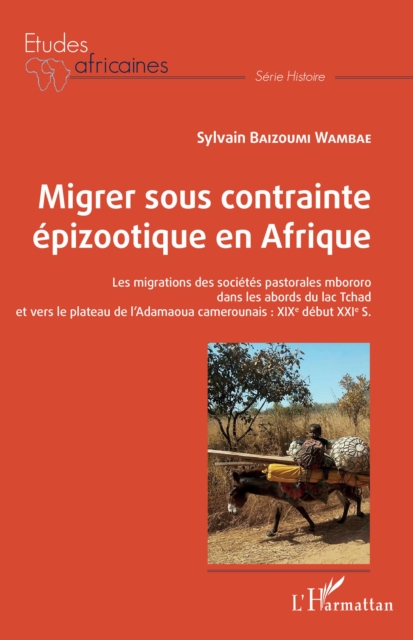
Migrer sous contrainte épizootique en Afrique
Ce livre questionne de manière spécifique le rôle des épizooties des grands ruminants sur les migrations des sociétés pastorales mbororo dans les abords sud du Lac Tchad et vers le plateau de l'Adamaoua camerounais. En dépit de l'éradication totale de la peste bovine en 2011, les migrations des sociétés pastorales ne se sont pas du tout estompées. À cause de la pérennisation et de la diversification des crises pastorales, les Mbororo continuent de migrer ; de manière sporadique certes, mais vers quel destin ?
eBook

Comparison of milk fatty acid profiles measured on Kouri cows near Lake Chad and on dairy cattle as reported by meta-analytical data
Kouri (
Bos taurus
) is a breed aboriginal from Lake Chad and threatened with extinction. This study aimed to compare milk fatty acid profiles measured on Kouri cows and on high-yielding dairy cattle in Europe and elsewhere as reported by meta-analytical data (22 experimentations). Milk samples were collected from 14 Kouri dairy cows in dry season (March to June) and fatty acids (FA) were determined by gas chromatography. Overall, 32 FA have been identified. Kouri showed lower values (
P <
0.001) in the sum of saturated FA (SFA, −10.9 pts),
cis-9
,
cis-12
18:2 (−1.00 pt) (
P
< 0.01, higher values (
P
< 0.001) in the sum of monounsaturated FA (MUFA, +15.3 pts), C18:0) (+3.5 pts),
cis-
9, t
rans-
11 C18:2-CLA (+1.00 pts),
trans-11
18:1 (+1.4 pts) and (
P
< 0.01) in
cis-9
, C18:1 (+3.00 pts) acids. The differences between the milk FA profile of the Kouri cows and that obtained from meta-analytical data could be the possible consequence of the use of particular lake pastures by Kouri cows.
Journal Article