
Catalogue Search | MBRL


Are you sure you want to remove the book from the shelf?

{{itemTitle}}
3,318
result(s) for
"Laments."
Sort by:
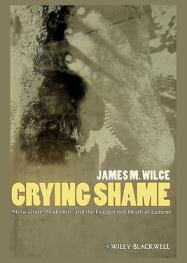

From Lament to Lamenting Song: Musical Models, Meanings and Expression in Seto Solo and Choral Funeral Laments
The distinctive ancient culture of the Seto (south-eastern Estonia) is of special interest, among other things, for its rich lament tradition which survived until the recent past. Unlike the laments of other Balto-Finnic peoples, which are an exclusively solo genre, some Seto laments – all the bridal laments and the funeral laments for a deceased maiden – are performed by a group of lamenters as a kind of polyphonic lamenting song. The unusual practice of choral lamentation raises important questions about the functions and meanings of laments in traditional culture, the specificity of the lament genre as a form of expressive behaviour, and the relationship between the genres of lament and song in Seto culture. This article explores these and some other questions by means of musical analysis of Seto lament tunes and attempts to place the Seto lament tradition in the context of the laments of linguistically and geographically related peoples.
Journal Article


Lament: Studies in the Ancient Mediterranean and Beyond: Studies in the Ancient Mediterranean and Beyond
Lament seems to have been universal in the ancient world. As such, it is an excellent touchstone for the comparative study of attitudes towards death and the afterlife, human relations to the divine, views of the cosmos, and the constitution of the fabric of society in different times and places. This collection of essays offers the first ever comparative approach to ancient Mediterranean and Near Eastern traditions of lament. Beginning with the Sumerian and Hittite traditions, the volume moves on to examine Bronze Age iconographic representations of lamentation, Homeric lament, depictions of lament in Greek tragedy and parodic comedy, and finally lament in ancient Rome. The list of contributors includes such noted scholars as Richard Martin, Ian Rutherford, and Alison Keith. Lament comes at a time when the conclusions of the first wave of the study of lament-especially Greek lament-have received widespread acceptance, including the notions that lament is a female genre; that men risked feminization if they lamented; that there were efforts to control female lamentation; and that a lamenting woman was a powerful figure and a threat to the orderly functioning of the male public sphere. Lament revisits these issues by reexamining what kinds of functions the term lament can include, and by expanding the study of lament to other genres of literature, cultures, and periods in the ancient world. The studies included here reflect the variety of critical issues raised over the past 25 years, and as such, provide an overview of the history of critical thinking on the subject.
eBook

The city lament : Jerusalem across the medieval Mediterranean
\"Examines Armenian, Arabic, English, and French lamentations over the loss of Jerusalem produced in the early crusading period\"-- Provided by publisher.
Book

The Language of Trauma in the Psalms
Over the last few decades, the field of trauma studies has shed new light on biblical texts that deal with individual and collective catastrophe. In The Language of Trauma in the Psalms , Danilo Verde advances the conversation, moving beyond the emphasis on healing that prevails in most literary trauma studies.
Using the lens of cognitive linguistics and combining insights from trauma studies and redaction criticism, Verde explores how trauma is expressed linguistically in the book of Psalms, how trauma-related language was rooted in ancient Israel’s external realities, and how psalms helped define Yehud’s cultural trauma in the Persian period (539–331 BCE). Rather than assuming the psalmists’ personal experiences are reflected in these texts, Verde focuses on the linguistic strategies used to express trauma in the Psalms, especially references to the body and highly dramatic metaphors. Current analyses often approach trauma texts as tools intended to help sufferers heal. Verde contends that many group laments in the book of Psalms were transmitted not only to heal but also to wound the community, ensuring that the pain of a previous generation was not forgotten.
The Language of Trauma in the Psalms shifts our understanding of trauma in biblical texts and will appeal to literary trauma scholars as well as those interested in ancient Israel.
eBook

Lament of Medea: A Kinesthetic Performance / Medea’nın Ağıtı: Kinestetik Bir Performans
This study shows how the language of lament liberates a woman from a socially constructed murderous identity. By using stylistic analysis and mainly focusing on the method of singing lament, this article shows the possibility of undermining the socially constructed identity of the ancient Greek heroine Medea. As the 19th-century thoughts in England about women acquired the most exacerbated misogynist overtones, the problem for the women artists was a desperate search for a new identity and, thus, for language. Two crucial Victorian poets, Amy Levy and Augusta Webster, turned to Greek mythology to explore the collective cultural constructions, recognized the power of lament as a literary device and used it to provide a new perspective to ancient Greek playwright Euripides’ Medea. They formulated their poem using the linguistic and contextual rules of lamentation, such as interrogative questions, alliteration, assonance, phonetic structuring, highly metaphorical language, wordplay, parallelism and antithesis. Due to the figurative devices and deviant use of language, they made the reader witness the melancholy and mourning of heroin. They got the reader to think that they should reconsider Medea. Thus, this study focuses on the poetic language of Levy and Webster to provide a different angle to the concept of identity and give the reader a better sense of what Medea is all about. This article provides critical insight into the power of the language of lament in the deconstruction of rigid and stable identity. Moreover, it shows the critical role that language and the performance of lament play in the construction of the self-perception of the speaking subject.
Journal Article

Embracing the Psalter’s imprecatory words in the 21st century
This article surveys the imprecatory words in the book of Psalms and examines and questions their place in the faith life of the third decade of the 21st-century world, one that is fraught with the impact of a global pandemic, political uncertainties, and racial injustices. The first section of the article examines the vitriolic words and sentiments found in the Psalter and in other places in the Old and New Testaments. It then suggests that we, as readers of these texts, in the words of Phyllis Trible, wrestle with such words and demand a blessing from them, much as Jacob did at the Jabbok with his mysterious wrestler. The second section of the article discusses various 20th- and 21st-century scholarly and ecclesial understandings of the Psalter’s imprecatory words. Next, the article discusses the form and scriptural status of the Psalter’s imprecatory words, emphasising the poetic and metaphoric characteristics of the Psalter’s words. Finally, the article addresses the ethics and appropriation of the Psalter’s imprecatory words in the 21st century. It concludes that, without the languages of absolute lament against injustice and violence that these biblical words provide, our dialogue with and our cries to God are empty and lifeless.
Journal Article
Embracing the Psalter’s imprecatory words in the 21
This article surveys the imprecatory words in the book of Psalms and examines and questions their place in the faith life of the third decade of the 21st-century world, one that is fraught with the impact of a global pandemic, political uncertainties, and racial injustices. The first section of the article examines the vitriolic words and sentiments found in the Psalter and in other places in the Old and New Testaments. It then suggests that we, as readers of these texts, in the words of Phyllis Trible, wrestle with such words and demand a blessing from them, much as Jacob did at the Jabbok with his mysterious wrestler. The second section of the article discusses various 20th- and 21st-century scholarly and ecclesial understandings of the Psalter’s imprecatory words. Next, the article discusses the form and scriptural status of the Psalter’s imprecatory words, emphasising the poetic and metaphoric characteristics of the Psalter’s words. Finally, the article addresses the ethics and appropriation of the Psalter’s imprecatory words in the 21st century. It concludes that, without the languages of absolute lament against injustice and violence that these biblical words provide, our dialogue with and our cries to God are empty and lifeless.
Journal Article

An Ancient Greek Lament Form
An unusual ancient Greek lament form, hitherto overlooked by students of the subject, displays the following syntax: parallel sentences with verb in initial position (Vi) expressing the loss, followed by the grammatical subject (S). Sometimes the same verb was used in each of the parallel lines. ViS parallelism is a subliterary syntax reflecting a very old style. A number of Greek authors adopted this syntax to represent or allusively echo the form. Examples, although relatively scarce, are spread through a diverse range of ancient literature spanning at least six centuries, from the second century BC to the fourth century AD, with earlier echoes as far back as Homer.
Journal Article