Catalogue Search | MBRL


Are you sure you want to remove the book from the shelf?

{{itemTitle}}
54
result(s) for
"Lancaster and York, 1399-1485"
Sort by:


The Wars of the Roses
The Wars of the Roses (1455-85) were a major turning point in English history. But the underlying causes for the successive upheavals have been hotly contested by historians ever since. In this original and stimulating new synthesis, distinguished historian Michael Hicks examines the difficult economic, military, and financial crises and explains, for the first time, the real reasons why the Wars of the Roses began, why they kept recurring, and why, eventually, they ceased. Alongside fresh assessments of key personalities, Hicks sheds new light on the significance of the involvement of the people in politics, the intervention of foreign powers in English affairs, and a fifteenth-century credit crunch. Combining a meticulous dissection of competing dynamics with a clear account of the course of events, this is a definitive and indispensable history of a compelling, complex period.
eBook

Iron, fire and ice : the real history that inspired Game of thrones
\"A young pretender raises an army to take the throne. Learning of his father's death, the adolescent, dashing and charismatic and descended from the old kings of the North, vows to avenge him. He is supported in this war by his mother, who has spirited away her two younger sons to safety. Against them is the queen, passionate, proud, and strong-willed and with more of the masculine virtues of the time than most men. She too is battling for the inheritance of her young son, not yet fully grown but already a sadist who takes delight in watching executions. Sound familiar? It may read like the plot of Game of Thrones. Yet that was also the story of the bloodiest battle in British history, fought at the culmination of the War of the Roses. George RR Martin's bestselling novels are rife with allusions, inspirations, and flat-out copies of real-life people, events, and places of medieval and Tudor England and Europe. The Red Wedding? Based on actual events in Scottish history. The poisoning of Joffrey Baratheon? Eerily similar to the death of William the Conqueror's grandson. The Dothraki? Also known as Huns, Magyars, Turks, and Mongols. Join Ed West, author of Skyhorse's A Very, Very Short History of England series, as he explores all of Martin's influences, from religion to war to powerful women. Instead of despairing while waiting for Season 8 of Game of Thrones, discover the real history behind the phenomenon and see for yourself that truth is stranger than fiction.\" -- Amazon.com
Book

Kingship and Masculinity in Late Medieval England
Kingship and Masculinity in Late Medieval England explores the dynamic between kingship and masculinity in fifteenth century England, with a particular focus on Henry V and Henry VI. The role of gender in the rhetoric and practice of medieval kingship is still largely unexplored by medieval historians. Discourses of masculinity informed much of the contemporary comment on fifteenth century kings, for a variety of purposes: to praise and eulogise but also to explain shortcomings and provide justification for deposition.
Katherine J. Lewis examines discourses of masculinity in relation to contemporary understandings of the nature and acquisition of manhood in the period and considers the extent to which judgements of a king's performance were informed by his ability to embody the right balance of manly qualities. This book's primary concern is with how these two kings were presented, represented and perceived by those around them, but it also asks how far Henry V and Henry VI can be said to have understood the importance of personifying a particular brand of masculinity in their performance of kingship and of meeting the expectations of their subjects in this respect. It explores the extent to which their established reputations as inherently 'manly' and 'unmanly' kings were the product of their handling of political circumstances, but owed something to factors beyond their immediate control as well. Consideration is also given to Margaret of Anjou's manipulation of ideologies of kingship and manhood in response to her husband's incapacity, and the ramifications of this for perceptions of the relational gender identities which she and Henry VI embodied together.
Kingship and Masculinity in Late Medieval England is an essential resource for students of gender and medieval history.
eBook

Knights
Three decisive battles fought by knights in medieval history are told in graphic novel format: In 1415, English long bowmen devastate the French army in the Battle of Agincourt; Successful in holding the French town of Orlans under siege for six months in 1428, the English forces are about to meet 17 year-old Joan of Arc; In 1485, the fight for the throne of England between two royal dynasties comes to an end at Bosworth.
Book


Cecily Duchess of York
\"A thoroughly researched re-examination of the life of Cecily duchess of York, from 1415 to 1495.\"--Provided by publisher.
Book
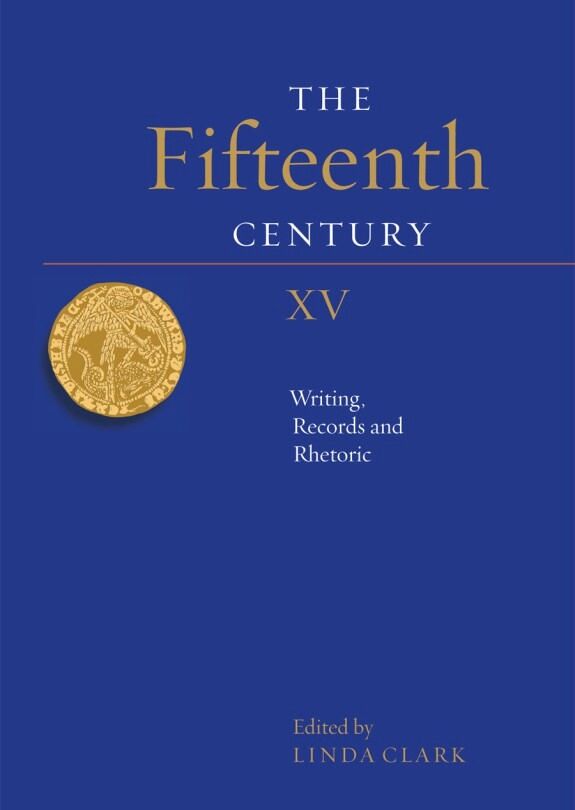
The Fifteenth Century XV
The focus of this volume may be summed up as \"The Word\". Its essays examine the contents and provenance of manuscripts which were written for polemical purposes, treasured by the duchess of York, and through the new medium of print introduced to a wider public topics of historical interest and illustrations of the geography of the known world. The essays here also consider official records of forest administration, expressed in arcane language; documents preserved in the papal curia which reveal significant facts about the lives of Scottish bishops; archives produced by the English chancery noting the movements of a royal councillor; and letters, poems and songs exposing the political strategy of a German prince. Nor is the spoken word neglected, whether employed in speeches delivered at the start of parliaments, using as their themes scriptures and classical texts to set a political agenda; or as sermons to open-air congregations gathered at St. Paul's Cross, where the oratory of Bishop Alcock stirred his listeners in different ways. Contributors: Michael Bennett, Julia Boffey, Paul Cavill, J.M. Grussenmeyer, Tom Johnson, J.L. Laynesmith, John Milner, Ben Pope, Dan E. Seward, Sarah Thomas
eBook