
Catalogue Search | MBRL


Are you sure you want to remove the book from the shelf?

{{itemTitle}}
13,159
result(s) for
"Landscape construction"
Sort by:

Site Engineering Workbook
A study guide to help you master the principles and practices of site engineering Whether used in conjunction with the Sixth Edition of Site Engineering for Landscape Architects or on its own, this Workbook is an invaluable learning resource for students and instructors, as well as for professionals studying for the LARE and other licensing exams.
eBook


Taking the landscape construction of characteristic towns in Mucheng Town China as an example
In Mucheng Town, Sichuan Province, landscape planning is not just about greenery or streets it’s about how people live, remember, and interact with their surroundings. This research looks at how the town's old ceramic culture and the nature around it, like the Qingyi River, shape public spaces today. The study used field visits, interviews with locals, and looked at government documents. One key finding is that people seem to really support projects that mix usefulness (like walkways or parks) with local stories or traditions. Over the past 2 years, more people have been going to local festivals, and satisfaction with new green areas is high. These things show how cultural and ecological thinking can work together. Other towns, especially those looking to grow without losing their past, might learn from Mucheng’s experience.
Journal Article

Why is Landscape Beautiful?
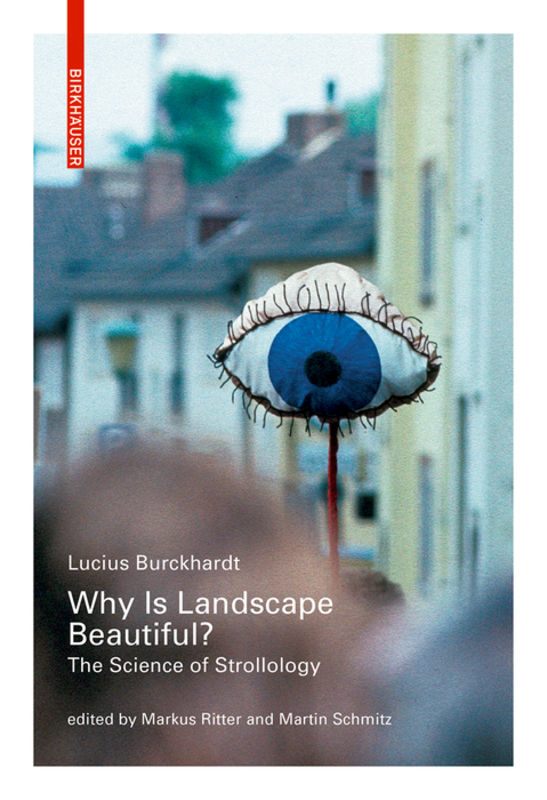
Lucius Burckhardt (1925-2003) taught architectural theory at Kassel University and, in the 1980s, coined the term \"Promenadology\" or the science of Strollology and developed this into a complex and far-sighted planning and design discipline.
eBook


Study on physical clogging process and practical application of horizontal subsurface flow constructed wetland
In view of the urgent concerns pertaining to the proliferation of rural wastewater discharges and the imperative for decentralized treatment, this article examines the phenomenon of physical clogging in a small-scale horizontal submerged flow artificial wetland system. Through a combination of experimental analysis and CFD-EDM numerical simulations, the impact of clogging on the hydraulic efficiency of the system was subjected to rigorous examination. Based on these findings, an innovative design strategy was proposed, namely the addition of vertical baffles. The experimental results demonstrate that this strategy can markedly prolong the duration of complete clogging of the system by up to 15% and enhance the hydraulic efficiency by 21%. Based on this, a small-scale horizontal submerged artificial wetland wastewater treatment system was designed for rural areas and successfully implemented in Fanrong Village, Rui’an City. This resulted in an enhanced wastewater treatment effect and an improved rural landscape. The findings of this study contribute to the development of a more rational and effective sewage treatment solution for rural areas.
Journal Article

John Yeon landscape : design, conservation, activism
John Yeon (1910-1994) devoted his life to designing and preserving the spectacular terrain of the Pacific Northwest. John Yeon Landscape explores his roles as planner, landscape architect, and conservation activist. The son of a lumber baron who raised the money for and oversaw the construction of one of America's first scenic highways, the Columbia River Gorge Highway, Yeon tackled conservation causes with the eye of a landscape designer. He single-handedly protected two of the most prominent features of the Oregon Coast: Neahkahnie Mountain and Chapman Point. Stemming from an intimate understanding of both landscape and the timber business, Yeon's writing and advocacy played an important role in the establishment of Olympic National Park. And in the Columbia River Gorge, he led a national committee dedicated to its conservation as well as buying 78 acres of land there, transforming it into the Shire. This private, picturesque landscape showcased the beauty of the gorge and even served as the birthplace of the Columbia River Gorge National Scenic Act. Exhibition: Portland Art Museum, Portland, USA (13.05. - 03.09.2017).
Book

Research on Evaluating the Characteristics of the Rural Landscape of Zhanqi Village, Chengdu, China, Based on Oblique Aerial Photography by Unmanned Aerial Vehicles
To achieve the transition of rural areas from traditional to modern, the visualization of rural landscape data and feature evaluations are essential. Landscape character assessment (LCA) is a well-established tool that was developed to assess and understand rural landscape features. In recent years, drones have become increasingly attractive for various applications and services due to their low costs and relative ease of operation. Unlike most previous studies that relied solely on drone-based remote sensing or visual esthetic evaluations, this study proposes an innovative assessment method based on landscape characteristic assessment (LCA) and oblique drone photography technology, supported by specific data and survey results. These include various landscape metrics, such as the Shannon diversity index (SHDI), Shannon evenness index (SHEI), vegetation coverage, landscape character zoning, and delineations of various ecologically sensitive areas. This method was applied to study Zhanqi Village in Chengdu, Sichuan Province, China and revealed some unique characteristics of this village. By categorizing and describing the landscape features, the study makes judgments and decisions about them. This is a beneficial attempt to apply the scientific methods of landscape assessments to the production management of aerial drone surveys. This method provides a comprehensive framework for evaluating rural landscape features and demonstrates that the combination of LCA and oblique drone photography technology is feasible for rural landscape research. Additionally, this study emphasizes the need for further research to explore the potential application of this method in continuously evolving urban and rural environments in the future.
Journal Article