
Catalogue Search | MBRL


Are you sure you want to remove the book from the shelf?

{{itemTitle}}
39
result(s) for
"Landscape design, Japanese."
Sort by:

Visionary landscapes : Japanese garden design in North America : the work of five contemporary masters
This Japanese gardening book examines the work of five leading landscape architects in North America who are exploring the power of Japanese-style garden design to create an immersive experience promoting personal and social well-being.
Book
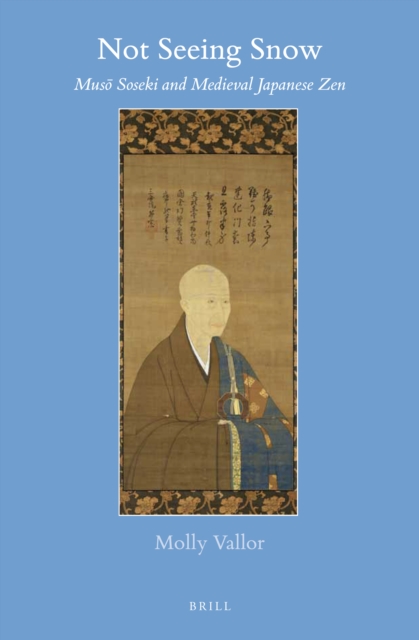
Not seeing snow : Musō Soseki and medieval Japanese Zen
Not Seeing Snow: Muso Soseki and Medieval Japanese Zen offers a detailed look at a crucial yet sorely neglected figure in medieval Japan. It clarifies Muso's far-reaching significance as a Buddhist leader, waka poet, landscape designer, and political figure. In doing so, it sheds light on how elite Zen culture was formed through a complex interplay of politics, religious pedagogy and praxis, poetry, landscape design, and the concerns of institution building. The appendix contains the first complete English translation of Muso's personal waka anthology, Shogaku Kokushishu.
eBook

Infinite spaces : the art and wisdom of the Japanese garden
\"The Sakuteiki ... by the eleventh-century courtier and poet Tachibana no Toshitsuna laid out the principles that shaped the design of [Japanese] gardens ... Infinite Spaces pairs extracts from the Sakuteiki with inspiring images that beautifully illustrate the principles of this ancient work\"--Jacket.
Book

Adaptability and Resilience of Chaenomeles japonica (Thunb.) Lindl. ex Spach (Rosaceae) in Urban Landscape Design
This research is interdisciplinary in nature and supports the process of selecting individual plants to achieve sustainable visual and ecological effects in the urban landscape. The importance of this study is further emphasised by climate change, which necessitates modifications to the existing selection of ornamental plants. These individuals must be capable of adapting to urban ecosystems in order to mitigate the impacts of climate change on humans and other organisms and to maintain a high level of biodiversity. Accordingly, this paper highlights, at the individual level, the significance of Japanese quince (Chaenomeles japonica (Thunb.) Lindl. ex Spach) as an element of urban green infrastructure in the Balkan Peninsula. Based on a real case study conducted over the period 2007–2025 and through an integrative approach involving 3841 phenological observations and climate parameters over 19 consecutive years, local phenological flowering patterns were identified, upon which the species’ functional potential depends. The key patterns and abundance of flowering are the result of interactions with daily maximum and minimum air temperatures and precipitation levels, as confirmed by correlations with percentile-based classifications of climatic variables for the study years. The statistical non-significance of the trends points to the influence of extreme climatic events but also to the adaptability of the selected genotype compared with other Japanese quince genotypes in the vicinity. Regression analysis determined the optimal daily air temperatures for continuous flowering during 2024 and 2025. The results confirm that the selected individual is sustainable, and it is, therefore, proposed for inclusion in the assortment of ornamental plants important for preserving ecosystem services in urban landscape design, particularly in view of its demonstrated utilitarian benefits.
Journal Article

Listening to Japanese Gardens: An Autoethnographic Study on the Soundscape Action Design Tool
Landscape architecture and urban design disciplines could benefit from soundscape thinking in order to enhance experiential qualities in their projects, though the available tools are not yet fully developed nor tested. The present research aims to substantiate one of the available tools, Soundscape Actions, and thereby increase the understanding of soundscape design. The study focuses on the Japanese garden tradition, which is known for high preference ratings, tranquil qualities and consideration for sound and other sensory experiences. An autoethnographic approach was used to conduct field studies in 88 gardens in Japan, the majority of which are located in urban areas with potential noise disturbance. The studies are based on observations in situ, supported by video documentation, field recordings and readings of sound pressure levels (SPL). A total of 19 Soundscape Actions are described and discussed in the paper. They are structured around three main categories: localisation of functions, reduction of unwanted sounds and introduction of wanted sounds. The study provides concrete examples of how the tool can be used to enhance tranquil qualities, particularly focusing on small green spaces in dense urban settings, involving the (simultaneous) reduction of unwanted sounds and enhancement of wanted sounds/effects. The autoethnographic approach allowed for the phenomenological perspective to be brought forward, which contributed new insights regarding the design tool. The findings are discussed in relation to health and soundscape research, focusing on multisensory experiences, masking strategies and potentials for implementation and future developments of the design tool.
Journal Article

Placemaking and pastoral park planning in Japan: the Showa case
PurposeThe purpose of this study is to critically assess how a National Government Park in Tokyo aims to commemorate the first 50 years of the Showa era (1926–1976), a time of drastic upheaval and societal change, with a naturalistic landscape.Design/methodology/approachThe author investigated the park by conducting a literature review, making observations in the park on multiple occasions, conducting a survey of and interviews with park users and compiling photographs.FindingsThe author found that the park nostalgically highlights the early 1950s as the essence of Showa Japan. These few years represent a lull between the two Showa-era upheavals of war and rapid development and urbanization, and symbolize a last flowering of Japan’s 2,000-year-old agrarian way of life. The nostalgic presentation of Japan’s rural essence presents, the author argues, a different nationalist narrative than the military-glorifying variant that has gained traction since the end of the Cold War.Social implicationsAccording to critical theorists, society and space are dialectically related and mutually constitutive. The nationalist vision of a landscape, then – including the park’s landscape – has potential to inform and help shape social beliefs and values.Originality/valueWhile Japanese nationalism is a major topic among Western academics, the literature on nationalist landscapes in Japan – with the exception of “obviously” symbolic sites, such as Yasukuni Shrine – is extremely limited. This paper helps fill the gap.
Journal Article
Lao Tze and Confucius' philosophies influenced the designs of Kisho Kurokawa and Tadao Ando
Japanese architecture retains the characteristic of appreciating its culture, despite the growing influence of Western architecture. Based on this issue, it is a very interesting area to study to understand the design concepts behind two masterpieces from the world’s architects Kisho Kurokawa and Tadao Ando. This study uses a qualitative method by analyzing theories and case studies in the work of the architects Kisho Kurokawa and Tadao Ando. It conducts the following detailed analyses; (a) Western architects who influenced both design concepts; (b) The primary considerations of the two architects in facing the demands of the times. The study concludes that Kisho Kurokawa was influenced by Kenzo Tange, while Tadao Ando has been influenced by Le Corbusier and Louis Khan. The primary consideration of Kisho Kurokawa is Hanasuki, while for Tadao Ando it is Shintai. The findings in this study are that the two architects in the design concept were inspired by Japanese culture, where Japanese culture is influenced by the philosophy of Lau Tze and Confucius.
Journal Article

Assessing housing accessibility issues for older adults in Japan: an expert panel approach to cross-cultural adaptation and content validity of the Japanese housing enabler
Accessible housing plays a crucial role in supporting aging in place, yet Japan lacks adequate tools for assessing housing accessibility among older adults. This study describes the process of translating and adapting the environmental component checklist of the Swedish Housing Enabler instrument for valid use in Japan. During translation to the Japanese language, technical terms and specifications were adjusted to match Japanese standards and guidelines. To validate the content of the instrument’s checklist for the environmental component, an expert panel including occupational therapists, architects, and care managers was used. Relevance in a Japanese housing context was rated for all items on a scale from 1 to 4 (higher = more relevant), and a content validity index (0–1) was calculated for each item. After consensus discussions, the expert panel suggested revisions, including removal and addition of items, to better capture the characteristics of Japanese housing and building design. A final checklist of 261 items for the Japanese Housing Enabler was suggested. While 15 items were removed due to their lack of relevance to Japanese housing, 115 items were added. More than 90% of the items had a content validity index that exceeded the recommended threshold for relevance (≥ 0.78). Although the study results support the cultural relevance and content validity of this new instrument for assessing housing accessibility in Japan, the large number of items may compromise its feasibility. Aspects such as feasibility, criterion-related validity, and interrater reliability require investigation.
Journal Article

Zen landscapes
The essential elements of the dry Japanese garden are few: rocks, gravel, moss. Simultaneously a sensual matrix, a symbolic form and a mythic domain, these gardens exhibit precise craftsmanship and exquisite miniaturization. However, their apparent minimalism belies a profound complexity, which must be approached according to the play of scale, surroundings and seasons, and especially in relation to the other arts, thus allowing us to experience them as living landscapes rather than as merely abstracted design. These gardens partake of the Zen aesthetics of the tea ceremony, which also permeates Japanese poetry, painting, calligraphy, architecture, cuisine and ceramics, all of which entail different modes of representation. Japanese art favours suggestion and allusion, the indistinct over the literal: the moment when objects emerge or disappear, and the border between figuration and abstraction, are particularly valued. This is an art of the incipient and the potential, inspired by the intimation of continual transformation. This book shows how ceramics – seen as the very sublimation of the earth – plays a crucial role related at once to the site-specificity of gardens, to the ritualized codes of the tea ceremony and to the everyday gestures of the culinary table. Zen Landscapes is the first in-depth study in the West to examine the correspondences between gardens and ceramics, suggesting new implications for theories of representation, arguing for the rightful place of ceramics among the fine arts and above all revealing original ways of seeing. This unique study will appeal to readers interested in landscape design, ceramic appreciation and the customs, craftsmanship and culture of Japan.
eBook

Mirei Shigemori
The first profound depiction of the great reformer of Japanese garden design in the twentieth century Mirei Shigemori decisively shaped the development of Japanese landscape architecture in the twentieth century.He founded the Kyoto Garden Society in 1932 and published the 26-volume Illustrated Book on the History of the Japanese Garden in 1938.
eBook