
Catalogue Search | MBRL


Are you sure you want to remove the book from the shelf?

{{itemTitle}}
96,619
result(s) for
"Language and culture"
Sort by:

Ritual communication
\"This volume presents a new approach to \"ritual communication\" by an international group of scholars from a multidisciplinary and cross-cultural perspective, rich with empirical data and path breaking for future theorizing on the topic. The chapters show how ritual communication involves witnessing a future through the making of cultural knowledge. They show ritual communication to be a highly \"self-oriented\" multimodal process in which the human body, temporalization, and spatialized settings play crucial roles. Ritual communication encompasses both verbal and sensory attributes. It is in part dependent upon prior formulaic and repeated action, and is thus anticipated within particular contexts of social interaction. It is performed and therefore subject to evaluation by its participants according to standards defined by language ideologies, local aesthetics, contexts of use, and interpersonal relations. The authors here emphasize the variety of participatory and experiential aspects of ritual communication in contemporary African, Native American, Asian, and Pacific cultures. Among the forms covered are ritual constraints on everyday interaction, gossip, private and public encounters, political meetings and public demonstrations, rites of passage, theatrical performances, magical formulae, shamanic chants, affinal civilities, and leaders' ceremonial discourse. The book is ideal for students and scholars in anthropology and linguistic anthropology in particular\"--Provided by publisher.
Book

The Discursive Construction of National Identity
How do we construct national identities in discourse? Which topics, which discursive strategies and which linguistic devices are employed to construct national sameness and uniqueness on the one hand, and differences to other national collectives on the o
eBook


Intercultural Language Teaching and Learning
This wide-ranging survey of issues in intercultural language teaching and learning covers everything from core concepts to program evaluation, and advocates a fluid, responsive approach to teaching language that reflects its central role in fostering intercultural understanding. * Includes coverage of theoretical issues defining language, culture, and communication, as well as practice-driven issues such as classroom interactions, technologies, programs, and language assessment * Examines systematically the components of language teaching: language itself, meaning, culture, learning, communicating, and assessments, and puts them in social and cultural context * Features numerous examples throughout, drawn from various languages, international contexts, and frameworks * Incorporates a decade of in-depth research and detailed documentation from the authors' collaborative work with practicing teachers * Provides a much-needed addition to the sparse literature on intercultural aspects of language education
eBook

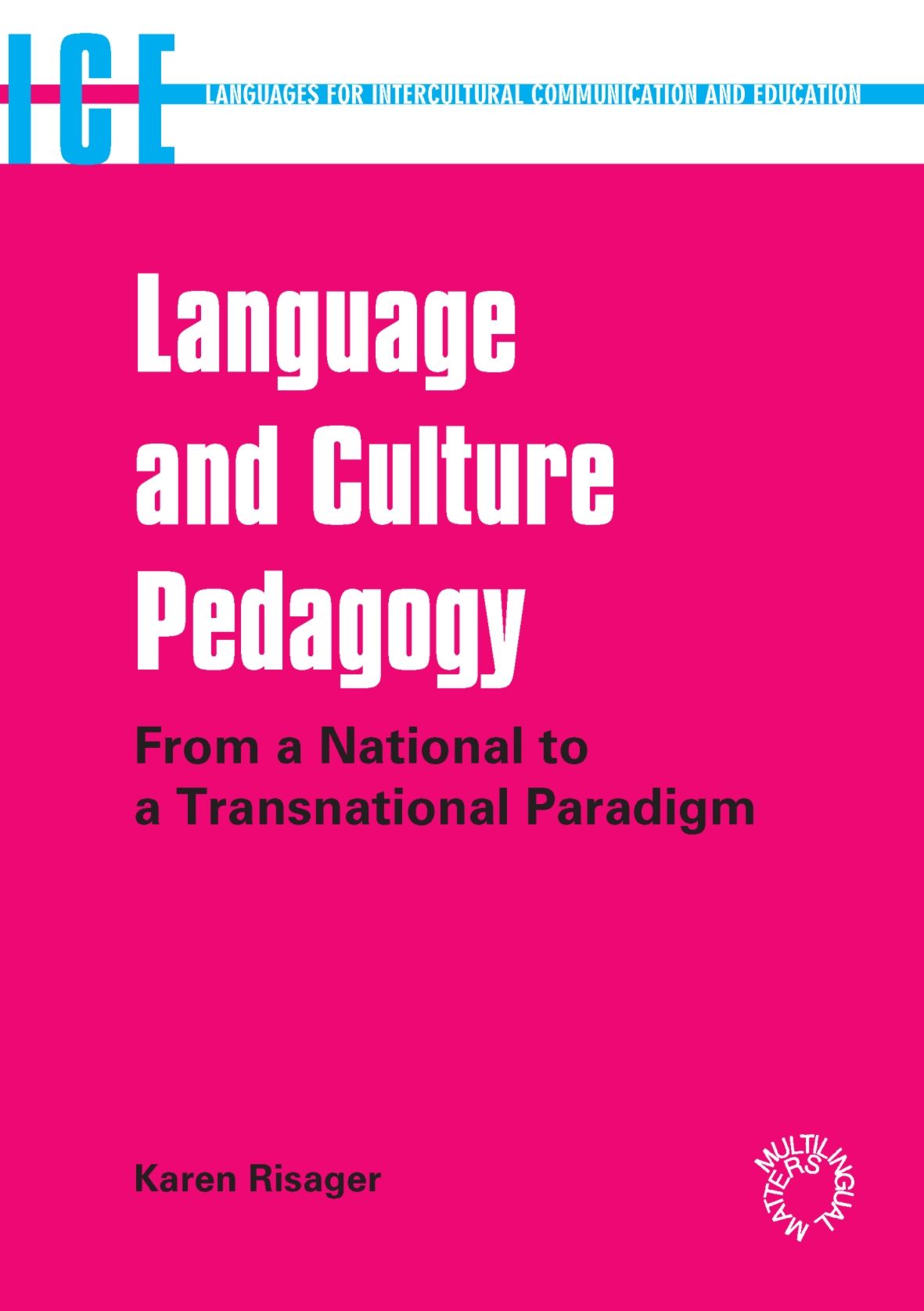
Language and Culture Pedagogy
How can we envisage a new language and culture pedagogy that breaks with the tradition of viewing language as part of a closed national universe of culture, history, people and mentality, and begins to see itself as a field operating in a complex and dynamic world characterised by transnational flows of people, commodities and ideas? Initially, to understand the field and its current challenges, we must understand its history, and the first part of this book contains a critical analysis of the history of the international field of culture teaching – the first historical treatment of this field ever written. The next part of the book focuses on how we can build a framework for a new transnational language and culture pedagogy that aims at the education of world citizens whose intercultural competence includes critical multilingual and multicultural awareness in a global perspective.
eBook


Venomous Tongues
Sandy Bardsley examines the complex relationship between speech and gender in the fourteenth and fifteenth centuries and engages debates on the static nature of women's status after the Black Death. Focusing on England, Venomous Tongues uses a combination of legal, literary, and artistic sources to show how deviant speech was increasingly feminized in the later Middle Ages. Women of all social classes and marital statuses ran the risk of being charged as scolds, and local jurisdictions interpreted the label \"scold\" in a way that best fit their particular circumstances. Indeed, Bardsley demonstrates, this flexibility of definition helped to ensure the longevity of the term: women were punished as scolds as late as the early nineteenth century.The tongue, according to late medieval moralists, was a dangerous weapon that tempted people to sin. During the fourteenth and fifteenth centuries, clerics railed against blasphemers, liars, and slanderers, while village and town elites prosecuted those who abused officials or committed the newly devised offense of scolding. In courts, women in particular were prosecuted and punished for insulting others or talking too much in a public setting. In literature, both men and women were warned about women's propensity to gossip and quarrel, while characters such as Noah's Wife and the Wife of Bath demonstrate the development of a stereotypically garrulous woman. Visual representations, such as depictions of women gossiping in church, also reinforced the message that women's speech was likely to be disruptive and deviant.
eBook


Writing in the devil's tongue : a history of English composition in China
Winner, CCCC Outstanding Book Award Until recently, American composition scholars have studied writing instruction mainly within the borders of their own nation, rarely considering English composition in the global context in which writing in English is increasingly taught.
eBook