
Catalogue Search | MBRL


Are you sure you want to remove the book from the shelf?

{{itemTitle}}
3,019
result(s) for
"Language and history Europe"
Sort by:
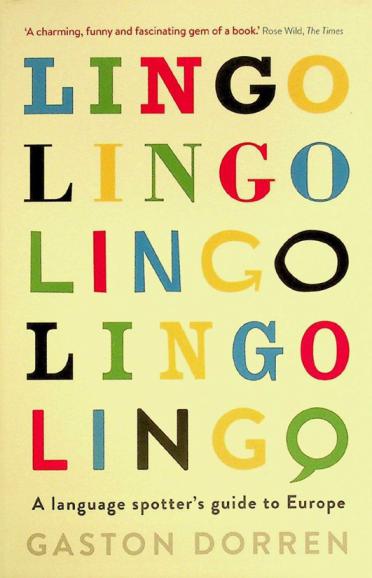
Lingo : a language spotter's guide to Europe
\"Welcome to Europe as you've never known it before, seen through the peculiarities of its languages and dialects. Combining linguistics and cultural history, Gaston Dorren takes us on an intriguing tour of the continent, from Proto-Indo-European (the common ancestor of most European languages) to the rise and rise of English, via the complexities of Welsh plurals and Czech pronunciation. Along the way we learn why Esperanto will never catch on, how the language of William the Conqueror lives on in the Channel Islands and why Finnish is the easiest European language. Surprising, witty and full of extraordinary facts, this book will change the way you think about the languages around you. Polyglot Gaston Dorren might even persuade you that English is like Chinese.\"--Wheelers.co.nz.
Book

Language and Social Change in Central Europe
This book explores the dynamics of language and social change in central Europe in the context of the end of the Cold War and eastern expansion of the European Union. One outcome of the profound social transformations in central Europe since the Second World War has been the reshaping of the relationship between particular languages and linguistic varieties, especially between 'national' languages and regional or ethnic minority languages. Previous studies have investigated these transformed relationships from the macro perspective of language policies, while others have taken more fine-grained approaches to individual experiences with language. Combining these two perspectives for the first time--and focusing on the German language, which has a uniquely complex and problematic history in the region--the authors offer an understanding of the complex constellation of language politics in central Europe.
Stevenson and Carl's analysis draws on a range of theoretical, conceptual and analytical approaches - language ideologies, language policy, positioning theory, discourse analysis, narrative analysis and life histories - and a wide range of data sources, from European and national language policies to individual language biographies. The authors demonstrate how the relationship between German and other languages has played a crucial role in the politics of language and processes of identity formation in the recent history of central Europe.
eBook


Multilingualism in the Middle Ages and Early Modern Age
Bi- and multilingualism are of great interest for contemporary linguists since this phenomenon deeply reflects on language acquisition, language use, and sociolinguistic conditions in many different circumstances all over the world. Multilingualism was, however, certainly rather common already, if not especially, in the premodern world. For some time now, research has started to explore this issue through a number of specialized studies. The present volume continues with the investigation of multilingualism through a collection of case studies focusing on important examples in medieval and early modern societies, that is, in linguistic and cultural contact zones, such as England, Spain, the Holy Land, but also the New World. As all contributors confirm, the numerous cases of multilingualism discussed here indicate strongly that the premodern period knew considerably less barriers between people of different social classes, cultural background, and religious orientation. But we also have to acknowledge that already then human communication could fail because of linguistic hurdles which prevented mutual understanding in religious and cultural terms.
eBook


A Grammar of the Eastern European Hasidic Hebrew Tale
This volume constitutes the first reference grammar of the Hasidic Hebrew hagiographic tales composed in late nineteenth- and early twentieth-century Eastern Europe. It presents a thorough survey of Hasidic Hebrew orthography, morphology, syntax, and lexis illustrated with extensive examples.
eBook

Language and Revolution
This work examines the role of language in forging the modern subject. Focusing on the idea of the \"New Man\" that has animated all revolutionaries, the present volume asks what it meant to define oneself in terms of one's class origins, gender, national belonging or racial origins.
eBook

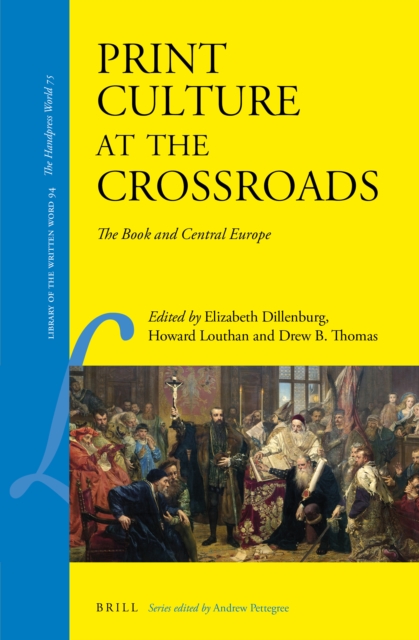
Print Culture at the Crossroads
This book investigates the importance of printing in early-modern Central Europe, revealing a complicated web of connections linking printers and scholars, Jews and Christians, from the Baltic to the Adriatic.
eBook