
Catalogue Search | MBRL


Are you sure you want to remove the book from the shelf?

{{itemTitle}}
1,580
result(s) for
"Language and languages Computer network resources."
Sort by:

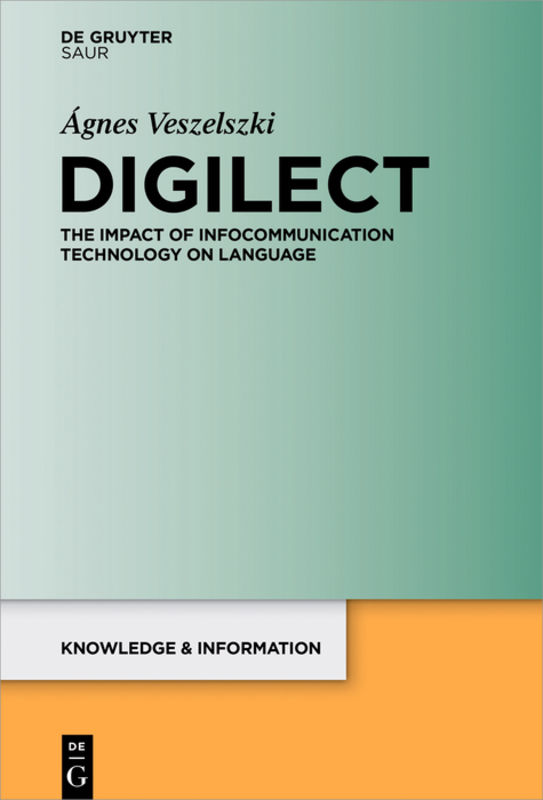
Digilect
The high degree of internet penetration and its social (and linguistic) effects evidently influence how people, and especially the highly susceptible younger generations, use language. The primary aim of the book is not only to identify the characteristic features of the digital language variety (this has already been done by several works) but to examine how digital communication affects the language of other mediums of communication: orality, handwritten texts, digitally created but not digitally perceived, that is printed texts, including in particular advertisements (which quickly respond to linguistic change). Naturally, the book presents the characteristics of the digital language variety (and coins the term digilect) but only to give a framework to the impact analysis. It is important to document changes in progress and thus direct attention to potential outcomes. The current linguistic change is different from previous ones primarily in its speed and form of spreading, and it not only brings innovative grammatical forms and writing/spelling solutions but may also have far-reaching cultural and educational consequences in the long run.
eBook

Social networking for language education
\"Social media are applications that have a networking dimension at the heart of their use. They attract language learners, teachers and providers for different reasons, although they are a controversial issue in language education as we lack evidence whether and how they promote language learning. This book studies the impact of networking with the social media on language learning, through a collection of chapters offering theoretical perspectives and empirical studies of learner experiences in a wide range of networking settings, illustrating through a variety of teaching as well as research methodologies. Through focusing on communities and socialization, together the editors and contributors help to identify priority issues (such as identity and community-building) that need attention if today's social media culture is to work to the benefit of language learners. \"-- Provided by publisher.
BOOK

Task-Based Language Learning in a Real-World Digital Environment
How can you use the latest digital technology to create an environment in which people can learn European languages while performing a meaningful real-world task and experiencing the cultural aspect of learning to cook European dishes?.
eBook

Task-based language learning in a real-world digital environment : the European digital kitchen
How can you use the latest digital technology to create an environment in which people can learn European languages while performing a meaningful real-world task and experiencing the cultural aspect of learning to cook European dishes? This book explains how to do this from A to Z, covering how a real-world, immersive digital environment for language learning was designed and built, as well as showing the learning experiences of users in five European countries. The project makes language learning motivational and fun by tapping into people's interest in both cooking and technology - you can learn a language while cooking and interacting with a speaking digital kitchen. The kitchens provide spoken instructions in the foreign language on how to prepare European cuisine. Digital sensors are inserted in or attached to all the kitchen equipment and ingredients, so the digital kitchen detects what learners are doing and gives them feedback. Learners are also able to communicate with the kitchens and can ask for help via photos and videos if they don't understand any foreign language words. Written by experts in computing and linguistics, the book explains the principles and procedures involved, enabling others to design and implement a real-world digital learning environment in the same way. It includes numerous photographs of the system in use and evidence of how and what 250 users actually learnt.
Book


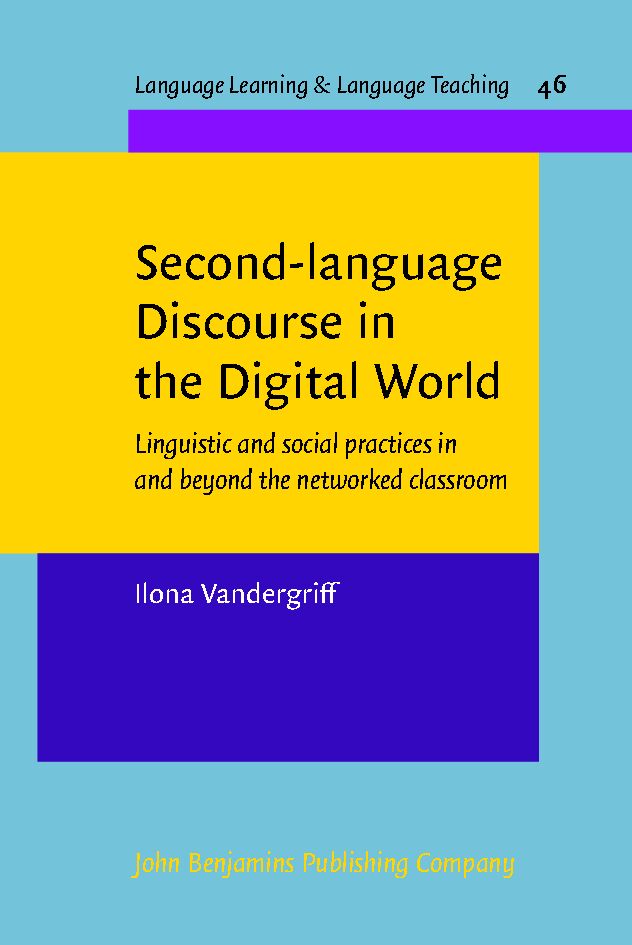
Second-language discourse in the digital world : linguistic and social practices in and beyond the networked classroom
Second-language Discourse in the Digital World illustrates a new, practice-driven approach to technology in second-language (L2) learning that begins with what L2 users do when they connect with others online. With its rich set of examples from a number of different languages and a variety of digital platforms, in and beyond the classroom, this book provides a structured account of L2 computer-mediated discourse. The book is divided into four sections. Section I considers how new media have changed language learning. Section II is about L2 participation in digital forms and practices in online communities. Sections III centers around L2 linguistic and other semiotic practices, including the use of multimodal and multilingual resources while section IV analyzes social practices to explore how networked L2 users build, maintain and challenge relationships. Written in accessible style, the volume will be an important read to anyone interested in L2 use and learning in Web 2.0.Finalist for the AAAL 2019 book award.
eBook

Mobile learning : languages, literacies and cultures
\"This book is a wide-ranging exploration of the use of mobile devices for teaching and learning language and literacies. It investigates the particular qualities of mobile devices which open up new educational possibilities, and examines the agendas behind the use of these tools in the developed and developing world alike. A history of the development of the hardware and software leads into a detailed study of how mobile devices can be used to teach language, which language areas and skills are already being taught around the world, and how the teaching of literacy, including digital literacies, can be supported. Eighteen case studies from across the globe are complemented by 13 vignettes by experienced mobile educators, thus building up a rich picture of contemporary mobile learning as well as sketching an outline of likely future developments\"-- Provided by publisher.
Book
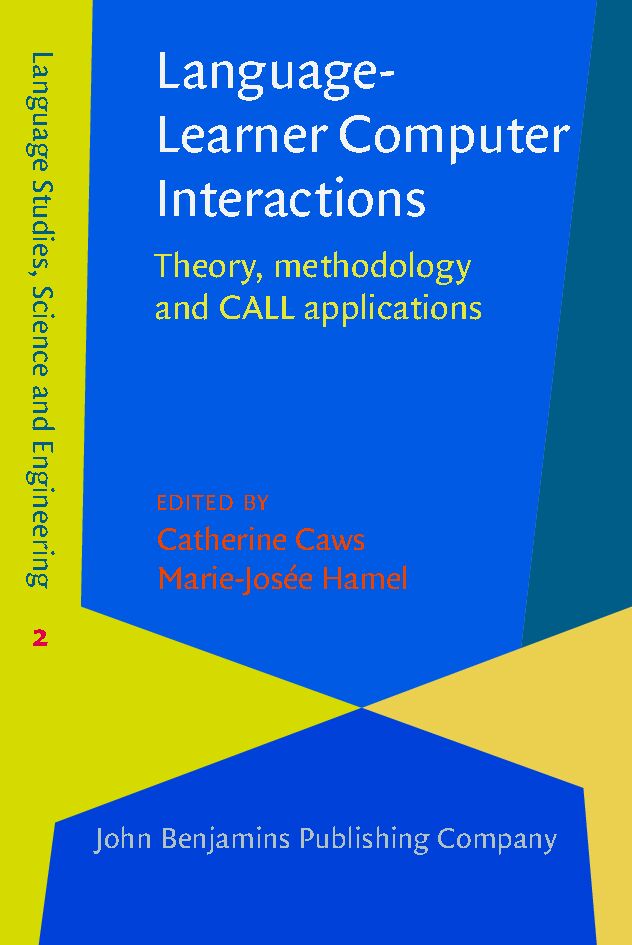
Language-learner computer interactions : theory, methodology and CALL applications
This book focuses on learner-computer interactions (LCI) in second language learning environments drawing largely on sociocultural theories of language development. It brings together a rich and varied range of theoretical discussions and applications in order to illustrate the way in which LCI can enrich our comprehension of technology-mediated communication, hence enhancing learners’ digital literacy skills. The book is based on the premise that, in order to fully understand the nature of language and literacy development in digital spaces, researchers and practitioners in linguistics, sciences and engineering need to borrow from each others’ theoretical and practical toolkits. In light of this premise, themes include such aspects as educational ergonomics, affordances, complex systems learning, learner personas and corpora, while also describing such data collecting tools as video screen capture devices, eye-tracking or intelligent learning tutoring systems.
eBook