
Catalogue Search | MBRL


Are you sure you want to remove the book from the shelf?

{{itemTitle}}
208
result(s) for
"Language and languages Programmed instruction."
Sort by:

One-on-one language teaching and learning : theory and practice
\"From the perspective of the tutor, teaching a language one-to-one is not just one more way of doing what classroom teachers do. With only one learner, it is possible to give serious attention to principles of second language acquisition such as motivation, error treatment, and learner autonomy, which are more difficult to address in classroom learning. One-on-One Language Teaching and Learning brings together a strong theoretical framework with practical suggestions and actual experiences of language learners and tutors from around the world. It applies research in the field of language acquisition and teaching to issues like building a strong tutor-student relationship, working with multilingual learners, and learning various skills and strategies. The book will be valuable for tutors of many languages, not only English, as well as learners who wants to take a more active role in one-on-one learning\"-- Provided by publisher.
Book
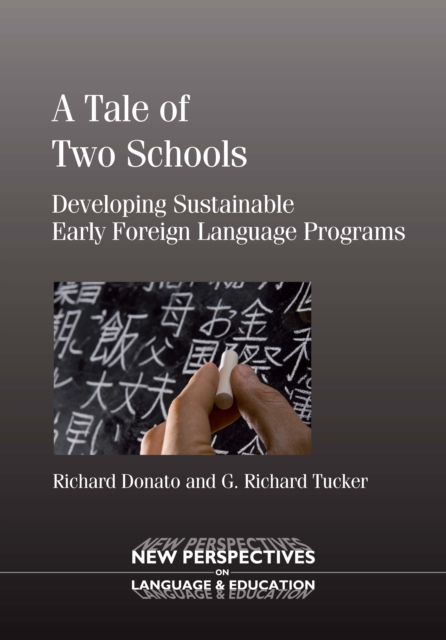
A tale of two schools
This volume documents a sixteen-year longitudinal study of two elementary schools in which Spanish and Japanese foreign language programs were implemented and evaluated. Evaluation of the programs involved documenting children’s language development, assessing the attitudes of various constituents, and examining critical issues related to the introduction and successful operation of a well articulated sequential foreign language program in schools. The volume concludes with a discussion of possible reasons why over time certain sequential foreign language programs flourish and grow while other programs are reduced or eliminated from the school’s curriculum. Parallels with the theory and practice of environmental sustainable development are used as a framework for this analysis.
eBook

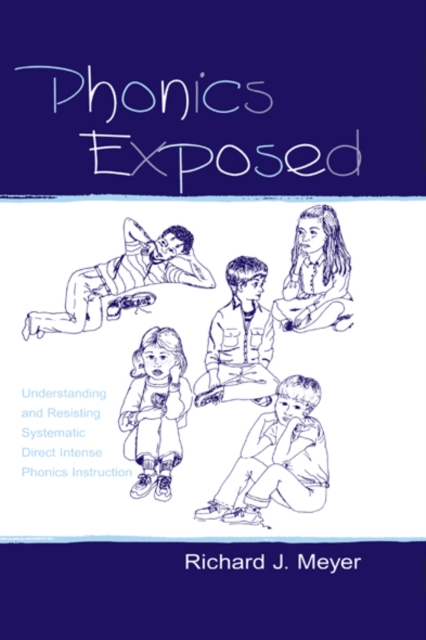
Phonics Exposed
What are the implications of teaching phonics via a systematic direct intense program that mandates all children to experience the same scripted lesson at the same time?
This book addresses the question through an in-depth play-by-play description of a phonics lesson as it occurred in a real classroom, followed by chapters that look at it from different angles by \"zooming in\" on one facet to analyze it closely:
* Reading. What is reading? What definition of reading is presented (implicitly) in the phonics lesson? What do competing definitions from the reading research literature say about how important phonics rules are and how they are used by readers and teachers of reading?
* Teacher knowledge. What is the role and the place of teacher knowledge as it relates to the lesson? What are the skills a teacher has and needs to use in a lesson that is completely scripted ?
* The children. What are their roles and positions during the lesson? What are they learning?
* Curriculum. Where does the phonics curriculum come from? Curriculum in general? Who does it serve and how? What is its purpose?
* Culture. What is the role of culture in the lesson? How do cultural differences and culturally relevant pedagogy relate to the scripted phonics lesson?
* Politics and ideology. Why and how is everything that happens in schools political? How are scripted lessons and resistance to them, forms of political action?
* Teacher professionalism. How can teachers act in order to maintain academic freedom expressed as professional decision making in classrooms?
The author of this book is not neutral. He presents the difficulties a teacher encounters in implementing mandated systematic, direct, intense phonics instruction and children who are confused and frustrated by it. But at the same time he constantly presents hope in the form of smart teachers, curious children, and possibilities for taking action that can lead to change. His direct, accessible writing style stimulates thought and discussion.
Contents: Y.M. Goodman, Foreword. Preface. Why Another Book on Phonics? Phonics Lessons. What Is Reading? Phonics Programs, Teacher Knowledge, and Teacher Identity. A Closer Look at the Children. Phonics Programs and Curriculum. Phonics, Reading, and Culture. Phonics, Reading, and Politics. Teachers, Activism, and Hope. Appendix: Maybe Rules Are Not the Way to Teach Phonics.
eBook

Learner interaction with, and response to, AI-programmed automated writing evaluation feedback in EFL writing: An exploratory study
Recently, artificial intelligence (AI)-programmed automated writing evaluation (AWE) has attracted increasing attention in language research. Using a small data set arising from an analysis of five Chinese university-level English as a foreign language (EFL) students’ submissions, this paper examined in detail how EFL students interacted with the feedback of Pigai, the largest AI-programmed AWE in China. The analysis started with the intention of capturing the machine feedback on the five students’ submissions and the exchanges between the participants and Pigai over repeated submissions, ranging from 3 to 12 submissions. The analysis showed that the learners’ interactions with Pigai focused on error corrective feedback in the initial two submissions. In the case of one student who had 12 submissions, the non-error corrective feedback increased gradually over time, providing rich linguistic resources but without examples and contextual information. The students’ take-up rates of feedback with linguistic resources were much lower than that of error corrective and general feedback. A terrain model to map the stages and nature of student responses showed a more complete dynamic process, in which students’ responses changed from the initial mechanical responses at the discrete language level to more considered approaches in response to machine feedback. The findings of this study have implications for both language pedagogy and the future design and development of AWE for second or foreign language learning.
Journal Article

Brave new digital classroom : technology and foreign language learning
Brave New Digital Classroom deftly interweaves results of pedagogical research and descriptions of the most successful computer-assisted language learning (CALL) projects to explore how technology can best be employed in the foreign-language curriculum to assist the second language acquisition process. Directed to all language teachersùwhether at the school or the postsecondary level, with or without prior experienceùthis book focuses on how to use new technologies effectively. Blake urges teachers to move beyond a simple functional competence of knowing how to use the tools toward first a critical competenceùrealizing what the various tools are good forùand ultimately a rhetorical competence of knowing how the tools will help transform the learning environment. This book examines the effective use of a range of technologies, from Internet sites through computer-mediated communication such as synchronous chatting and blogs, to distance learning. At the end of each chapter questions and activities demonstrate the interactionist, learner-centered pedagogy Blake espouses. An invaluable reference for experienced researchers and CALL developers as well as those of limited experience, Brave New Digital Classroom is also ideal for graduate-level courses on second language pedagogy. It will also be of interest to department chairs and administrators seeking to develop and evaluate their own CALL programs.
eBook

Brave new digital classroom : technology and foreign language learning
Robert Blake, now with Gabriel Guillén, updates his successful book (1st ed. 2008, 2nd ed. 2013) on how to teach foreign languages using technology. Brave New Digital Classroom touches on all of the key concepts and challenges of teaching with technology, focusing on issues specific to FLL or L2 learning and CALL. Originally referred to as computer-assisted language learning, CALL has come to encompass any kind of learning that uses digital tools for language learning. This edition reframes the conversation to account for how technology has been integrated into our lives. Blake and Guillén address the ways technology can help with L2, how to choose the right digital tools, how to use those tools effectively, and how technology can impact literacy and identity. The book is primed for use in graduate courses: terminology is in bold and a comprehensive glossary is included; each chapter finishes with a short list of references for further reading on the topic and discussion questions. The authors provide short interview videos (free via GUP website) to enhance discussions on each chapter's topic.
eBook
Educational Data Mining with R and Rattle
Educational Data Mining (EDM) is one of the emerging fields in the pedagogy and andragogy paradigm, it concerns the techniques which research data coming from the educational domain. EDM is a promising discipline which has an imperative impact on predicting students' academic performance. It includes the transformation of existing, and the innovation of new approaches derived from multidisciplinary spheres of influence such as statistics, machine learning, psychometrics, scientific computing etc. An archetype that is covered in this book is that of learning by example. The intention is that reader will easily be able to replicate the given examples and then adapt them to suit their own needs of teaching-learning. The content of the book is based on the research work undertaken by the authors on the theme \"Mining of Educational Data for the Analysis and Prediction of Students' Academic Performance\". The basic know-how presented in this book can be treated as guide for educational data mining implementation using R and Rattle open source data mining tools. . Technical topics discussed in the book include: • Emerging Research Directions in Educational Data Mining • Design Aspects and Developmental Framework of the System • Model Development - Building Classifiers • Educational Data Analysis: Clustering Approach
eBook

Text processing with Javascript: regular expressions, tools, and techniques for optimal performance
You might think of regular expressions as the holy grail of text processing, but are you sure you aren't just shoehorning them in where standard built-in solutions already exist and would work better? JavaScript itself provides programmers with excellent methods for text manipulation, and knowing how and when to use them will help you write more efficient and performant code. From extracting data from APIs to calculating word counts and everything in between, discover how to pick the right tool for the job and make the absolute most of it every single time.Whether you're a beginner or an advanced programmer, this up-to-date guide will save you a ton of time when dealing with text. With Text Processing with JavaScript, you'll find a collection of tiny programs, each demonstrating a string manipulation approach in JavaScript. You'll also focus squarely on the practical aspects of text processing with JavaScript - that is, what each technique is designed to accomplish and how to use it in your program.Discover how to extract data from APIs and web pages, apply spelling corrections, convert and format currencies, and remove HTML tags from text. Learn to intersect tables, copy text to the clipboard, extract lists from text, and highlight sentences that contain a specific word. Find duplicate words and fix them automatically, modify a copy of an existing regex literal, match the beginning or end of a string, and remove all comments from JavaScript and HTML files with ease. Match non-ASCII words, calculate the word count of an article in any language, and more.Become a JavaScript expert and master chef of text processing with this collection of hands-on and production-ready recipes.
eBook
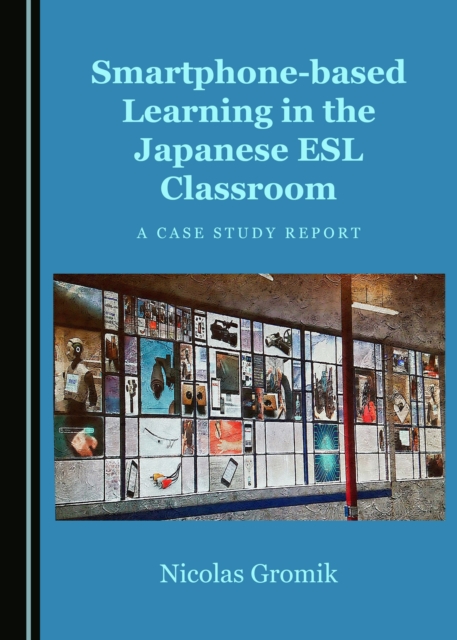
Smartphone-based Learning in the Japanese ESL Classroom
Mobile Assisted Learning emerged from Computer Assisted Learning, with researchers extending computer-based activities to mobile platforms, but differs from the latter in many ways. First, it is obviously mobile, but, second, smartphones have converged many features and software that were previously accessible through a range of digital tools. Thirdly, Mobile Assisted Learning allows interaction with social media. Educators are well-advised to consider smartphone video-based learning and to understand the many possibilities it affords. This book provides an account of the integration of smartphone video recording in the language classroom. It outlines and reports on the implementation process and the practical issues related to this learning method. Using simple digital storytelling, and mini-documentary filmmaking, students are able to learn to speak in a foreign language, while at the same time exploring and experimenting with video production. As such, this book will take readers on a journey through various educational concepts that enhance the formulation of a smartphone based learning approach, as well as suggesting that digital video production is not just a task, it is a 21st century skill necessary for all academics and learners.
eBook