
Catalogue Search | MBRL


Are you sure you want to remove the book from the shelf?

{{itemTitle}}
143
result(s) for
"Language arts Ability testing."
Sort by:

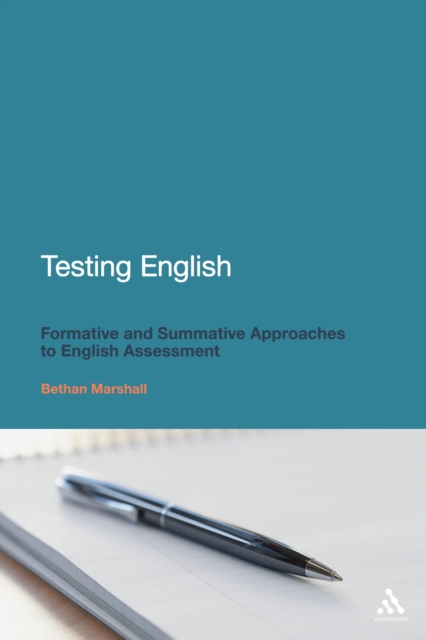
Testing English : formative and summative approaches to English assessment
Bloomsbury Academic ebook
eBook

Assessing English proficiency for university study
\"English-medium institutions around the world face challenges in coping with the diverse language backgrounds of their students. This book focuses on strategies and procedures for assessing the academic language ability of incoming students so that those with significant needs can have opportunities to enhance their language skills. It draws upon a variety of contexts, with a particular focus on initiatives at universities in Australia and New Zealand to introduce post-entry language assessment (PELA) programmes. The book discusses the relative merits of the constructs of academic language proficiency and academic literacies as the basis for the assessment and also considers the diagnostic nature of such assessments. On a practical level, there is a wealth of advice on appropriate test formats, and a framework for evaluating the validity of assessments of this kind. It will be of great interest to academics and administrators concerned with the quality of teaching and learning in their institutions, as well as lecturers and tutors in EAP and academic learning programmes\"-- Provided by publisher.
BOOK
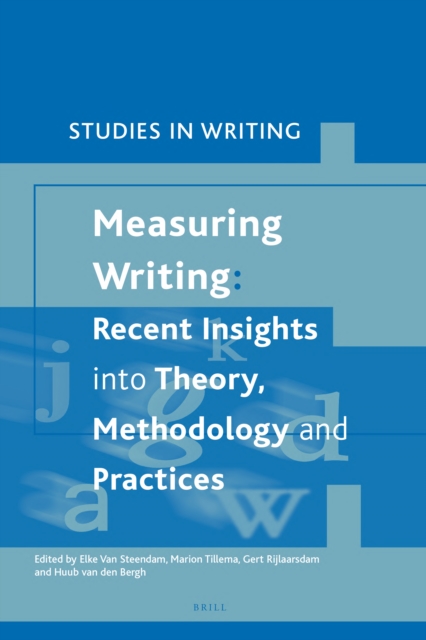
Measuring Writing: Recent Insights into Theory, Methodology and Practices
This volume provides a state-of-the-art overview of theory, methodology and practices in the assessment of writing. The focus throughout the book is on the construct of writing and its assessment: what constitutes writing ability and how can it be defined (in various contexts)? This question cannot be answered without looking into the methodological question of how to validate and measure the construct of writing ability. Throughout the book, therefore, discussions integrate theoretical and methodological issues. A number of chapters discusses whether varying definitions and varying operationalizations of writing ability are needed in various contexts, such as formative assessments versus summative assessments, large scale assessments versus individual assessments, different tasks, different genres, and different languages, but also different age groups. A range of rating methods is investigated and discussed in this book. The ongoing debate on holistic versus analytic ratings, and the different underlying conceptions of writing proficiency, is a pertinent matter, on which a number of chapters in this volume shed new light. The matter is discussed and analyzed from various angles, such as generalizability of judgements and usability in formative contexts. Another fundamental debate concerns computer scoring of written products. A nuanced discussion of its validity is presented in this volume.
eBook

Strategies for second language listening : current scenarios and improved pedagogy
\"Listening is generally perceived as a difficult and sometimes neglected skill by language teachers and learners. This volume aims to help second language teachers to teach listening in a principled way. It provides a detailed overview of research into effective second language listening and offers insight into the role of learner strategies. The book also examines teachers' beliefs and practices regarding listening and listening pedagogy, providing an analysis of textbook materials for second language listening. With suggested practical activities for the teaching of listening as a process, not a product, the book is an invaluable resource for the development of more effective listening, and will appeal to researchers and practitioners of second language learning alike\"-- Provided by publisher.
Book

The Minimum Core for Language and Literacy
An essential self assessment book to support trainee teachers in acquiring the minimum core for literacy in the lifelong learning sector.
eBook


Assessment and autonomy in language learning
\"While assessment and autonomy are areas that have been extensively explored in relation to EFL and foreign language learning in general, the nature of the relationship between the two has not been given the coverage that one might expect. This book examines this contested relationship from a number of perspectives in a variety of Higher Education language-learning contexts in Europe and the Far East. The contributors to the book, all teacher-researchers with direct experience of the issues and challenges involved, describe research into assessment both for and as autonomy, as well as approaches to the assessment of autonomy itself. The chapters explore how assessment can be used to promote and increase autonomy through learner involvement in assessment processes. Addressing a range of challenges to both autonomy in assessment and the assessment of autonomy, the book also provides practical models, tools and techniques for putting these ideas into practice, which can be adapted to other teaching contexts beyond language learning\"-- Provided by publisher.
Book
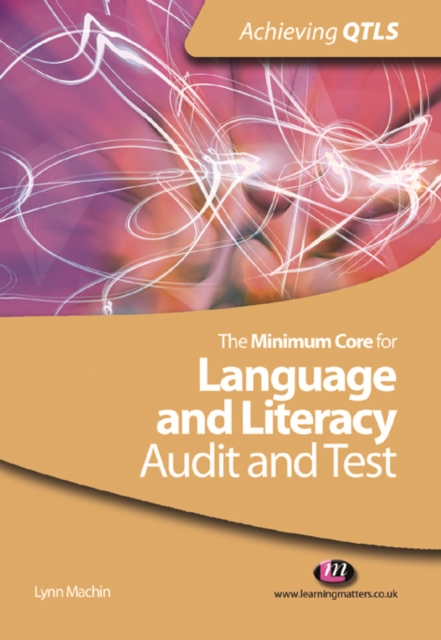
The minimum core for language and literacy: audit and test
This book supports trainee teachers in the Lifelong Learning Sector in the assessment of their literacy knowledge. A self-audit section is included to help trainees understand their level of competence and confidence in literacy and will help them identify any gaps in their knowledge and skills. This is followed by exercises and activities to support and enhance learning. The book covers all the content of the LLUK standards for the minimum core for literacy. Coverage and assessment of the minimum core have to be embedded in all Certificate and Diploma courses leading to QTLS and ATLS status.
eBook