
Catalogue Search | MBRL


Are you sure you want to remove the book from the shelf?

{{itemTitle}}
51,243
result(s) for
"Language families"
Sort by:


Building Culturally and Linguistically Sustaining Spaces for Emergent Bilinguals: Using Read‐Alouds to Promote Translanguaging
Multilingual students arrive in classrooms with rich language knowledge and funds of knowledge. Educators must recognize that emergent bilinguals speak multiple languages. They have one unitary language system; their language is bilingualism. Whether in a monolingual classroom setting or a multilingual setting, when working with emergent bilinguals, it is important that all of the students’ linguistic resources are welcomed into the classroom. The author describes how, as a first‐grade dual‐language (Spanish–English) teacher, she used children's literature and translanguaging to support her emergent bilinguals in using all of their linguistic resources to make meaning and build a linguistically sustaining space. The use of the text created a space for the teacher to model translanguaging and for the students to use all of their linguistic resources.
Journal Article

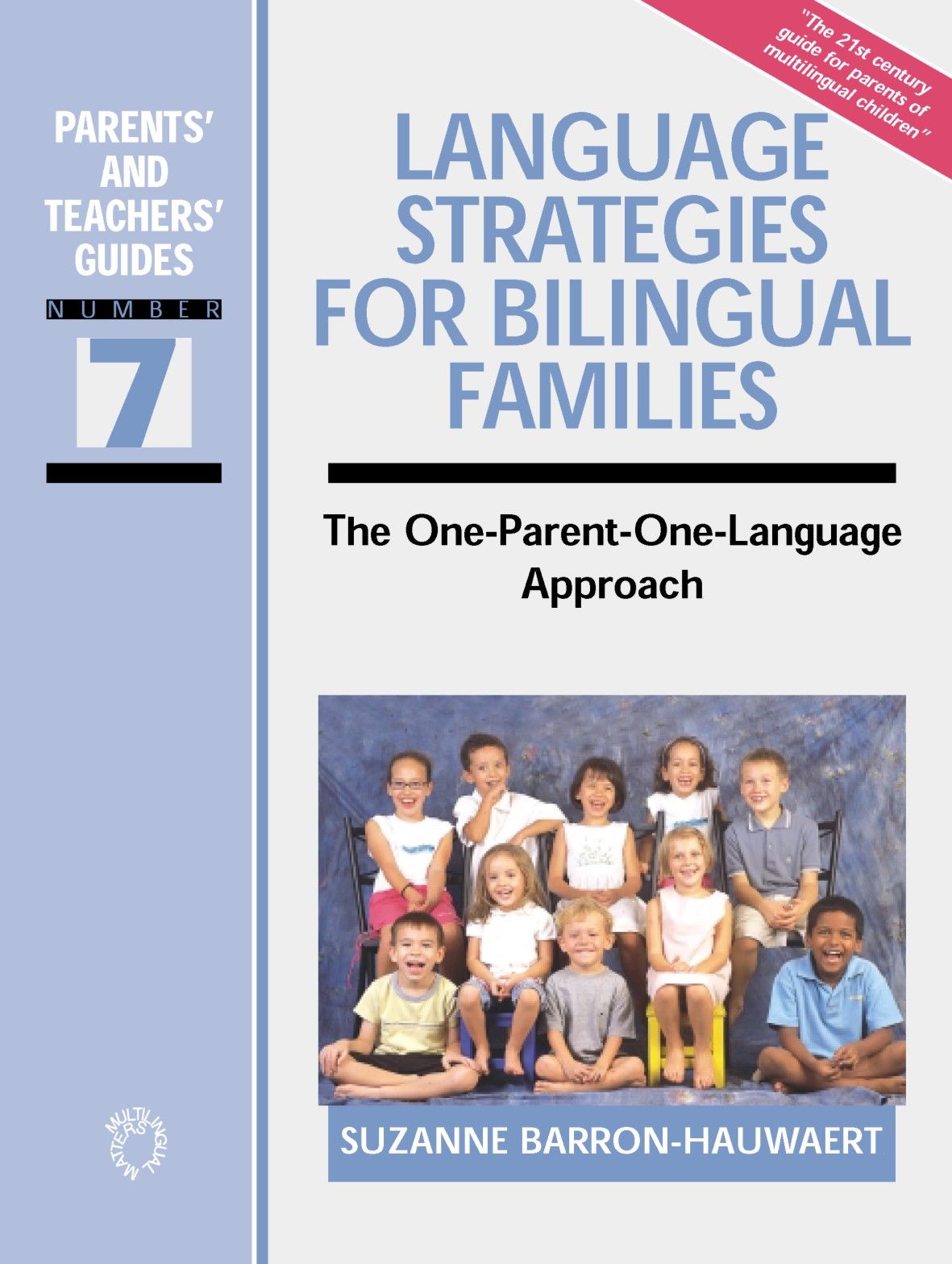
Language Strategies for Bilingual Families
Lots of new parents these days have the opportunity to bring up their child with two or more languages because of increasing job mobility and the global community. The benefits of bilingualism and biculturalism such as higher cognitive skills, an awareness of language and sensitivity to other cultures, are being increasingly recognised. However many parents don't know how to start, what methods to use or where to seek help when facing problems.
Now Suzanne Barron-Hauwaert, a mother of three trilingual children, teacher and linguist who has lived and worked all over the world, has written a book which provides an inspiring approach to passing on two or more languages to your children. In Language Strategies for Bilingual Families she considers several methods of bilingualism and focuses on the one-person one-language approach, in which each parent speaks his or her native language and is responsible for passing on his or her culture.
Suzanne questioned over a hundred bilingual families about their experiences and she interviewed thirty families in depth. The results of her study are linked to current academic research, but the book is both readable and relevant to non-academics and provides fascinating insights into being a multilingual family. It will prove an exciting and stimulating read for potential and current mixed-language families.
eBook

Nebenan : roman
\"Ein kleiner Ort am Nord-Ostsee-Kanal, zwischen Natur, Kreisstadt und Industrie, kurz nach dem Jahreswechsel. Mitten aus dem Alltag heraus verschwindet eine Familie spurlos. Das verlassene Haus wird zum gedanklichen Zentrum der Nachbarn: Julia, Ende dreissig, die sich vergeblich ein Kind wünscht, die mit ihrem Freund erst vor Kurzem aus der Grossstadt hergezogen ist und einen kleinen Keramikladen mit Online-Shop betreibt. Astrid, Anfang sechzig, die seit Jahrzehnten eine Praxis in der nahen Kreisstadt führt und sich um die alt gewordene Tante sorgt. Und dann ist da das mysteriöse Kind, das im Garten der verschwundenen Familie auftaucht.Sie alle kreisen wie Fremde umeinander, scheinbar unbemerkt von den Nächsten, sie wollen Verbundenheit und ziehen sich doch ins Private zurück. Und sie alle haben Geheimnisse, Sehnsüchte und Ängste. Ihre Wege kreuzen sich, ihre Geschichten verbinden sich miteinander, denn sie suchen, wonach wir alle uns sehnen: Geborgenheit, Zugehörigkeit und Vertrautheit.\" -- Publisher's website
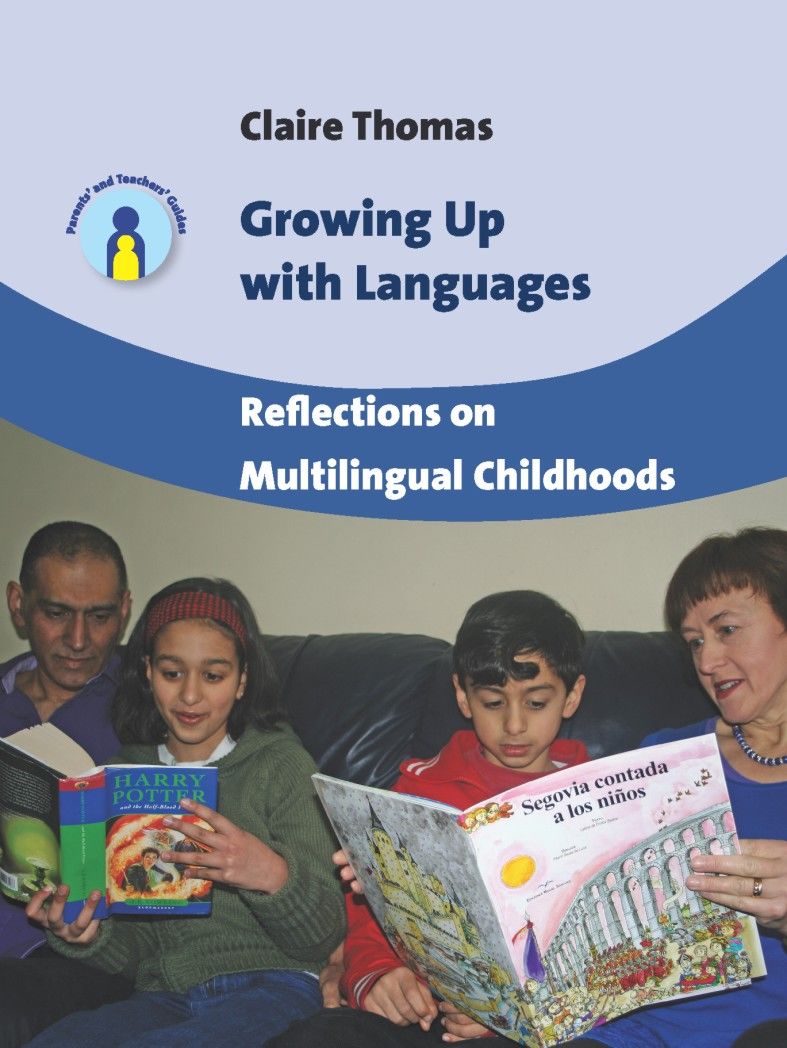
Growing Up with Languages
Primarily aimed as a practical resource for parents, but also of interest to students and researchers because of its unique content, this book includes recollections of and advice on many of the common issues or dilemmas that arise in multilingual families.
eBook


Community literacy club and family language policymaking initiatives for biliteracy development
BackgroundOur article analyses two case studies that show an urban South African family and members of a community literacy club engaging in grassroots initiatives as family and community language policymakers and planners for bilingual and biliteracy development.ObjectivesThe main aim is to describe and analyse the initiatives taken by both community members of the literacy club and family members in challenging separate bilingualism, monoglossic, and anglonormative ideologies.MethodThe researchers used linguistic ethnographic methods to collect data and primarily draw on image data, a written text at the literacy club, as well as transcribed data from observational data.ResultsThe research findings point to the critical role that communities and families play in developing and maintaining children’s home language, as well as desire and uses of more than one language to develop children’s biliteracy.ConclusionWe view children’s biliteracy development in the community and the family as rooted in the sociocultural through a process of drawing from a rich linguistic knowledge and vocabulary that is learned in context.ContributionOur contribution to the field is in highlighting policymaking from below and how policymaking from above needs to meet language policymaking and planning from below. We also contribute to understandings of simultaneous biliteracy as opposed to separate and sequential biliteracy.
Journal Article

Pride, prejudice and pragmatism: family language policies in the UK
In this study, we examine how mobility and on-going changes in sociocultural contexts impact family language policy (FLP) in the UK. Using a questionnaire and involving 470 transnational families across the UK, our study provides a descriptive analysis of different family language practices in England and establishes how attitudes influence the different types of FLP in these families. Complementing the descriptive analysis, we use interview data to understand the driving forces behind the different types of language practices and language management activities, and explore how ideological constructs of ‘pride’, ‘prejudice’ and ‘pragmatism’ are directly related to negative or positive attitudes towards the development of children’s heritage language. The findings indicate that migration trajectories, social values, raciolinguistic policing in schools, and linguistic loyalty have shaped family decisions about what languages to keep and what languages to let go. Our paper responds to the linguistic and demographic changes in British society, and makes an important contribution to our knowledge about multilingual development of children in transnational families. Critically, this study shows that FLPs alone cannot save the minority languages; institutionally sanctioned language practices and ideologies have to make a move from limiting the use of these languages in educational contexts to legitimising them as what they are: linguistic resources and languages of pride.
Journal Article