
Catalogue Search | MBRL


Are you sure you want to remove the book from the shelf?

{{itemTitle}}
54,169
result(s) for
"Language poetry"
Sort by:

Poetry & Language Writing
It has been variously labelled ‘Language Poetry’, ‘Language Writing’, ‘L=A=N=G=U=A=G=E writing’ (after the magazine that ran from 1978 to 1981), and ‘language-centred writing’. It has been placed according to its geographical positions, on East or West coasts; its venues in small magazines, independent presses and performance spaces, and its descent from historical precursors, be they the Objectivists, the composers-by-field of the Black Mountain School, the Russian Constructivists or American modernism à la William Carlos Williams and Gertrude Stein. Indeed, one of the few statements that can be made about it with little qualification is that ‘it’ has both fostered and endured a crisis in representation more or less since it first became visible in the 1970s. In Poetry & Language Writing David Arnold grasps the nettle of Language poetry, reassessing its relationship with surrealism and providing a scholarly, intelligent way of understanding the movement. Poets discussed include Charles Bernstein, Susan Howe, Michael Palmer and Barrett Watten.
eBook

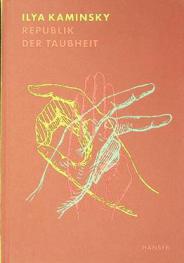
Deaf republic : poems
Deaf Republic opens in an occupied country in a time of political unrest. When soldiers breaking up a protest kill a deaf boy, Petya, the gunshot becomes the last thing the citizens hear--they all have gone deaf, and their dissent becomes coordinated by sign language. The story follows the private lives of townspeople encircled by public violence. At once a love story, an elegy, and an urgent plea, these poems confronts our time's vicious atrocities and our collective silence in the face of them.
BOOK

Eye Gaze in Creative Sign Language
This article discusses the role of eye gaze in creative sign language. Because eye gaze conveys various types of linguistic and poetic information, it is an intrinsic part of sign language linguistics in general and of creative signing in particular. We discuss various functions of eyegaze in poetic signing and propose a classification of gaze behaviors based on the observation of a number of poems in British Sign Language and Swedish Sign Language.
Journal Article


The Shattered Language of Dreams in Lyn Hejinian’s The Book of a Thousand Eyes
Lyn Hejinian, a prominent figure in Language poetry, is strongly committed to the task of dismantling poetic conventions by envisaging a new language that resists the constraints of linearity and referentiality. In The Book of a Thousand Eyes (2012), she explores the dream world in order to delve into the mechanics of the writing process, while playing with language and experience at various stages of consciousness and perception. This paper examines Hejinian’s philosophical and epistemological quest for meaning and knowledge, focusing on her scrutiny of language as a medium for expressing and shaping the poet’s experiences. A further aim is to analyze her poetics of indeterminacy and her use of the framing structure of dreams to distort reality, emphasize the role of art as a radical construct, and foster a dynamic space where the poetic language is shifty and elusive.
Journal Article

Poetry and Language Writing
It has been variously labelled 'Language Poetry', 'Language Writing', 'L=A=N=G=U=A=G=E writing' (after the magazine that ran from 1978 to 1981), and 'language-centred writing'. It has been placed according to its geographical positions, on East or West coasts; its venues in small magazines, independent presses and performance spaces, and its descent from historical precursors, be they the Objectivists, the composers-by-field of the Black Mountain School, the Russian Constructivists or American modernism à la William Carlos Williams and Gertrude Stein. Indeed, one of the few statements that can be made about it with little qualification is that 'it' has both fostered and endured a crisis in representation more or less since it first became visible in the 1970s. In Poetry & Language Writing David Arnold grasps the nettle of Language poetry, reassessing its relationship with surrealism and providing a scholarly, intelligent way of understanding the movement. Poets discussed include Charles Bernstein, Susan Howe, Michael Palmer and Barrett Watten.
eBook


A Comparative Minoritarian Study of Language Poetry of Iran and the United States
In her article \"A Comparative Minoritarian Study of Language Poetry of Iran and the United States\" Sama Khosravi Ooryad analyses Language poetry of the United States (1970s) and Language poetry of Iran (1990s) through Gilles Deleuze and Felix Guattari's concepts of minor literature and rhizomic text. The argument of the article is that the two movements, in both their poems and theoretical passages, carry potentialities to be related to Deleuzian concepts. The practice of minor literature, rhizomic text and book as machine is more evident in the works of U.S. language poets. Moreover, Iranian language poetry, while being analyzed alongside its American counterpart, has proved to be less conscious of the political status that minor literature advocates. Both movements' similarities and dissimilarities are sketched out while keeping alert to their significance in creating communities.
Journal Article