
Catalogue Search | MBRL


Are you sure you want to remove the book from the shelf?

{{itemTitle}}
689
result(s) for
"Language policy Congresses."
Sort by:


Endangered Languages and Languages in Danger
This peer-reviewed collection brings together the latest research on language endangerment and language rights. It creates a vibrant, interdisciplinary platform for the discussion of the most pertinent and urgent topics central to vitality and equality of languages in today’s globalised world. The novelty of the volume lies in the multifaceted view on the variety of dangers that languages face today, such as extinction through dwindling speaker populations and lack of adequate preservation policies or inequality in different social contexts (e.g. access to justice, education and research resources). There are examples of both loss and survival, and discussion of multiple factors that condition these two different outcomes. We pose and answer difficult questions such as whether forced interventions in preventing loss are always warranted or indeed viable. The emerging shared perspective is that of hope to inspire action towards improving the position of different languages and their speakers through research of this kind.
eBook

Contact talk : the discursive organization of contact and boundaries
\"This book critiques and operationalizes contemporary thinking in the rapidly expanding field of linguistic anthropology. It does so using cases studies of actual everyday language practices from an extremely understudied, yet incredibly important area of the global South, Indonesia. In doing so, it provides a rich set of studies that model and explain complex linguistic anthropological analysis in engaging and easily understood ways. As a book that is both accessible for undergraduate students and enlightening for graduate students through to senior professors, this book problematizes a wide range of assumptions. The diversity of settings and methodologies used in this book surpass many recent collections that attempt to address issues surrounding contemporary processes of diversification given rapid ongoing social change. In focusing on the trees, so to speak, the collection as a whole also enables readers to see the forest. This approach provides a rare insight into relationships between everyday language practices, social change, and the ever present and ongoing processes of nation building\"-- Provided by publisher.
Book

Languages in Africa
People in many African communities live within a series of concentric circles when it comes to language. In a small group, a speaker uses an often unwritten and endangered mother tongue that is rarely used in school. A national indigenous language-written, widespread, sometimes used in school-surrounds it. An international language like French or English, a vestige of colonialism, carries prestige, is used in higher education, and promises mobility-and yet it will not be well known by its users.The essays inLanguages in Africaexplore the layers of African multilingualism as they affect language policy and education. Through case studies ranging across the continent, the contributors consider multilingualism in the classroom as well as in domains ranging from music and film to politics and figurative language. The contributors report on the widespread devaluing and even death of indigenous languages. They also investigate how poor teacher training leads to language-related failures in education. At the same time, they demonstrate that education in a mother tongue can work, linguists can use their expertise to provoke changes in language policies, and linguistic creativity thrives in these multilingual communities.
eBook

Sustaining Linguistic Diversity
In the last three decades the field of endangered and minority languages has evolved rapidly, moving from the initial dire warnings of linguists to a swift increase in the number of organizations, funding programs, and community-based efforts dedicated to documentation, maintenance, and revitalization.Sustaining Linguistic Diversitybrings together cutting-edge theoretical and empirical work from leading researchers and practitioners in the field. Together, these contributions provide a state-of-the-art overview of current work in defining, documenting, and developing the world's smaller languages and language varieties. The book begins by grappling with how we define endangerment-how languages and language varieties are best classified, what the implications of such classifications are, and who should have the final say in making them. The contributors then turn to the documentation and description of endangered languages and focus on best practices, methods and goals in documentation, and on current field reports from around the globe. The latter part of the book analyzes current practices in developing endangered languages and dialects and particular language revitalization efforts and outcomes in specific locations. Concluding with critical calls from leading researchers in the field to consider the human lives at stake,Sustaining Linguistic Diversityreminds scholars, researchers, practitioners, and educators that linguistic diversity can only be sustained in a world where diversity in all its forms is valued.
eBook

Language legislation and linguistic rights : selected proceedings of the Language Legislation and Linguistic Rights Conference, the University of Illinois at Urbana-Champaign, March 1996
The contributions to this volume cover a broad range of issues in language policy that are hotly debated in every corner of the globe. The articles included investigate the implications of language policies on the notion of language rights as the issues are played out in very specific circumstances - from the courtroom in Australia to the legislature in California to the educational system in England to the administrative practices of the European Commission. The authors explore conflicts between basic conceptions of fairness in justice, administration and education on the one hand, and political and economic realities on the other. Articles focus on langage issues in the United States, Canada, Brazil, England, France, Slovakia, Russia, Sri Lanka, Australia and several African states. Other articles consider the implications of new supernational agreements - the European Union, NAFTA, GATT, the OAU - on language issues in the signatory states. In sum the volume offers an extensive presentation of current issues and practices in language policy and linguistic human rights.
eBook

Cruising the Library
Cruising the Library examines the ways in which library classifications have organized sexuality and sexual perversion. The author studies the Library of Congress Subject Headings and Classification, as well as the Library of Congress's Delta Collection, a restricted collection of obscenity until 1964.
eBook

Linguistic and cultural interactions between Greece and Anatolia : in search of the golden fleece
The aim of this book is to provide new insights on the multi-faceted topic of the relationships between ancient Greece and ancient Anatolia before the Classical era. This is a rapidly evolving field of enquiry, thanks to the recent advances in our understanding of the Anatolian languages and the ever-growing availability of primary evidence. The chapters in this volume investigate the question of Graeco-Anatolian contacts from various points of view and with a specifically linguistic and textual focus. The nature of the evidence calls for an interdisciplinary approach, and the contributions presented here range from writing systems to contact linguistics, without excluding the analysis of cultural motifs and religious practices in both literary texts and non-literary evidence.
eBook
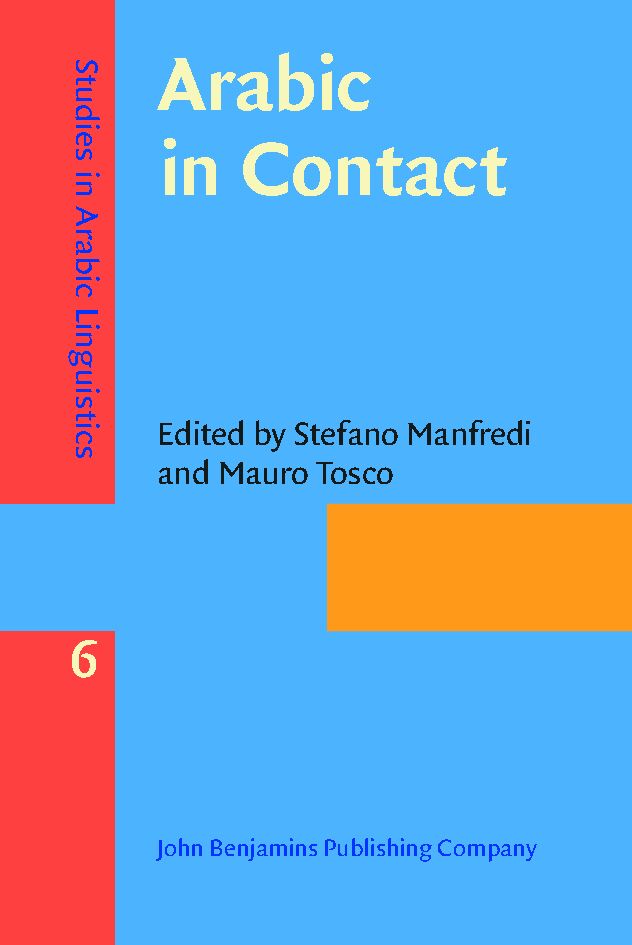
Arabic in Contact
The present volume provides an overview of current trends in the study of language contact involving Arabic. By drawing on the social factors that have converged to create different contact situations, it explores both contact-induced change in Arabic and language change through contact with Arabic. The volume brings together leading scholars who address a variety of topics related to contact-induced change, the emergence of contact languages, codeswitching, as well as language ideologies in contact situations. It offers insights from different theoretical approaches in connection with research fields such as descriptive and historical linguistics, sociolinguistics, ethnolinguistics, and language acquisition. It provides the general linguistic public with an updated, cutting edge overview and appreciation of themes and problems in Arabic linguistics and sociolinguists alike. As of January 2023, this e-book is freely available, thanks to the support of libraries working with Knowledge Unlatched.
eBook

Language endangerment and obsolescence in East Asia : China, Japan, Siberia, and Taiwan
What shapes and magnitude can language loss have in East Asian endangered languages? How does it differ with regards to the languages' historical development and sociolinguistic environment? This book surveys a number of minority and, in most cases, endangered languages spoken in China, Japan, Taiwan, and Russia which all face, or have faced in their recent history, loss of language features. The contributions in this publication present you with different cases of obsolescence attested throughout East Asia and highlight how this process, though often leading back to common causes, is in fact a multifaceted reality with diverse repercussions on grammar and linguistic vitality.
eBook