
Catalogue Search | MBRL


Are you sure you want to remove the book from the shelf?

{{itemTitle}}
7,232
result(s) for
"Languages of Asia"
Sort by:

English as a Lingua Franca in ASEAN
The lingua franca role of English, coupled with its status as the official language of ASEAN, has important implications for language policy and language education. These include the relationship between English, the respective national languages of ASEAN and thousands of local languages. How can the demand for English be balanced against the need for people to acquire their national language and mother tongue? While many will also need a regional lingua franca, they are learning English as the first foreign language from primary school in all ASEAN countries. Might not this early introduction of English threaten local languages and children’s ability to learn? Or can English be introduced and taught in such a way that it can complement local languages rather than replace them? The aim of this book is to explore questions such as these and then make recommendations on language policy and language education for regional policymakers. The book will be important for regional policymakers and language education professionals. It should also benefit language teachers, especially, but by no means exclusively, English language teachers. The book will be of interest to all who are interested in the development of English as an international language and the possible implications of this upon local languages and cultures.
eBook

Exploring ethical perceptions in EFL classroom assessment: perspectives of Chinese secondary school teachers
This article employs a mixed-method approach and investigates the perceptions of Chinese secondary-school English as a Foreign Language (EFL) teachers regarding ethical issues in classroom assessment practices. It examines the agreement of 927 teachers from across 31 provinces in China with the judgment of previous researchers on 14 classroom assessment scenarios that illustrate both ethical and unethical assessment practices. The findings show a high level of agreement with experts' views on eight scenarios, intermediate level on four, and low level on two. Within the Chinese educational context, it is evident that besides demographic factors, such as gender, years of teaching, educational backgrounds, etc., societal and cultural factors, teachers' educational values and philosophies, the macro-level assessment requirements set by educational authorities and parental involvement, all significantly shape teachers' ethical perceptions. This study advocates that guidance on making rational ethical judgments in classroom assessment be incorporated into teacher training curricula to empower teachers' ability to deal with ethical dilemmas. It also suggests the establishment of regulatory frameworks, which delineates the rights and responsibilities of parents, teachers and educational administrations, ensuring that teachers retain their autonomy in classroom assessment.
This study identifies key ethical dilemmas in classroom assessment for Chinese EFL teachers. It calls for integrating ethics into teacher training and creating supportive policies. These steps are vital to safeguard teacher autonomy and ensure fair, impactful assessments for students.
Journal Article

Evolution and trends in interlanguage pragmatics research: a bibliometric analysis (1973-2024)
Interlanguage pragmatics (ILP) has emerged as a vital area within second language acquisition research over the past five decades, examining how non-native speakers develop pragmatic competence. While narrative reviews have examined theoretical developments in this field, a thorough understanding of its evolution, research patterns and emerging trends remains lacking. This study presents the first large-scale bibliometric analysis of ILP research from 1973 to 2024, mapping the intellectual structure and development of this dynamic field. The analysis reveals significant growth in ILP research, with distinct developmental phases of establishment, consolidation and expansion. Publication patterns show a notable shift in research leadership from traditional Western academic centers to a more globally distributed network. The citation analysis identifies influential works that have shaped theoretical foundations, while co-authorship networks indicate opportunities for enhanced international collaboration. Keyword analysis reveals evolving research themes, particularly the integration of digital technologies in pragmatic instruction and assessment. The findings suggest that ILP has matured into a dynamic field characterized by methodological innovation, geographical diversification and emerging research directions in digital communication contexts. This study provides valuable insights for understanding the field's development and identifying future research opportunities, particularly in fostering cross-cultural collaboration and integrating diverse theoretical perspectives.
Journal Article
Flipped learning: facilitating student engagement through repeated instruction and direct feedback
Flipped Learning is an alternative model for an online learning which combines asynchronous video lectures and synchronous practice problems. The purpose of this study was to investigate the effect of Flipped Learning through Repeated Instruction and Direct Feedback on the students' behavioural, cognitive, and emotional engagement. A qualitative and quantitative approach was conducted in two groups with 26 students in which one group used flipped learning. Data were gathered from the questionnaire, semi-structure interviews and the teacher's observations on how the students engaged in the learning English. Findings demonstrate that student engagement on the flipped learning class are generally positive overall than those in the non-flipped class. Flipped learning group produced higher quality, positive collaboration between student lecturers, increasing interest in learning, active participation in learning and strengthening relationships between students and lecturers in online learning. Thus, Flipped Learning integrated with repeated instruction and direct feedback can be a solution of a passive learning experience in a traditional teacher-centred approach as it seems to be effective in improving student engagement.
Journal Article
The mandarin advantage: How Thai university students are facilitating cross-border E-commerce for Chinese tourists in Thailand's post-COVID recovering hospitality sector
This study explores the crucial role of Thai university students proficient in Chinese in revitalizing cross-border e-commerce for Chinese tourists within Thailand's recovering hospitality sector. By leveraging their language proficiency and cultural insight, these students enhance platform usability, foster cultural sensitivity, and drive business innovation-offering unique solutions for post-COVID economic recovery. Through qualitative interviews, the research highlights how these students act as cultural intermediaries, bridging gaps between Thai service providers and Chinese tourists. Students reported contributing to improved platform features, such as better communication channels for seamless transactions, and the implementation of culturally tailored marketing strategies. However, they also identified challenges, including navigating cultural nuances, overcoming technological barriers, and the need for stronger institutional support. The study offers practical recommendations within the Belt and Road Initiative (BRI) framework, including fostering Thai-Chinese student collaborations in digital platform design, developing user-friendly payment systems tailored to Chinese preferences, and integrating cultural sensitivity training for stakeholders involved in cross-border trade. The findings underscore the transformative impact of student involvement in enhancing Thailand's e-commerce and tourism ecosystems. By aligning educational, technological, and policy strategies, Thailand can accelerate its hospitality sector's recovery while promoting sustainable, inclusive growth in the broader regional context of the BRI.
Journal Article
Persuasive languages on political billboard of the 2024 Indonesian General Election in Padang City West Sumatra, Indonesia
Persuasive languages have advantages and strengths in influencing the public to achieve goals. Therefore, people use persuasive language widely in various communication events. In this regard, this study attempts to research the strategic role of persuasive language used by politicians in the City of Padang who are running to become members of the People’s Representative Council and Regional Representative Council, as well as the presidential and vice presidential candidates they nominate. The researchers conducted the study using a linguistic landscape and a pragmatic approach. The data for this study are two hundred sub-texts segmented from billboards of the candidate of the members of the Indonesian House of Representatives (DPR), the Regional People’s House of Representatives (DPRD), and the Regional Representative Council (DPD) in the period of 2024–2029. The researchers collected the data by capturing photographs of billboards in Padang City. The results of the analysis reveal that the landscape of persuasive languages in political billboards in Padang City consists of nine types. Meanwhile, the linguistic landscape of persuasive languages of one billboard consists of three parts: introducing the parties, the main message, and additional information. The languages used are Indonesian, Minangkabau language, English, and Arabic. Regarding pragmatics, the politicians deliver the message through direct and indirect literal speech acts of various kinds. The politicians also put politeness systems and deixis in their language on the billboards.
Journal Article

The Languages and Linguistics of South Asia
With nearly a quarter of the world's population, members of at least five major language families plus several putative language isolates, South Asia is a fascinating arena for linguistic investigations, whether comparative-historical linguistics, studies of language contact and multilingualism, or general linguistic theory. This volume provides a state-of-the-art survey of linguistic research on the languages of South Asia, with contributions by well-known experts. Focus is both on what has been accomplished so far and on what remains unresolved or controversial and hence offers challenges for future research. In addition to covering the languages, their histories, and their genetic classification, as well as phonetics/phonology, morphology, syntax, and sociolinguistics, the volume provides special coverage of contact and convergence, indigenous South Asian grammatical traditions, applications of modern technology to South Asian languages, and South Asian writing systems. An appendix offers a classified listing of major sources and resources, both digital/online and printed.
eBook
A comparative study of southern Thai idioms containing the word /kin/ and Chinese idioms with similar meanings
For over four decades, comparative analyses of Thai and Chinese idioms have been conducted, yet a significant gap persists in the examination of idiomatic expressions specific to southern Thai dialects juxtaposed with Chinese equivalents. This study aims to address this gap by scrutinizing the structural and functional parallels and disparities between southern Thai idioms and Chinese idioms. This study curated a corpus of 47 southern Thai idioms incorporating the term /kin/ which had the same meaning as the English word eat, which were then contrasted with 57 Chinese idioms conveying similar meanings. Findings from this comparative analysis underscore the divergent idiomatic conventions inherent in both languages. Moreover, the study elucidates how idiomatic expressions, while bearing equivalent semantic content, may be employed within distinct sociocultural contexts owing to the inherent cultural disparities between the two linguistic traditions. Notably, the idiomatic repertoire of southern Thai dialects exhibits distinct features deviating from those observed in central Thai idioms, which have historically served as the benchmark for comparative investigations in prior academic.
Journal Article

Asian Englishes
This book provides crucial reading for students and researchers of world Englishes. It is an insightful and provocative study of the forms and functions of English in Asia, its acculturation and nativization, and the innovative dimensions of Asian creativ
eBook
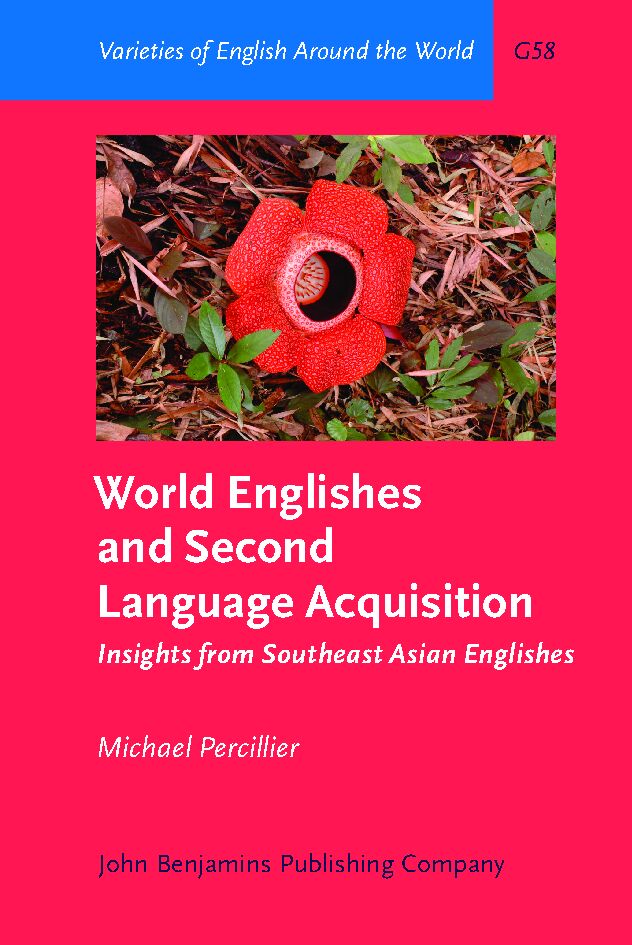
World Englishes and second language acquisition : insights from Southeast Asian Englishes
The volume will be highly relevant for researchers interested in the dynamics of Outer Circle and Expanding Circle Englishes, the structural and sociolinguistic aspects of English in Southeast Asia, or the integration of the paradigms of World Englishes and Second Language Acquisition.
eBook