
Catalogue Search | MBRL


Are you sure you want to remove the book from the shelf?

{{itemTitle}}
171
result(s) for
"Languedoc"
Sort by:


The life and death of industrial Languedoc, 1700-1920
In this seminal book, Johnson writes a full-scale study of the rise and decline of industrialization in the Bas-Languedoc region of France. Working within a broad 200-year time frame, Johnson examines the process of how and why a successful industrial region (woollens) transformed itself to agriculture (wine).
eBook

The voices of Nîmes : women, sex, and marriage in Reformation Languedoc
\"Most of the women who ever lived left no trace of their existence on the record of history. Sixteenth- and seventeenth-century women of the middling and lower levels of society left no letters or diaries in which they expressed what they felt or thought. Criminal courts and magistrates kept few records of their testimonies, and no ecclesiastical court records are known to survive for the French Roman Catholic Church between 1540 and 1667. For the most part, we cannot hear the voices of ordinary French women-- but this study allows us to do so. Based on the evidence of 1,200 cases brought before the consistories, or moral courts, of the Huguenot church of Languedoc between 1561 and 1615, The Voices of Nîmes allows us to access ordinary women's everyday lives: their speech, behavior, and attitudes relating to love, faith, and marriage, as well as friendship and sex. Women appeared frequently before the consistory because one of the chief functions of moral discipline was the regulation of sexuality, and women were thought to be primarily responsible for sexual sin. This means that the registers include over a thousand testimonies by and about women, most of whom left no other record to posterity\"-- Provided by publisher.
Book
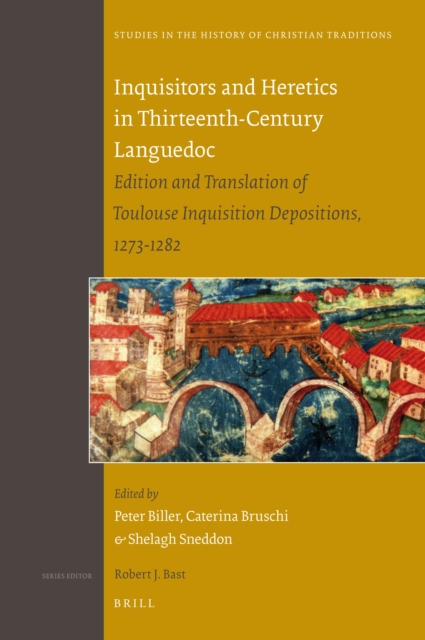
Inquisitors and Heretics in Thirteenth-Century Languedoc
This book provides an edition and translation of depositions of heresy suspects interrogated in Toulouse in the 1270s. These depositions plug a large hole in the history of heresy and inquisition, and they are reminiscent of Montaillou in their sheer colour and liveliness.
eBook


State and Society in Eighteenth-Century France
'The Old Regime Province Of Languedoc' provides the setting for Stephen Miller's rich analysis of state and society relations in eighteenth-century France. Continuing where William Beik's pathbreaking seventeenth-century study ends, this book sheds new light on the origins of the French Revolution and the social and political developments thereafter.Beik's widely acclaimed study depicted Languedoc as the classic example of the ruling compromise between crown and the social elites established by Louis XIV. Building on this study, Miller shows that the monarchical state was far from being a neutral modernizing force. Rather it was committed to reinforcing not just fiscal inequalities, but also those of personal honor, authority, and rights.Based on years of research in the National Archives of France as well as local archives, this book surveys recent scholarship on various aspects of political culture. It then sensibly stresses the importance of evaluating Languedoc in the economic and administrative context. Miller argues that the monarchy's search for revenue in the 1770s and 1780s led to close collaboration with the high-ranking nobles and ecclesiastics of the province.The originality of Miller's research is its discovery that this devolution of power excluded the majority of the provincial elite from the circuits of royal authority. Impetus for opposition to royal absolutism in 1788 and 1789 came from nobles anxious to protect their privileges from the efforts of the crown and its allies to draw revenue from the province. This discovery, Miller shows, helps explain the difficulty the nobles had in winning political support from common subjects after 1789.
eBook

So Great a Light, So Great a Smoke
In So Great a Light, So Great a Smoke, Louisa A. Burnham takes us inside the world of a little-known heretical group in the south of France in the early fourteenth century. The Beguins were a small sect of priests and lay people allied to (and sharing many of the convictions of) the Spiritual Franciscans. They stressed poverty in their pursuit of a Franciscan evangelical ideal and believed themselves to be living in the Last Days. By the late thirteenth century, the leaders of the order and the popes themselves had begun to discipline the Spirituals, and by 1317 they had been deemed a heresy. The Beguins refused to accept this situation and began to evade and confront the inquisitorial machine. Burnham follows the lives of nine Beguins as they conceal themselves in cities, construct an \"underground railroad,\" solicit clandestine donations in order to bribe inquisitors, escape from prison, and venerate the burned bones of their martyred fellows as the relics of saints. Their actions brought the Beguins the apocalypse they had long imagined, as the Church's inquisitors pursued them along with the Spirituals and began to arrest them and burn them at the stake. Reconstructing this dramatic history using inquisitorial depositions, notarial records, and the previously unknown Beguin martyrology, Burnham vividly recreates the world in which the Beguins lived and died for their beliefs.
eBook

The Wandering Heretics of Languedoc
How should historians read sources which record inquisitorial trials in the Middle Ages? How can we understand the fears felt by those on trial? By analysing six volumes of depositions in the trial of Cathar and Waldensian heretics in Languedoc between the late twelfth and the fourteenth century, in this book, Caterina Bruschi challenges old methodologies in the study of dissent. She examines the intrinsic narratological problems related to the sources and, using approaches from the social sciences, analyses the different fears felt by deponents and how those fears affected their actions and decisions. In so doing, she sheds light on itinerancy within the ecclesial structure of non-conformist movements and contextualises the problem of itinerancy as a benchmark for the definition of heresy. Focusing on the lives and attitudes of trial witnesses, this innovative account is a major contribution to our understanding of the nature of religious non-conformity in the Middle Ages.
eBook