
Catalogue Search | MBRL


Are you sure you want to remove the book from the shelf?

{{itemTitle}}
28
result(s) for
"Laos Fiction."
Sort by:

Run me to earth : a novel
\"Alisak, Prany, and Noi--three orphans united by devastating loss--must do what is necessary to survive the perilous landscape of 1960s Laos. When they take shelter in a bombed out field hospital, they meet Vang, a doctor dedicated to helping the wounded at all costs. Soon the teens are serving as motorcycle couriers, delicately navigating their bikes across the fields filled with unexploded bombs, beneath the indiscriminate barrage from the sky. In a world where the landscape and the roads have turned into an ocean of bombs, we follow their grueling days of rescuing civilians and searching for medical supplies, until Vang secures their evacuation on the last helicopters leaving the country. It's a move with irrevocable consequences--and sets them on disparate and treacherous paths across the world\"-- Provided by publisher.
Book
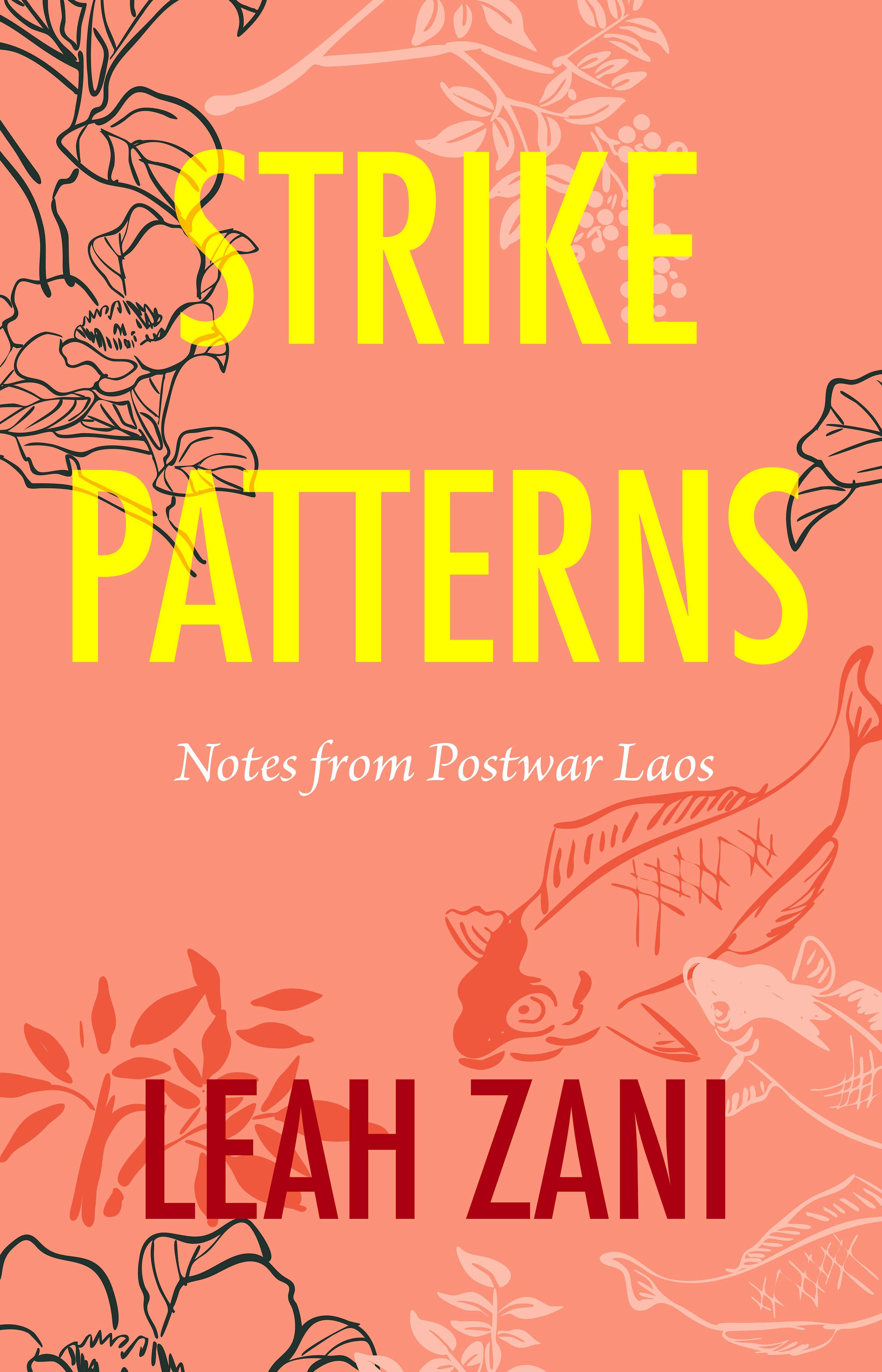
Strike patterns : notes from postwar Laos
A strike pattern is a signature of violence carved into the land—bomb craters or fragments of explosives left behind, forgotten. In Strike Patterns, poet and anthropologist Leah Zani journeys to a Lao river community where people live alongside such relics of a secret war. With sensitive and arresting prose, Zani reveals the layered realities that settle atop one another in Laos—from its French colonial history to today's authoritarian state—all blown open by the war. This excavation of postwar life's balance between the mundane, the terrifying, and the extraordinary propels Zani to confront her own explosive past.
From 1964 to 1973, the United States carried out a covert air war against Laos. Frequently overshadowed by the war with Vietnam, the Secret War was the longest and most intense air war in history. As Zani uncovers this hidden legacy, she finds herself immersed in the lives of her hosts: Chantha, a daughter of war refugees who grapples with her place in a future Laos of imagined prosperity; Channarong, a bomb technician whose Thai origins allow him to stand apart from the battlefields he clears; and Bounmi, a young man who has inherited his bomb expertise from his father but now struggles to imagine a similar future for his unborn son. Wandering through their lives are the restless ghosts of kin and strangers.
Today, much of Laos remains contaminated with dangerous leftover explosives. Despite its obscurity, the Secret War has become a shadow model for modern counterinsurgency. Investigating these shadows of war, Zani spends time with silk weavers and rice farmers, bomb clearance crews and black market war scrap traders, ritual healers and survivors of explosions. Combining her fieldnotes with poetry, fiction, and memoir she reflects on the power of building new lives in the ruins.
eBook

Moon bear
In Laos, twelve-year-old Tam must work at a bear farm where bears are cruelly caged and milked for their bile, but when a familiar cub is brought to the farm, Tam will do anything to free both the cub, and himself.
Book

China’s Minority Fiction
[...]they number more than 130 million, and their literature deserves study both for its political urgency and for its lyricism and philosophical power. The Chinese Communist Party continues to recognize the political power of writing, and literature in particular, through the PRC's official organ for writers, the Chinese Writers Association (CWA). * Who Counts as Chinese? During the Civil War of 1946 to 1949, the Chinese Communist government adopted the Soviet paradigm using the term \"nationalities\" (K?) to refer to ethnic groups within the empire. [...]editorial control spins the book titles of Uyghur writer Abdurehim Ötkür (1923-1995).
Journal Article

The second biggest nothing
\"A death threat to Dr. Siri and all his friends sends the ex-coroner down memory lane in the 14th installment of Cotterill's quirky, critically acclaimed series set in 1970s Laos. Vientiane, 1980: Laos is celebrating its fifth anniversary of communist rule, and Dr. Siri and his crew couldn't be less thrilled. But really, things could be a lot worse. Madame Daeng's noodle shop is thriving, Tukta and Geung are on their honeymoon, and Siri and Civilai are still plotting their directorial debut. But before things get too comfortable, Dr. Siri finds something odd tied with pink ribbon to his dog, Ugly's, tail: a mysterious note written in English. Upon finding someone to translate the note, Dr. Siri learns it is a death threat--and not just to him, but to everyone he holds dear. And whoever wrote the note claims the job will be executed in two weeks. Thus, at the urging of his motley crew of faithful friends, Dr. Siri contemplates who would hold such a strong grudge as to wish him dead, launching him into hair-bending scenes from his past, including the first time Siri met his lifelong pal Civilai in Paris in the early '30s, a particularly disruptive episode at an art museum in Saigon in 1956, and a prisoner of war negotiation in Hanoi at the height of the Vietnam War in the '70s. There will be grave consequences in the present if Dr. Siri can't put together the clues in the past\"-- Provided by publisher.
Book

A Very Brief History of Chinese Science Fiction
After laying the groundwork by suggesting that ancient texts that offered supernatural explanations for natural phenomena demonstrated curiosity about the natural world as well as scientific imagination, authors Yao Jianbin and Wu Yan give an overview of major Chinese science fiction authors and trends since the late nineteenth century, when science fiction per se was introduced into China. Tying the development of science fiction in China to the nineteenth-century importation of Western science and science fiction, Yao and Wu trace the fortunes of this kind of literature through the turbulent decades of the twentieth century. They further connect the resurgence and international success of science fiction from China to China's rise as a technological innovator and world power.
Journal Article

Slash and burn
Supervising an excavation for the remains of a U.S. fighter pilot who crashed in a northern Laos jungle a decade earlier, national coroner Dr. Siri becomes suspicious when a series of fatal accidents culminates in his team getting trapped in a cabin.
BOOK

Alterity and Alien Contact in Lao She's Martian Dystopia,Cat Country
This article considers several contexts for the treatment of the themes of alterity and alien contact in Lao She'sMaocheng ji[Cat Country], a work that straddles cultures and raises important questions for scholars of both science fiction and Chinese literature. It examines howCat Countryfits—or does not—into the history of science fiction and also into the development of twentieth-century Chinese literature. Finally, it compares the treatment of alien contact and alterity inMaocheng jiand Stanley G. Weinbaum's “A Martian Odyssey.”
Journal Article


Laughter and the Cosmopolitan Aesthetic in Lao She's 二马 (Mr. Ma and Son)
In his article \"Laughter and the Cosmopolitan Aesthetic in Lao She's 二马 (Mr. Ma and Son)\" Jeffrey Mather discusses Lao She's (pseudonym for Qingchun Shu 1899-1966) texts and their naturalist portrayals of social life in China during a tumultuous period. Lao She's most celebrated works include the 1937 novel 骆驼祥子 (Rickshaw Boy) and the 1958 play 茶馆 (Teahouse), both of which were made into films in China. Rickshaw Boy was translated into English in 1945 and became an international bestseller, making Lao She one of the first modern Chinese writers known in the West. Lao She wrote Mr. Ma and Son in London during the 1920s: the novel was first published in installments in 1929 in the prominent modernist literary magazine 小说月报 (Fiction Monthly). Set in London and drawing from a range of literary and popular sources, Lao She's novel engages with humor as a way to challenge distinctions between East and West and to present readers with the possibilities of a cosmopolitan literary aesthetic. While the novel points an accusatory finger through its satirical aims and along the way empowers a nationalist sense of self-defense seemingly, there is at the same time an ironic laughter that disrupts the rational integrity of the text, one that is spontaneous and slippery in its ambivalence.
Journal Article