
Catalogue Search | MBRL


Are you sure you want to remove the book from the shelf?

{{itemTitle}}
162
result(s) for
"Latin America -- Emigration and immigration -- Social aspects"
Sort by:

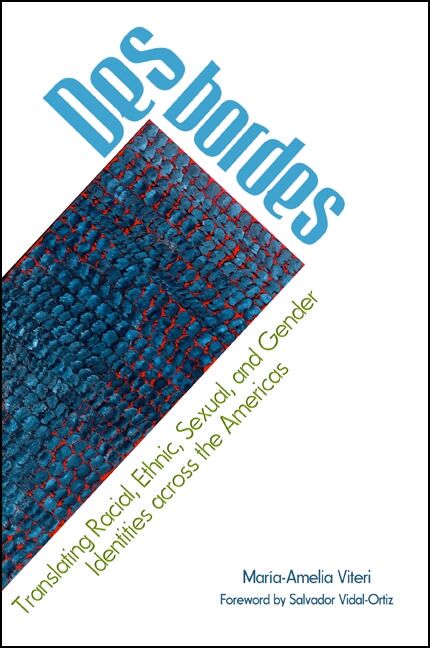
Desbordes
María-Amelia Viteri explores the multiple unfixed meanings that the
term \"Latino\" takes on as this category is reappropriated and
translated by LGBT \"Latinos\" in Washington, DC, San Salvador, and
Quito. Using an anthropology-based, interdisciplinary approach, she
exposes the creative ways in which migrants-including
herself-subvert traditional readings based on country of origin,
skin color, language, and immigrant status. A critical look at the
multiple ways migrants view what it means to be American, Latino,
and/or queer provides fertile ground for theoretical,
methodological, and political debates on the importance of a queer
transnational and immigration framework when analyzing citizenship
and belonging. Desbordes (un/doing, overflowing borders)
ethnographically addresses the limits and constraints of current
paradigms within which sexuality and gender have been commonly
analyzed as they intersect with race, class, ethnicity, immigration
status, and citizenship. This book uses the concept of \"queerness\"
as an analytical tool to problematize the notion of a seamless
relationship between identity and practice.
eBook


Alimentación y migraciones en Iberoamérica
Este libro nace de un proyecto sobre migraciones y culturas alimentarias en Iberoamérica (incluyendo España y Portugal) iniciado en 2009 y ligado en su última fase a la Cátedra UNESCO de Alimentación, Cultura y Desarrollo de la Universitat Oberta de Catalunya (UOC). Algunos de los textos publicados en este libro nacen directamente de este proyecto, mientras que algunos otros, de carácter claramente complementario, han sido invitados a participar y a dialogar en la misma obra. De este modo, el libro que aquí se inicia responde a distintas necesidades y objetivos. Por un lado, es una de las muy pocas obras en lengua castellana que se dedican específicamente al análisis de las culturas alimentarias en situación de migración, cubriendo así un hueco necesario en la bibliografía existente. Por otro lado, este libro intenta reunir en un mismo espacio y de manera dialogante los trabajos de distintos especialistas que se han dedicado al tema de la alimentación y las migraciones desde diferentes puntos de vista; trabajos que en muy pocas ocasiones han visto la posibilidad de situarse en un mismo contexto y en una situación que permita una revisión y una comparación conjuntas. Igualmente, a partir de esta situación, podemos articular también la detección de determinados ejes temáticos que aparecen vinculados a las distintas visiones de los diferentes investigadores, en distintos territorios y posiblemente con distintos intereses: permanencias y rupturas en los hábitos alimentarios, fronteras alimentarias, aprovisionamiento, etnicidad, nostalgia, restauración? Este libro analiza estos aspectos desde una perspectiva cultural y abierta.
eBook

A Latino memoir : exploring identity, family and the common good
\"In a bumpy, anxiety-producing plane ride across the Straits of Florida to Cuba in 1979, graduate student Gerald Poyo knew his life would either end that day in the World War II-era prop airplane or change forever. He survived the trip, and his ten-day visit solidified his academic research and confirmed his career as a history professor. In this wide-ranging examination of his relatives' migrations in the Western Hemisphere -- the Americas -- over five generations, Poyo uses his training as a historian to unearth his family's stories. Beginning with his great-great grandfather's flight from Cuba to Key West in 1869, this is also about the loss of a beloved homeland. His father was Cuban; his mother was from Flint, Michigan. Poyo himself was six months old when his parents took him to Bogotá, Colombia. He celebrated his eighth birthday in New Jersey and his tenth in Venezuela. He was 12 when he landed in Buenos Aires, where he spent his formative years before returning to the United States for college. 'My heart belonged to the south, but somehow I knew I could not escape the north,' he writes. Transnationalism shaped his life and identity. Divided into two parts, the first section traces his parents and ancestors as he links their stories to impersonal movements in the world -- Spanish colonialism, Cuban nationalism, United States expansionism -- that influenced their lives. The second half explores how exile, migration and growing up a 'hemispheric American, a borderless American' impacted his own development and stimulated questions about poverty, religion and relations between Latin America and the United States. Ultimately, this thought-provoking memoir unveils the universal desire for a safe, stable life for one's family\"-- Provided by publisher.
Book


A sociolinguistics of diaspora : Latino practices, identities, and ideologies
\"This volume brings together scholars in sociolinguistics and the sociology of new media and mobile technologies who are working on different social and communicative aspects of the Latino diaspora. There is new interest in the ways in which migrants negotiate and renegotiate identities through their continued interactions with their own culture back home, in the host country, in similar diaspora elsewhere, and with the various \"new\" cultures of the receiving country. This collection focuses on two broad political and social contexts: the established Latino communities in urban settings in North America and newer Latin American communities in Europe and the Middle East. It explores the role of migration/diaspora in transforming linguistic practices, ideologies, and identities\"-- Provided by publisher.
Book
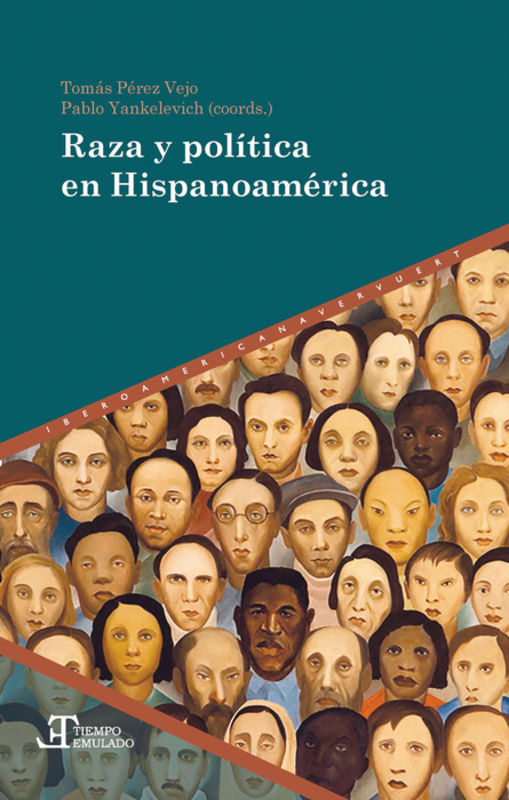
Raza y política en Hispanoamérica
Esta obra analiza la diversidad de sentidos del término “raza” en el debate público iberoamericano. A través de estudios de caso, nacionales y regionales, el lector entrará en contacto con los significados y los usos de categorías raciales proyectadas en el terreno de las prácticas políticas. La revitalización de discursos y conductas racistas obliga a una revisión de la historia de tradiciones políticas e intelectuales que utilizaron categorías raciales para moldear identidades colectivas y definir proyectos políticos sobre limos. Un problema histórico, pero también de una alarmante actualidad política.[Texto de la editorial]
eBook

The color line : a short introduction
'The Color Line' provides a concise history of the role of race and ethnicity in the US, from the early colonial period to the present, to reveal the public policies and private actions that have enabled racial subordination and the actors who have fought against it. Focusing on Native Americans, African Americans, Asian Americans, and Latino Americans, it explores how racial subordination developed in the region, how it has been resisted and opposed, and how it has been sustained through independence, the abolition of slavery, the civil rights movement, and subsequent reforms. The text also considers the position of European immigrants to the US, interrogates relevant moral issues, and identifies persistent problems of public policy, arguing that all four centuries of racial subordination are relevant to understanding contemporary America and some of its most urgent issues.
Book
