
Catalogue Search | MBRL


Are you sure you want to remove the book from the shelf?

{{itemTitle}}
278
result(s) for
"Latin America Colonization."
Sort by:


The Mestizo Mind
Mestizo: a person of mixed blood; specifically, a person of mixed European and American Indian ancestry.Serge Gruzinski, the renowned historian of Latin America, offers a brilliant, original critique of colonization and globalization in The Mestizo Mind. Looking at the fifteenth-century colonization of Latin America, Gruzinski documents the mélange that resulted: colonized mating with colonizers; Indians joining the Catholic Church and colonial government; and Amerindian visualizations of Jesus and Perseus. These physical and cultural encounters created a new culture, a new individual, and a phenomenon we now call globalization. Revealing globalization's early origins, Gruzinski then fast forwards to the contemporary mélange seen in the films of Peter Greenaway and Wong Kar-Wai to argue that over 500 years of intermingling has produced the mestizo mind, a state of mixed thinking that we all possess.A masterful alchemy of history, anthropology, philosophy and visual analysis, The Mestizo Mind definitively conceptualizes the clash of civilizations in the style of Homi Bhabha, Gayatri Spivak and Anne McClintock.
eBook


From Al-Andalus to the Americas (13th-17th Centuries)
From Al-Andalus to the Americas (13th-17th Centuries). Destruction and Construcion of Societies offers a multi-perspective view of the filiation of colonial and settler colonial experiences, from the Medieval Iberian Peninsula to the early modern Americas.
eBook

Slavery, race and conquest in the tropics : Lincoln, Douglas, and the future of Latin America
\"Slavery, Race, and Conquest in the Tropics challenges the way historians interpret the causes of the American Civil War. Using Abraham Lincoln and Stephen Douglas's famed rivalry as a prism, Robert E. May shows that when Lincoln and fellow Republicans opposed slavery in the West, they did so partly from evidence that slaveholders, with Douglas's assistance, planned to follow up successes in Kansas by bringing Cuba, Mexico, and Central America into the Union as slave states. A skeptic about \"Manifest Destiny,\" Lincoln opposed the war with Mexico, condemned Americans invading Latin America, and warned that Douglas's \"popular sovereignty\" doctrine would unleash U.S. slaveholders throughout Latin America. This book internationalizes America's showdown over slavery, shedding new light on the Lincoln-Douglas rivalry and Lincoln's Civil War scheme to resettle freed slaves in the tropics\"-- Provided by publisher.
Book

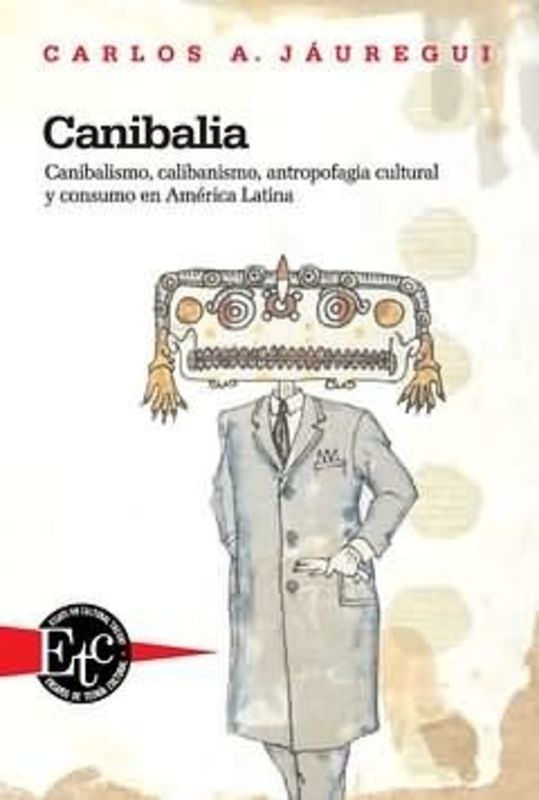
Canibalia
\"Canibalia (Premio Casa de las Américas 2005) traza la genealogía múltiple y expansiva del cannibal y sus permutaciones [...]. El estudio expone de qué modo el caníbal es reapropiado por diversos proyectos indigenistas, vanguardistas, revolucionarios o americanistas como una seña de identidad y como un tropo de apoderamiento por ingestión. Valiéndose de una amplia gama de referentes que incluye la iconografía, la crónica, la relación colonial, la literatura, el testimonio, la antropología, la etnografía, la música popular brasileña y el cinema novo, el tejido de relaciones va trazando un escenario amplio que logra mantener el control de su figura central sin evadir por ello ese carácter equívoco, a veces contradictorio, siempre huidizo de la metáfora del caníbal para articular el entramado de la continentalidad cultural latinoamericana. La imagen del caníbal termina asociándose, en última instancia, con la idea misma del consumo en la lógica del capital, así como se asocia paralelamente con la noción de trauma en la lógica del psicoanálisis. [...] A través del caníbal, propone Jáuregui, América se produce como el engendro de un «monstruo deseante», reiteradamente reconfigurado en la pugna permanente entre la mirada imperial y el cuerpo del subalterno. Abarcando la gama diversa de épocas, naciones y géneros de Latinoamérica, desde Cristóbal Colón hasta Caetano Veloso, Canibalia explora el advenimiento y el posible cansancio de una metáfora que en el libro se asocia íntimamente con la construcción misma de los idearios de la modernidad. Su reencarnación posmoderna como consumo (o consumismo) de bienes, de ideas y, en suma, de cuerpos, (literalmente, en el caso de la venta de órganos en los países del llamado tercer mundo) reabre el tópico en el contexto de la globalización, cuando cada vez es más precaria, aunque no imposible, la capacidad de
reactivar la imagen del caníbal en algún discurso utópico de solidaridad. [...]. Estamos ante un gran ensayo de crítica cultural: erudito, ambicioso, perspicaz; su generoso periplo entiende la cultura como indivisible de lo político, y es desde esa convicción que ejerce la radicalidad de su gesto crítico.\" Rubén Ávila Ríos.
eBook

Bound Lives
Bound Lives chronicles the lived experience of race relations in northern coastal Peru during the colonial era. Rachel Sarah O'Toole examines the construction of a casta (caste) system under the Spanish government, and how this system was negotiated and employed by Andeans and Africans.Royal and viceregal authorities defined legal identities of \"Indian\" and \"Black\" to separate the two groups and commit each to specific trades and labor. Although they were legally divided, Andeans and Africans freely interacted and depended on each other in their daily lives. Thus, the caste system was defined at both the top and bottom of society. Within each caste, there were myriad subcategories that also determined one's standing.The imperial legal system also strictly delineated civil rights. Andeans were afforded greater protections as a \"threatened\" native population. Despite this, with the crown's approval during the rise of the sugar trade, Andeans were driven from their communal property and conscripted into a forced labor program. They soon rebelled, migrating away from the plantations to the highlands. Andeans worked as artisans, muleteers, and laborers for hire, and used their legal status as Indians to gain political representation.As slaves, Africans were subject to the judgments of local authorities, which nearly always sided with the slaveholder. Africans soon articulated a rhetoric of valuation, to protect themselves in disputes with their captors and in slave trading negotiations. To combat the ongoing diaspora from Africa, slaves developed strong kinship ties and offered communal support to the newly arrived.Bound Lives offers an entirely new perspective on racial identities in colonial Peru. It highlights the tenuous interactions of an imperial power, indigenous group, and enslaved population, and shows how each moved to establish its own power base and modify the existing system to its advantage, while also shaping the nature of colonialism itself.
eBook

Go-betweens and the Colonization of Brazil
Doña Marina (La Malinche) ...Pocahontas ...Sacagawea-their names live on in historical memory because these women bridged the indigenous American and European worlds, opening the way for the cultural encounters, collisions, and fusions that shaped the social and even physical landscape of the modern Americas. But these famous individuals were only a few of the many thousands of people who, intentionally or otherwise, served as \"go-betweens\" as Europeans explored and colonized the New World.
In this innovative history, Alida Metcalf thoroughly investigates the many roles played by go-betweens in the colonization of sixteenth-century Brazil. She finds that many individuals created physical links among Europe, Africa, and Brazil-explorers, traders, settlers, and slaves circulated goods, plants, animals, and diseases. Intercultural liaisons produced mixed-race children. At the cultural level, Jesuit priests and African slaves infused native Brazilian traditions with their own religious practices, while translators became influential go-betweens, negotiating the terms of trade, interaction, and exchange. Most powerful of all, as Metcalf shows, were those go-betweens who interpreted or represented new lands and peoples through writings, maps, religion, and the oral tradition. Metcalf's convincing demonstration that colonization is always mediated by third parties has relevance far beyond the Brazilian case, even as it opens a revealing new window on the first century of Brazilian history.
eBook