
Catalogue Search | MBRL


Are you sure you want to remove the book from the shelf?

{{itemTitle}}
9
result(s) for
"Latin America. fast (OCoLC)fst01245945"
Sort by:

Borges and the literary marketplace : how editorial practices shaped cosmopolitan reading
A fascinating history of Jorge Luis Borges's efforts to revolutionize and revitalize literature in Latin America Jorge Luis Borges (1899-1986) stands out as one of the most widely regarded and inventive authors in world literature. Yet the details of his employment history throughout the early part of the twentieth century, which foreground his efforts to develop a worldly reading public, have received scant critical attention. From librarian and cataloguer to editor and publisher, this writer emerges as entrenched in the physical minutiae and social implications of the international book world. Drawing on years of archival research coupled with bibliographical analysis, this book explains how Borges's more general involvement in the publishing industry influenced not only his formation as a writer, but also global book markets and reading practices in world literature. In this way it tells the story of Borges's profound efforts to revolutionize and revitalize literature in Latin America through his varying jobs in the publishing industry.
eBook

\Our Hemisphere\?
An accessible course book on U.S.-Latin American
relations \"Our Hemisphere\"? uncovers the range,
depth, and veracity of the United States' relationship with the
Americas. Using short historical vignettes, Britta and Russell
Crandall chart the course of inter‑American relations from 1776 to
the present, highlighting the roles that individuals and groups of
soldiers, intellectuals, private citizens, and politicians have had
in shaping U.S. policy toward Latin America in the postcolonial,
Cold War, and post-Cold War eras. The United States is usually and
correctly seen as pursuing a monolithic, hegemonic agenda in Latin
America, wielding political, economic, and military muscle to force
Latin American countries to do its bidding, but the Crandalls
reveal unexpected yet salient regional interactions where Latin
Americans have exercised their own power with their northern and
very powerful neighbor. Moreover, they show that Washington's
relationship with the region has relied, in addition to the usual
heavy‑handedness, on cooperation and mutual respect since the
beginning of the relationship.
eBook

The Emerald Handbook of Public Administration in Latin America
This handbook presents contemporary research on public administration in Latin America. The first section explores the range of administrative systems in existence across the region. The second portion of the book discusses important topics such as public personnel management, accountability and policy coordination in Latin America.
eBook
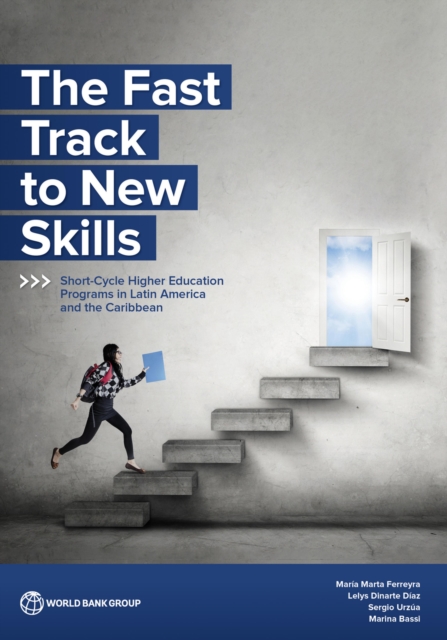
The Fast Track to New Skills
Short-cycle higher education programs (SCPs) form skilled human capital in two or three years. Through original empirical research, this book explores SCPs' outcomes and returns, their supply, and what makes them good. It draws attention towards a higher education sector that has been typically overlooked in research and policy.
eBook
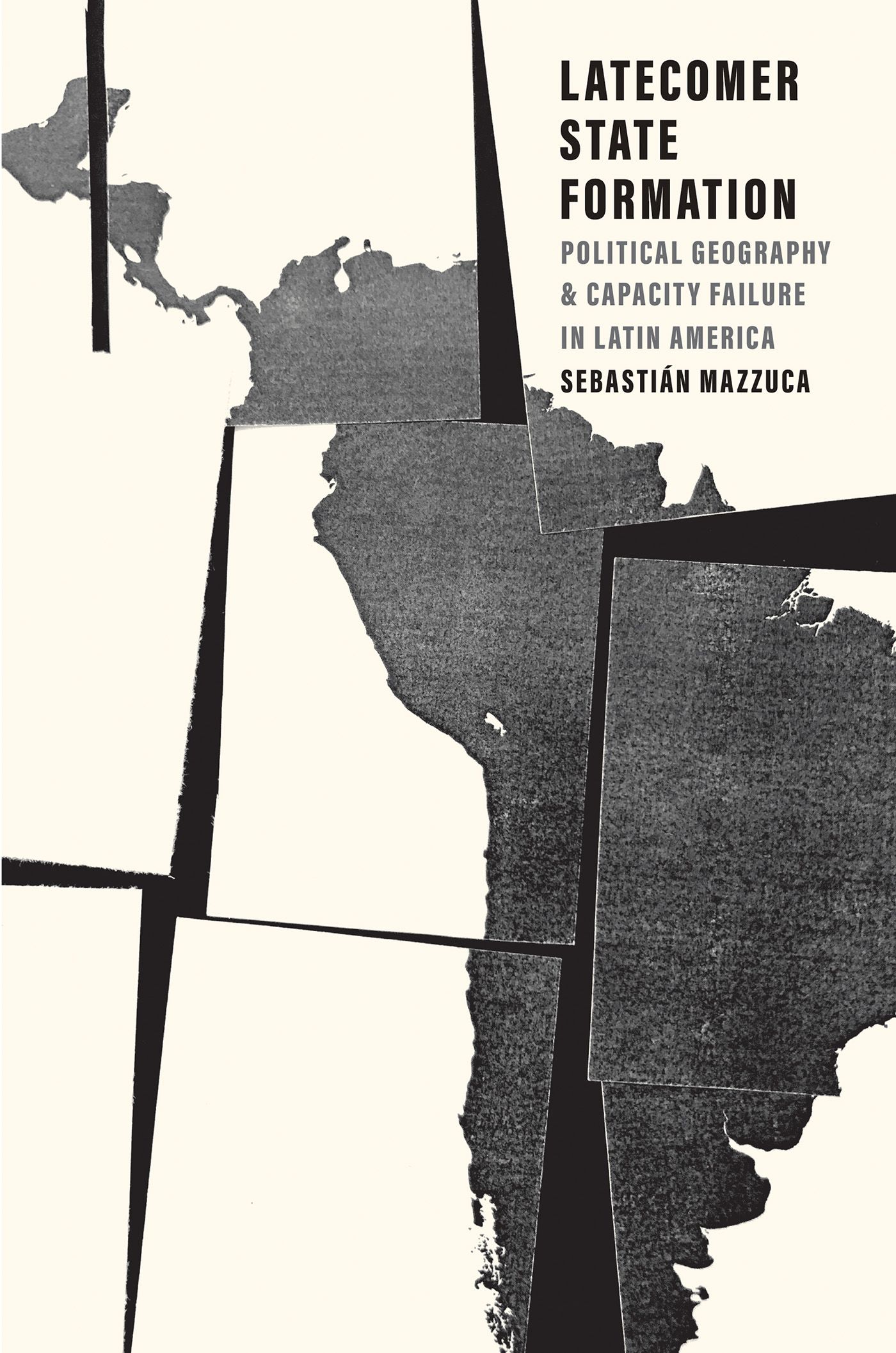
Latecomer state formation : political geography and capacity failure in Latin America
A major contribution to the field of comparative state formation and the scholarship on long-term political development of Latin America Latin American governments systematically fail to provide the key public goods for their societies to prosper. Sebastian Mazzuca argues this is because nineteenth-century Latin American state formation occurred in a period when commerce, rather than war, was the key driver forging countries. Latin American leaders pursued the benefits of international trade at the cost of long-term liabilities built into the countries they forged, notably patrimonial administrations and dysfunctional regional combinations.
eBook

Forbidden Passages
During the sixteenth and seventeenth centuries, Spanish authorities restricted emigration to the Americas to those who could prove they had been Catholic for at least three generations. In doing so, they hoped to instill religious orthodoxy in the colonies and believed Muslim converts, or Moriscos, would hamper efforts to convert indigenous people to Catholicism. Nevertheless, Moriscos secretly made the treacherous journey across the ocean, settling in the forbidden territories and influencing the nature of Spanish colonialism. Once landed, Morisco men and women struggled to define and practice their religion or pursue their trades, all while experiencing increasing anxiety about their place in the emerging Spanish empire. Many Moriscos were accused by authorities of descending from Muslims or practicing Islam in secret and turned to the courts to assert their legitimacy.
Forbidden Passagesis the first book to document and evaluate the impact of Moriscos in the early modern Americas. Through close examination of sources that few historians have used-some one hundred cases of individuals brought before the secular, ecclesiastical, and inquisitorial courts-Karoline P. Cook shows how legislation and attitudes toward Moriscos in Spain assumed new forms and meanings in colonial Spanish America. Moriscos became not simply individuals struggling to join a community that was increasingly hostile to them but also symbols that sparked authorities' fears about maintaining religious purity in the face of territorial expansion. Cook reveals how Morisco emigrants shined a light on the complicated question of what it meant to be Spanish in the New World.
eBook

Alimentación y migraciones en Iberoamérica
Este libro nace de un proyecto sobre migraciones y culturas alimentarias en Iberoamérica (incluyendo España y Portugal) iniciado en 2009 y ligado en su última fase a la Cátedra UNESCO de Alimentación, Cultura y Desarrollo de la Universitat Oberta de Catalunya (UOC). Algunos de los textos publicados en este libro nacen directamente de este proyecto, mientras que algunos otros, de carácter claramente complementario, han sido invitados a participar y a dialogar en la misma obra. De este modo, el libro que aquí se inicia responde a distintas necesidades y objetivos. Por un lado, es una de las muy pocas obras en lengua castellana que se dedican específicamente al análisis de las culturas alimentarias en situación de migración, cubriendo así un hueco necesario en la bibliografía existente. Por otro lado, este libro intenta reunir en un mismo espacio y de manera dialogante los trabajos de distintos especialistas que se han dedicado al tema de la alimentación y las migraciones desde diferentes puntos de vista; trabajos que en muy pocas ocasiones han visto la posibilidad de situarse en un mismo contexto y en una situación que permita una revisión y una comparación conjuntas. Igualmente, a partir de esta situación, podemos articular también la detección de determinados ejes temáticos que aparecen vinculados a las distintas visiones de los diferentes investigadores, en distintos territorios y posiblemente con distintos intereses: permanencias y rupturas en los hábitos alimentarios, fronteras alimentarias, aprovisionamiento, etnicidad, nostalgia, restauración? Este libro analiza estos aspectos desde una perspectiva cultural y abierta.
eBook
Retórica de los sentimientos
Ofrece un acercamiento etnográfico a las emociones amerindias contemporáneas, un sinuoso recorrido que va desde las relaciones entre percepción y afectividad, hasta las demandas colectivas, políticas, de reconocimiento cultural, pasando por el estudio de sus contextos rituales o sociales en general, además de atender, en todos los casos, al vínculo entre emoción y retórica textual.[Texto de la editorial]
eBook
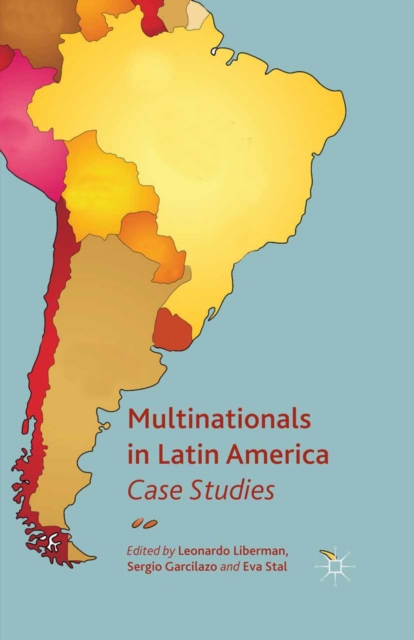
Multinationals in Latin America : case studies
The book deals with cases about the impact of, and interaction between, the different Latin American cultural, economic, legal, and political settings on activities, strategies, structures and decision-making processes of MNCs. The cases focus on business processes, settings and organizational behavior in Latin America.
eBook