
Catalogue Search | MBRL


Are you sure you want to remove the book from the shelf?

{{itemTitle}}
15,417
result(s) for
"Latin American culture"
Sort by:


The Puerto Rican Problem in Postwar New York City
The Puerto-Rican Problem in Postwar New York City presents the first comprehensive examination of the emergence, evolution, and consequences of the “Puerto Rican problem” campaign and narrative in New York City from 1945 to 1960. This notion originated in an intense public campaign that arose in reaction to the entry of Puerto Rican migrants to the city after 1945. The “problem” narrative influenced their incorporation in New York City and other regions of the United States where they settled. The anti-Puerto Rican campaign led to the formulation of public policies by the governments of Puerto Rico and New York City seeking to ease their incorporation in the city. Notions intrinsic to this narrative later entered American academia (like the “culture of poverty”) and American popular culture (e.g., West Side Story ), which reproduced many of the stereotypes associated with Puerto Ricans at that time and shaped the way in which Puerto Ricans were studied and perceived by Americans.
eBook
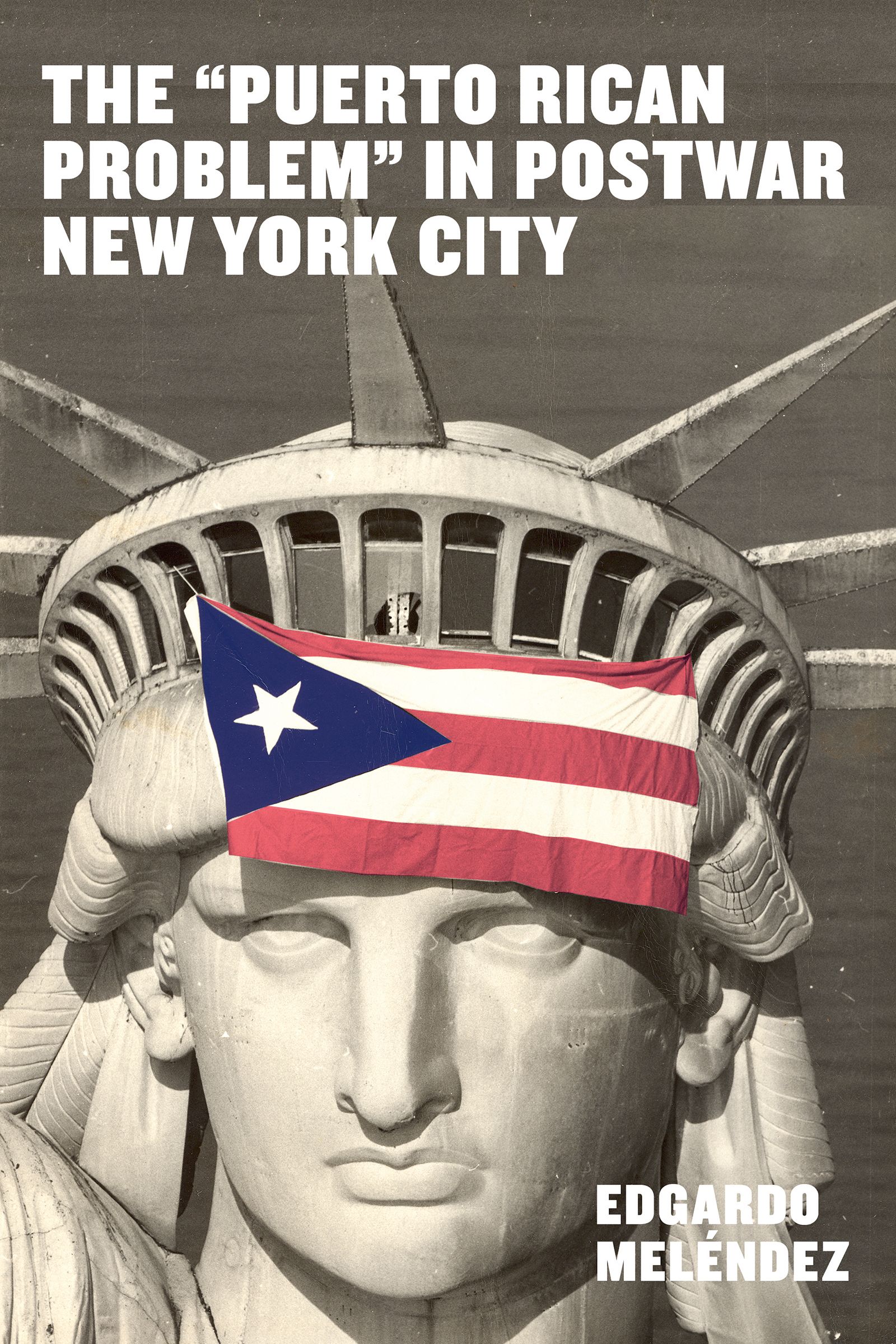
The \Puerto Rican problem\ in postwar New York City
The \"Puerto-Rican Problem\" in Postwar New York City presents the first comprehensive examination of the emergence, evolution, and consequences of the \"Puerto Rican problem\" campaign and narrative in New York City from 1945 to 1960.
eBook

Challenging the Black Atlantic
The historical novels of Manuel Zapata Olivella and Ana Maria Gonçalves map black journeys from Africa to the Americas in a way that challenges the Black Atlantic paradigm that has become synonymous with cosmopolitan African diaspora studies. Unlike Paul Gilroy, who coined the term and based it on W.E.B. DuBois’s double consciousness, Zapata, in Changó el gran putas (1983), creates an empowering mythology that reframes black resistance in Colombia, Haiti, Mexico, Brazil, and the United States. In Um defeito de cor (2006), Gonçalves imagines the survival strategies of a legendary woman said to be the mother of black abolitionist poet Luís Gama and a conspirator in an African Muslim–led revolt in Brazil’s “Black Rome.” These novels show differing visions of revolution, black community, femininity, sexuality, and captivity. They skillfully reveal how events preceding the UNESCO Decade of Afro-Descent (2015–2024) alter our understanding of Afro-Latin America as it gains increased visibility.
Published by Bucknell University Press. Distributed worldwide by Rutgers University Press.
eBook

“Cien porciento tico tico”: Reggae, Belonging, and the Afro-Caribbean Ticos of Costa Rica
Costa Rican dancefloors, and reggae spaces more broadly, are Caribbean cultural places in which those claiming black racial identities are privileged embodied performers. Many people who call Costa Rica home suggest that black Costa Ricans are \"not really 'ticos'\" - casting them outside the term Costa Ricans use to refer to their national identity. When asked to define what Afro-Caribbean Costa Ricans are, if not tico, many of the majority assert flatly that the former are simply limonense or, even less generously, something different, but not tico, underscoring their dubious belonging.
Journal Article

Latinx thoughts: Latinidad with an X
The term “Latinx” has become a site of contention, like “Latino” once was. Our goal is to propose an articulation of Latina/o/x populations through the term Latinx as a site of possibilities, while clarifying its potential use and the reasoning behind it. Rather than seeing the use of Latinx as a trend, or a rupture, in linguistic usage, we see its use as a continuity of internal shifting group dynamics and disciplinary debates. Complicating the argument that the term Latinx is an imperialist imposition on the Spanish language is possible by reclaiming the “x” history of (racial and ethnic) resistance as a marker of nonwhiteness (for example, in Xicana feminism), while turning to the “x” usage by Latin American and Spanish-speaking activists. Latinx foregrounds tensions among self-naming practices and terms that encompass all members of a diverse and complex ethnoracial group: Latinx acts as a new frame of inclusion, while also posing a challenge for those used to having androcentric terms serve as collective representational proxies.
Journal Article

Marronage as a Past and Present Geography in the Americas
Chattel slavery was a practice found throughout all of the Americas, lasting for hundreds of years and contributing to the assumed a-spatiality of the populations of African descent present in the Western Hemisphere. While oppressed and seemingly dehumanized by the societies in which they found themselves, Blacks in the Americas found myriad ways to struggle against the imposition of a condition of non-being. One such method was that of marronage. More than simply a reaction to slavery and non-being, marronage was perhaps one of the most creative and emergent methods of life-building found in the modern world. Maroon communities, today, occupy national memories in various manners. This paper explores the history and present-day understanding and existence of maroon communities in two American countries—Brazil and the United States. Whereas the history of maroon communities (known as quilombos) were drawn on by the Black Movement in Brazil in the 1970s and 1980s to make claims for land redistribution in wake of the fall of Brazil’s Military Dictatorship, the spatial figure of the maroon community is largely absent from the national memory and imagination of the United States. Instead, U.S. Black movements are more frequently associated with advocating inclusionary politics or nationalist separatism. By exploring the effects of the idea of the quilombo as a spatial entity in Brazil and acknowledging the history of maroon settlements in the United States, this paper argues that marronage continues, in the present, as a viable spatial praxis and posits a placement of the maroon community at the forefront of present and future discussions of U.S. human rights.
La esclavitud era una práctica encontrado a través de todas las Américas, que duró cientos de años y contribuyó a la asumida a-espacialidad de las poblaciones de ascendencia africana presente en el hemisferio occidental. Mientras oprimidos y aparentemente deshumanizado por las sociedades en las que se encontraban, los negros en las Américas encontraron miles de maneras de luchar contra la imposición de una condición de no ser. Uno de tales métodos es el del cimarrón. Más que una simple reacción a la esclavitud y el no ser, el cimarrón fue quizás uno de los métodos más creativos y emergentes de la creación de la vida que se encuentran en el mundo moderno. Comunidades cimarronas, hoy en día, ocupan las memorias nacionales de diversas maneras. Este artículo explora la historia y la comprensión hoy en día y la existencia de comunidades de cimarrones en dos países: Brasil y los Estados Unidos de América. Mientras que la historia de las comunidades de cimarrones (conocido como quilombos) se dibuja en el Movimiento Negro en Brasil en los años 1970 y 1980 para hacer las reclamaciones de redistribución de la tierra en consecuencia de la caída de la dictadura militar de Brasil, la figura espacial de la comunidad cimarrón es en gran parte ausente de la memoria nacional y la imaginación de los Estados Unidos. En cambio, los movimientos negros EE.UU. son más frecuentemente asociados con la defensa política de inclusión o el separatismo nacionalista. Al explorar los efectos de la idea del quilombo como una entidad espacial en Brasil y el reconocimiento de la historia de los asentamientos cimarrones en los Estados Unidos, este documento sostiene que marronage continúa, en el presente, como una praxis espacial viable y postula una colocación de la comunidad cimarrón en la vanguardia de las discusiones actuales y futuras de los derechos humanos en Estados Unidos.
Journal Article

The Lasater Clinical Judgment Rubric: 17 Years Later
This article has been amended to include factual corrections. An error was identified subsequent to its original publication. This error was acknowledged on page 366, volume 63, issue 6. The online article and its erratum are considered the version of record.
Background:
Nearly 17 years ago, the Lasater Clinical Judgment Rubric (LCJR) was published to provide a common language and trajectory of students' development to think like a nurse.
Method:
This article traces the uses of the LCJR from creation to the present and cites lessons learned from its use.
Results:
During the intervening years, the LCJR has been used effectively as a debriefing guide in simulation and as a research instrument, as well as for formative assessment. The LCJR has been translated or is in process in 19 languages besides English.
Conclusion:
This article provides evidence of the efficacy of the LCJR and discusses important lessons learned. [J Nurs Educ. 2024;63(3):149–155.]
Journal Article
