
Catalogue Search | MBRL


Are you sure you want to remove the book from the shelf?

{{itemTitle}}
70
result(s) for
"Latin Orient"
Sort by:


Settlement and crusade in the thirteenth century : multidisciplinary studies of the Latin East
\"Settlement and Crusade in the Thirteenth Century sheds new light on formerly less explored aspects of the crusading movement and the Latin East during the thirteenth century. In commemoration of the 800th anniversary of the construction of 'Atlit Castle, a significant section of this volume is dedicated to the fortification, which was one of the most impressive built in the Latin East. Scholarly debate has centred on the reasons behind the construction of the castle, its role in the defence of the Kingdom of Jerusalem during the thirteenth century, and its significance for the Templar order. The studies in this volume shed new light on diverse aspects of the site, including its cemetery and the surveys conducted there. Further chapters examine Cyprus during the thirteenth century, which, under the Lusignan dynasty, was an important centre of Latin settlement in the East, and a major trade centre. These articles present new contributions regarding the complex visual culture which developed on the island, the role of the mendicant orders in Cyprus, and settlement patterns. Adopting a multidisciplinary approach, this book will be of interest to scholars and students of the medieval period, as well as those interested in the crusades, archaeology, material culture, and art history\"-- Provided by publisher.
Book

The Crusades Uncovered
Adrian Boas, an archaeologist with four decades' experience in the field, takes a fresh approach to investigating the experiences of crusaders, pilgrims, and settlers in the crusader states during the twelfth and thirteenth centuries. The book opens up the experience of medieval travel and crusading by drawing on personal reflection and comparison with contemporary events. Topics covered include wonderment at the strangeness of the East, adjusting to life in the Levant, the horrors of warfare, the drama of fortress and battlefield, and the theatrical beauty of religious architecture, together with new perceptions of a selection of characters known and less-known. The book encourages the reader to think more deeply as to the meaning of the topics involved.
eBook


The Crusader States
When the armies of the First Crusade wrested Jerusalem from control of the Fatimids of Egypt in 1099, they believed their victory was an evident sign of God's favor. It was, therefore, incumbent upon them to fulfill what they understood to be God's plan: to re-establish Christian control of Syria and Palestine. This book is devoted to the resulting settlements, the crusader states, that developed around the eastern shores of the Mediterranean and survived until Richard the Lionheart's departure in 1192. Focusing on Jerusalem, Antioch, Tripoli, and Edessa, Malcolm Barber vividly reconstructs the crusaders' arduous process of establishing and protecting their settlements, and the simultaneous struggle of vanquished inhabitants to adapt to life alongside their conquerors.
Rich with colorful accounts of major military campaigns, the book goes much deeper, exploring in detail the culture of the crusader states-the complex indigenous inheritance, the architecture, the political, legal, and economic institutions, the ecclesiastical framework through which the crusaders perceived the world, the origins of the Knights Templar and the Hospitallers, and more. With the zest of a scholar pursuing a life-long interest, Barber presents a complete narrative and cultural history of the crusader states while setting a new standard for the term \"total history.\"
eBook
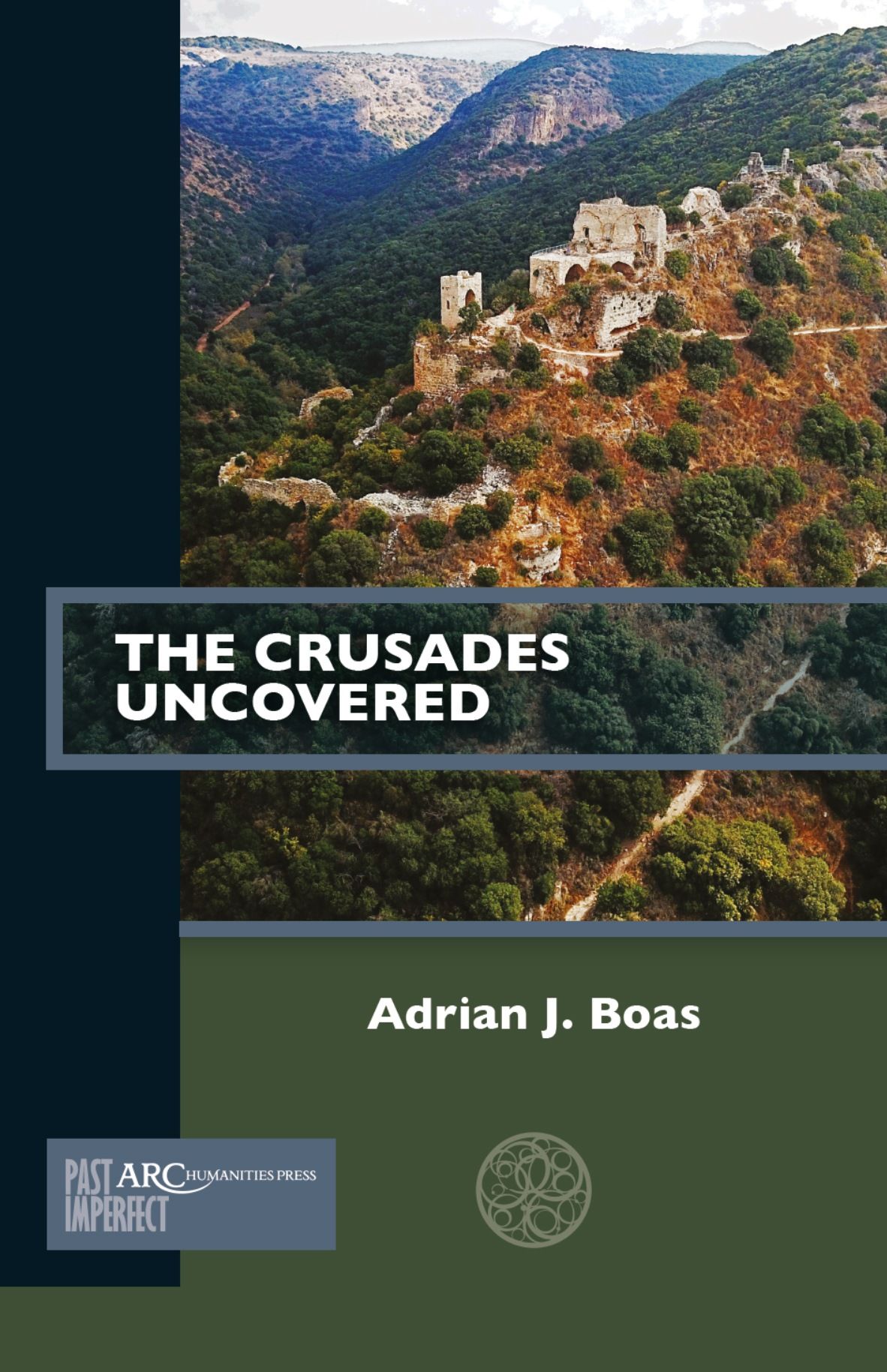
The Crusades Uncovered
Adrian Boas, an archaeologist with four decades' experience in the field, takes a fresh approach to investigating the experiences of crusaders, pilgrims, and settlers in the crusader states during the twelfth and thirteenth centuries. The book opens up the experience of medieval travel and crusading by drawing on personal reflection and comparison with contemporary events. Topics covered include wonderment at the strangeness of the East, adjusting to life in the Levant, the horrors of warfare, the drama of fortress and battlefield, and the theatrical beauty of religious architecture, together with new perceptions of a selection of characters known and less-known. The book encourages the reader to think more deeply as to the meaning of the topics involved.
eBook
Letters from the East
No written source is entirely without literary artifice, but the letters sent from Asia Minor, Syria and Palestine in the high middle ages come closest to recording the real feelings of those who lived in and visited the crusader states. They are not, of course, reflective pieces, but they do convey the immediacy of circumstances which were frequently dramatic and often life-threatening.
Those settled in the East faced crises all the time, while crusaders and pilgrims knew they were experiencing defining moments in their lives. There are accounts of all the great events from the triumph of the capture of Jerusalem in 1099 to the disasters of Hattin in 1187 and the loss of Acre in 1291. These had an impact on the lives of all Latin Christians, but at the same time individuals felt impelled to describe both their own personal achievements and disappointments and the wonders and horrors of what they had seen. Moreover, the representatives of the military and monastic orders used letters as a means of maintaining contact with the western houses, providing information about the working of religious orders not found elsewhere.
Some of the letters translated here are famous, others hardly known, but all offer unique insight into the minds of those who took part in the crusading movement.
eBook

Idols in the East
Representations of Muslims have never been more common in the Western imagination than they are today. Building on Orientalist stereotypes constructed over centuries, the figure of the wily Arab has given rise, at the dawn of the twenty-first century, to the \"Islamist\" terrorist. InIdols in the East, Suzanne Conklin Akbari explores the premodern background of some of the Orientalist types still pervasive in present-day depictions of Muslims-the irascible and irrational Arab, the religiously deviant Islamist-and about how these stereotypes developed over time.
Idols in the Eastcontributes to the recent surge of interest in European encounters with Islam and the Orient in the premodern world. Focusing on the medieval period, Akbari examines a broad range of texts including encyclopedias, maps, medical and astronomical treatises, chansons de geste, romances, and allegories to paint an unusually diverse portrait of medieval culture. Among the texts she considers areThe Book of John Mandeville,The Song of Roland,Parzival, and Dante'sDivine Comedy. From them she reveals how medieval writers and readers understood and explained the differences they saw between themselves and the Muslim other.
Looking forward, Akbari also comes to terms with how these medieval conceptions fit with modern discussions of Orientalism, thus providing an important theoretical link to postcolonial and postimperial scholarship on later periods. Far reaching in its implications and balanced in its judgments,Idols in the Eastwill be of great interest to not only scholars and students of the Middle Ages but also anyone interested in the roots of Orientalism and its tangled relationship to modern racism and anti-Semitism.
eBook

The Old French William of Tyre
William of Tyre's history of the Kingdom of Jerusalem has long been viewed as one of the most useful sources for the Crusades and the Latin East from the beginnings of the First Crusade to William's death shortly before Saladin's conquest of Jerusalem. However, this text was most popular during the medieval period in an Old French translation.In The Old French of William of Tyre Philip Handyside identifies the differences between the Latin and French texts and analyses the translator motives for producing the translation and highlights significant changes that may provide a better understanding of the period in question. Handyside also argues for a complex manuscript tradition that developed across the medieval Mediterranean.
eBook