
Catalogue Search | MBRL


Are you sure you want to remove the book from the shelf?

{{itemTitle}}
171
result(s) for
"Laughter Psychological aspects."
Sort by:

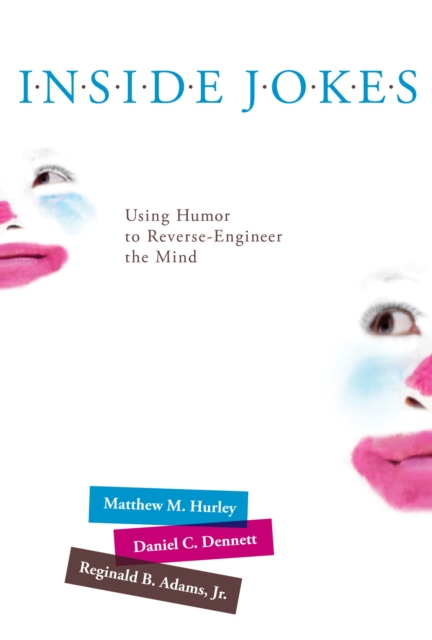
Inside jokes : using humor to reverse-engineer the mind
This evolutionary and cognitive theory of humor seeks to reveal the complex science behind why we crack up.\"A sophisticated analysis...written with clarity, good cheer, and, of course, wit.\" â Steven Pinker, author of How The Mind Works  Some things are funny--jokes, puns, sitcoms, Charlie Chaplin, The Far Side , Malvolio with his yellow.
eBook


The laughing guide to well-being
Do you experience stress? Are you interested in better health and well-being? Do you pursue happiness? If you answered yes to any of these questions, you need to read this book. If you answered no, you're in denial. All of us can use a little help to become happier or healthier. Unfortunately, the help we get is often too scary: \"if you don't do this or that, some catastrophic event of epic proportions will happen.\" Prilleltensky's approach, in contrast, is to help you become healthier and happier through laughter. In this hilarious book, Prilleltensky combines humor with science to help you improve your well-being. Each chapter consists of the Laughing Side, a series of funny stories; and the Learning Side, a research-based, user-friendly guide to health and happiness. The first chapter provides an overview of well-being, while subsequent chapters cover each of its six domains: Interpersonal, Community, Occupational, Physical, Psychological, and Economic (I COPPE). When you finish the book you'll have a greater understanding of your life, and ways to make it better.
eBook
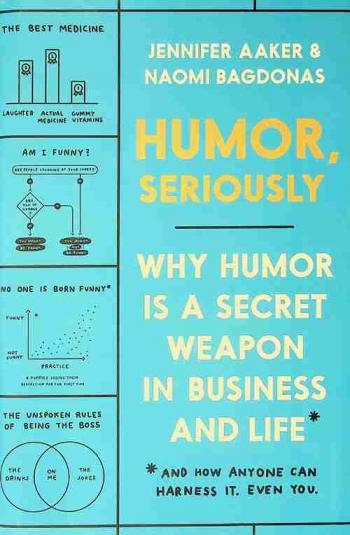
Humor, seriously : why humor is a secret weapon in business and life : And how anyone can harness it. Even you.
\"Anyone-even you!-can learn how to harness the power of humor in business (and life), based on the popular class at Stanford's Graduate School of Business. Many people understand humor's power intuitively. But when it comes to using it with intention, far fewer know how. As a result, humor is vastly underleveraged in most workplaces today, impacting our performance, relationships, and health, and contributing to a permanent and unsightly frown known as \"resting boss face.\" In fact, research shows that humor is one of the most powerful tools we have for accomplishing serious things. Top executives know this, which is why 98 percent prefer employees with a sense of humor, and 84 percent believe these employees do better work. Studies show that humor makes us appear more competent and confident, strengthens relationships, unlocks creativity, and boosts our resilience during difficult times. That's why Jennifer Aaker and Naomi Bagdonas teach the popular course Humor: Serious Business at the Stanford Graduate School of Business, where they help some of the world's most hard-driving, blazer-wearing business minds build levity into their organizations and lives. In Humor, Seriously, they draw on findings by behavioral scientists, advice from world-class comedians, and stories from real-life business leaders to reveal how humor works and-more important-how you can make greater and better use of it. Aaker and Bagdonas unpack the theory and application of humor: what makes something funny, how to mine your life for material, and how to craft a joke. They show how to use humor to make a strong first impression, deliver difficult feedback, and foster cultures where levity and creativity can thrive. And they explore the gray areas of humor: how to keep it appropriate-and recover if you cross a line. President Dwight D. Eisenhower once said, \"A sense of humor is part of the art of leadership, of getting along with people, of getting things done.\" If Eisenhower-the second least naturally funny president ever (after Franklin Pierce)-thought humor was necessary to win wars and build highways, then you might consider learning it too. Seriously\"-- Provided by publisher.

Importance of Not Being Earnest
The thesis of this book is that neither laughter nor humor can be understood apart from the feeling that underlies them. This feeling is a mental state in which people exclude some situation from their knowledge of how the world really is, thereby inhibiting seriousness where seriousness would be counterproductive. Laughter is viewed as an expression of this feeling, and humor as a set of devices designed to trigger it because it is so pleasant and distracting. Beginning with phonetic analyses of laughter, the book examines ways in which the feeling behind the laughter is elicited by both humorous and nonhumorous situations. It discusses properties of this feeling that justify its inclusion in the repertoire of human emotions. Against this background it illustrates the creation of humor in several folklore genres and across several cultures. Finally, it reconciles this understanding with various already familiar ways of explaining humor and laughter.
eBook
La thérapie par le rire
« Quand on sort de chez vous, on n'a pas envie de se jeter par la fenêtre! », « Il n'y a même pas de mouchoirs sur le bureau, ça donne déjà pas envie de se plaindre! Du coup, on pense à aller de l'avant! », « C'est grâce à vous docteur, vous m'avez fait rire, et je me suis dit que ça ne pouvait pas continuer comme ça… »Et si l'on profitait des multiples vertus de l'humour pour en faire un outil thérapeutique? En effet, l'humour facilite l'expression des émotions, consolide l'alliance avec le patient, diminue ses résistances, amène à rire de soi et de l'absurdité de la vie, favorise l'espoir, réactive la résilience... Il aide aussi le thérapeute à déjouer le burn-out et à gérer les patients agressifs!Ce livre s'adresse à tous les thérapeutes qui souhaitent dynamiser leur pratique en y ajoutant une dose d'humour, tout en évitant les risques qui y sont liés. Conçu comme un manuel didactique, stimulant et drôle, illustré par 121 exemples percutants issus des consultations de l'auteur, il reprend de manière synthétique et claire les différentes étapes de la psychothérapie.Une lecture incontournable pour les praticiens qui souhaitent accompagner encore mieux leurs patients, et travailler leur sens de l'humour!
À PROPOS DE L'AUTEUR Christophe Panichelli est médecin, psychiatre et psychothérapeute systémicien. Il travaille exclusivement en consultation, au contact direct avec les patients, depuis plus de 15 ans. Auteur de nombreux articles scientifiques, il a dirigé la première étude de l'efficacité de l'humour réalisée dans une population de 110 patients venus en thérapie chez lui.
eBook
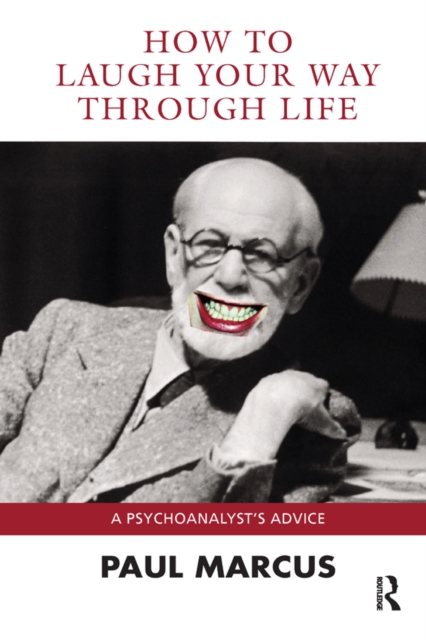
How to Laugh Your Way Through Life
While living in anti-Semitic Vienna, Freud wrote in a letter to Ernest Jones, 'What progress we are making. In the Middle Ages they would have burned me. Now they are content with burning my books. Unlike most books on the psychology and philosophy of humour, and following Ludwig Wittgenstein's wonderful advice-'A serious and good philosophical work could be written consisting entirely of jokes,' this book is replete with jokes, humorous stories, and amusing maxims and quotes making it a lively reading experience that aims to help people fashion the 'good life'-a life of deep and expansive love, creative and productive work, that is aesthetically pleasing and in accordance with reason and ethics.
eBook
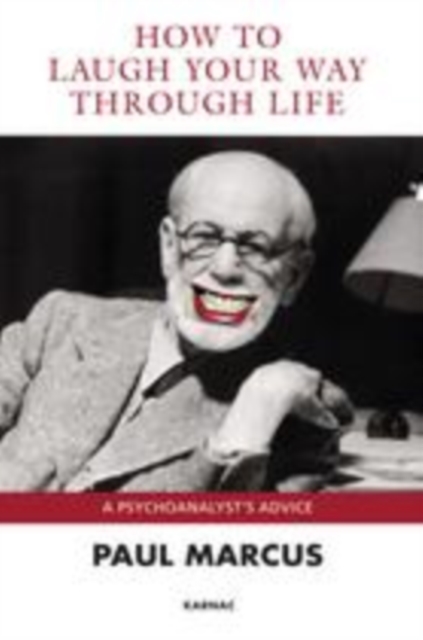
How to laugh your way through life: a psychoanalyt's advice
While living in anti-Semitic Vienna, Freud wrote in a letter to Ernest Jones, `What progress we are making. In the Middle Ages they would have burned me. Now they are content with burning my books.` Tragicomic attunement-seeing the comic in the tragic and the tragic in the comic-is a perspective on life that, following Freud, is one of the best ways to `to ward off possible suffering` and better manage the stressors, anxieties, and worries of everyday life. Moreover, tragicomic attunement and intervention has a meaning-giving, affect-integrating, life-affirming, double structure that is especially pertinent to sensible living in our troubled and troubling post-modern world: `In tragedy`, said theologian Harvey Cox, `we weep and are purged. In comedy we laugh and hope.` In Monty Python`s Life of Brian, a bunch of crucified criminals happily sing `Always Look on the Bright Side of Life`; In Stephen King`s book The Tommyknockers, the central character thinks about a joke he heard once. As a man is about to be executed, the firing squad officer in charge offers the man about to be shot a cigarette. He replies, `No thanks, I`m trying to quit.` It is precisely this capacity to use one`s imaginative resources to create a tragicomic `form of life`, a way of thinking, feeling, and acting in the service of aesthetic, epistemological, and ethical deepening, of affirming Beauty, Truth and, especially, Goodness, that mainly constitutes the art of living the `good life.` In chapters on love, work, suffering, death, and psychoanalysis, the author shows how the `nuts and bolts` of tragicomic attunement and intervention can be cultivated and used to help people better manage the harshness, if not outrageousness, of life, as well as more deeply engage its beauty and nobility. Unlike most books on the psychology and philosophy of humour, and following Ludwig Wittgenstein`s wonderful advice-`A serious and good philosophical work could be written consisting entirely of jokes,` this book is replete with jokes, humorous stories, and amusing maxims and quotes making it a lively reading experience that aims to help people fashion the `good life`-a life of deep and expansive love, creative and productive work, that is aesthetically pleasing and in accordance with reason and ethics. As tragicomic master Mel Brooks noted, `Life literally abounds in comedy if you just look around you,` and becoming more attuned to its dynamics and applications in everyday life is the art of living the `good life`.
eBook