
Catalogue Search | MBRL


Are you sure you want to remove the book from the shelf?

{{itemTitle}}
40
result(s) for
"Law Spain History 16th century."
Sort by:


Widowhood in Early Modern Spain
This study of Castilian widows, based on extensive analysis of literary and archival sources, provides insight into the complex mechanisms lying behind the formulation of gender boundaries and the pragmatic politics of everyday life in the early modern world.
eBook

Sexual Hierarchies, Public Status
By focusing on how hierarchies were created both within sexual relationships and in the public eye, this investigation traces the significance of homosexual desire in the context of daily social relations informed by status, ethnic, religious, and national differences.
eBook
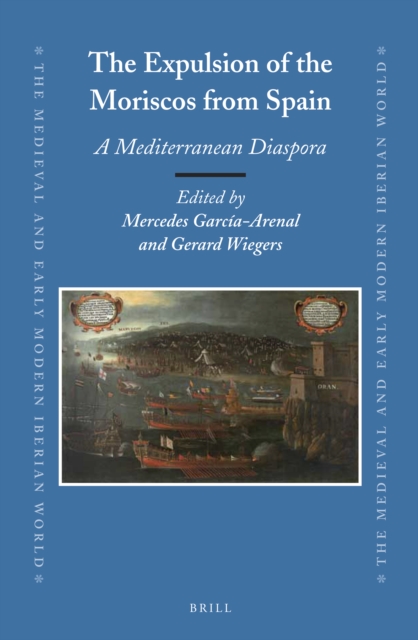
The Expulsion of the Moriscos from Spain
The Expulsion of the Moriscos from Spain offers a multi-perspective study of the forced migration and diaspora of the crypto-Muslim minority in the Mediterranean in the first half of the 17th century.
eBook
A Companion to Early Modern Spanish Imperial Political and Social Thought
This volume offers an account from a legal, theological and philosophical point of view of the historical and conceptual intricacies of the debates about the imperial expansion of the early modern Spanish monarchy.
eBook
Reason, Justice and Dignity
The book takes the reader on a journey to unexplored sources of human rights: ancient China, the golden age of Islam and 16th century Spain. All three share a strong belief in reason, justice and human dignity.
eBook

The Globalisation of Franciscan Poverty
This article explores the Franciscans’ attempt to translate their local conception of poverty into a world order between the thirteenth and sixteenth centuries. Studies of Franciscan poverty have generally been confined to Europe and to the Middle Ages, yet the pursuit of poverty also shaped the Franciscans’ global interactions across the medieval and early modern periods. This focus provides an alternative perspective not only on the history of the Franciscan Order but also on global history, which has often been conceptualised as the European expansion of commodities, money and markets. Economic expansion was in dialogue with an overlooked story of resistance to, and questioning of, the phenomena of money and markets, and the attempt to realise a vision of the world based upon a unifying, yet unequal, notion of poverty.
Journal Article

An economic theory of economic analysis
The School of Salamanca often is identified as the first economic tradition in the history of the “dismal science”. Its members anticipated principles later developed by the likes of Adam Smith and Carl Menger. This paper provides an economic theory of the production of economic analysis by the Doctors of Salamanca, beginning from the observation that producers of economic analysis respond to incentives the same way producers of meat, beer, or bread do. Historically, the demand for economic analysis arises from two sources: governments and interest groups. I argue that the changes in international trade associated with the emergence of new transatlantic markets in the sixteenth century led to an increase in the demand for economic analysis by Spanish merchants and that the contribution of the School of Salamanca was grounded in the predictable supply response to those fresh incentives.
Journal Article

Refinancing short-term debt with a fixed monthly interest rate into funded juros under Philip II: an asiento with the Maluenda brothers
In the fragmented geographical, fiscal, and financial state inherited by Philip II of Spain, while the public debt reached an unprecedented level (50-60 per cent of GDP), the critical refinancing of unfunded asientos into funded juros was operated by merchant-bankers who signed the asientos. This process is illustrated, using abundant archival documentation, by an asiento with the Maluenda brothers in 1595, which provided the Crown with steady monthly cash payments for a year with options to sell juros for two-thirds of the credit, and a monthly rate of 1 per cent on the interim balance. Other examples are provided.
Journal Article

By My Absolute Royal Authority
A study of the kingdom of Castile's judicial administration that brings together political ideas and political action by giving serious attention to how well royal justices were able to handle difficult, prominent lawsuits that raised politically troubling questions and involved major litigants. 'By My Absolute Royal Authority': Justice and the Castilian Commonwealth at the Beginning of the First Global Age' is a study of judicial administration. From the fifteenth century to the seventeenth, the kingdom of Castile experienced a remarkable proliferation of judicial institutions, which historians have generally seen as part of a metanarrative of 'state-building.' Yet, Castile's frontiers were extremely porous, and a crown government that could not control the kingdom's borders exhibited neither the ability to obtain information and shape affairs, nor the centrality of court politics that many historians claim in an effort to craft a tidy narrative of this period. Castilians retained their loyalty to the monarchy not because of the 'power' of the institutions of a developing 'state,' but because they shared an identity as citizens of a commonwealth in which a high value was given to justice as an ultimate purpose of the political community and a conviction that the sovereign possessed 'absolute royal authority' to see that justice was done. This expectation served as a foundation for the political identity and loyalty that held together for several centuries the disparate and globally-dispersed domains of the Hispanic Monarchy, but perceptions of how well crown judicial institutions worked were a fundamental determinant of the degree of support a monarch could attract to meet fiscal and military goals. This book maps part of this unfamiliar terrain through a microhistory of an extended, high profile lawsuit that was carefully watched by generations of Castilian leaders. Justices from the late fifteenth century to the reign of Philip II had difficulty resolving the conflict because the proper exercise of \"absolute royal authority\" was itself the central legal issue and the dispute pitted against each other members of important groups who demonstrated a tendency to give prominence to different interpretive schemes as they tried to comprehend their world. The account brings together political ideas and political action by giving serious attention to how well royal justices were able to handle difficult, prominent lawsuits that raised politically troubling questions and involved major litigants. J. B. Owens is professor of the history and director of the Glenn E. Tyler Collection at Idaho State University, where he specializes in Spanish history and the use of Geographic Information Systems for research and teaching
eBook