
Catalogue Search | MBRL


Are you sure you want to remove the book from the shelf?

{{itemTitle}}
418,398
result(s) for
"Law schools"
Sort by:


The Development (or Lack Thereof) of Law and Economics in Singapore
In this article, I briefly reviewed the status of the law and economics movement in Singapore. I probed three spheres to describe this status, namely, academia, teaching and judiciary. In short, law and economics is of very little influence in Singapore both intellectually and practically. However, the unpromising position of law and economics is not unique to Singapore, as substantiated by several other pieces in this volume. Therefore, a serious pondering over the underlying cause is probably warranted. Robert Cooter’s call for efforts in the third, content, enterprise of law and economics might help move law and economics closer to the center stage of legal scholarship and practice in Asia.
Journal Article


Guilty People
Criminal defense attorneys protect the innocent and guilty alike, but, the majority of criminal defendants are guilty. This is as it should be in a free society. Yet there are many different types of crime and degrees of guilt, and the defense must navigate through a complex criminal justice system that is not always equipped to recognize nuances. In Guilty People, law professor and longtime criminal defense attorney Abbe Smith gives us a thoughtful and honest look at guilty individuals on trial. Each chapter tells compelling stories about real cases she handled; some of her clients were guilty of only petty crimes and misdemeanors, while others committed offenses as grave as rape and murder. In the process, she answers the question that every defense attorney is routinely asked: How can you represent these people? Smith’s answer also tackles seldom-addressed but equally important questions such as: Who are the people filling our nation’s jails and prisons? Are they as dangerous and depraved as they are usually portrayed? How did they get caught up in the system? And what happens to them there? This book challenges the assumption that the guilty are a separate species, unworthy of humane treatment. It is dedicated to guilty people—every single one of us.
eBook

Legal Academics
This detailed study of the lived experience of legal academics explores not only the culture of legal academia and the professional identities of law teachers, but also addresses some of the most pressing issues currently facing the discipline of law. Given the diverse nature of contemporary legal scholarship, where does the future lie? With traditional doctrinalism, socio-legal studies or critical scholarship? What does academic law have to offer its students, the legal profession and the wider society? How do legal academics ‘embody’ themselves as law teachers, and how does this affect the nature of the law they teach and study? In the context of the RAE, the QAA and all the other pressures facing universities, legal academics discuss the realities of contemporary legal academia in the UK.
eBook

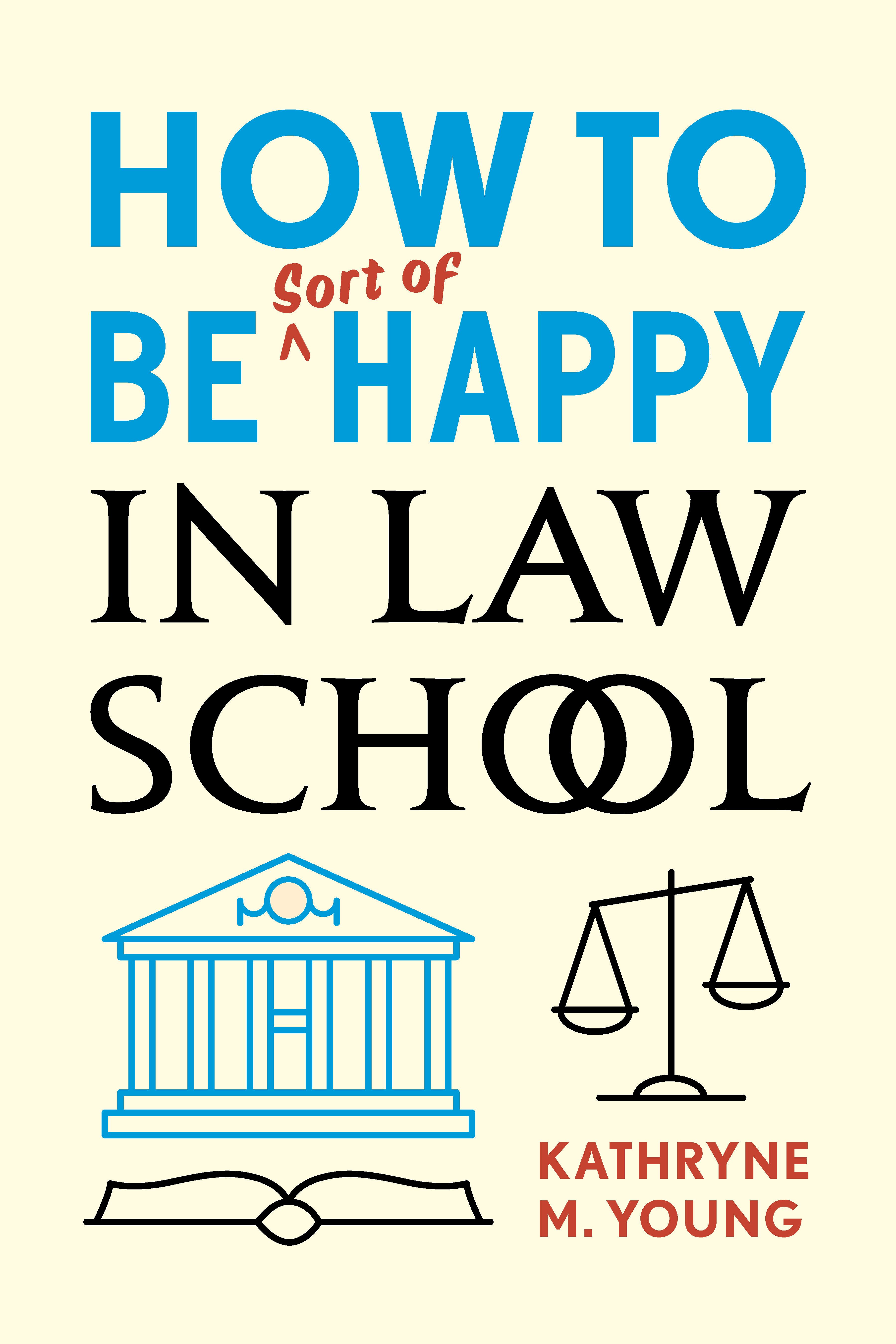
How to Be Sort of Happy in Law School
Each year, over 40,000 new students enter America's law schools. Each new crop experiences startlingly high rates of depression, anxiety, fatigue, and dissatisfaction. Kathryne M. Young was one of those disgruntled law students. After finishing law school (and a PhD), she set out to learn more about the law school experience and how to improve it for future students. Young conducted one of the most ambitious studies of law students ever undertaken, charting the experiences of over 1000 law students from over 100 different law schools, along with hundreds of alumni, dropouts, law professors, and more. How to Be Sort of Happy in Law School is smart, compelling, and highly readable. Combining her own observations and experiences with the results of her study and the latest sociological research on law schools, Young offers a very different take from previous books about law school survival. Instead of assuming her readers should all aspire to law-review-and-big-firm notions of success, Young teaches students how to approach law school on their own terms: how to tune out the drumbeat of oppressive expectations and conventional wisdom to create a new breed of law school experience altogether. Young provides readers with practical tools for finding focus, happiness, and a sense of purpose while facing the seemingly endless onslaught of problems law school presents daily. This book is an indispensable companion for today's law students, prospective law students, and anyone who cares about making law students' lives better. Bursting with warmth, realism, and a touch of firebrand wit, How to Be Sort of Happy in Law School equips law students with much-needed wisdom for thriving during those three crucial years.
eBook

A study in Charlotte
Sherlock Holmes and Dr. Watson descendants, Charlotte and Jamie, students at a Connecticut boarding school, team up to solve a murder mystery.
Book

Bridging the Theories and Practices of Healthcare and Law: A Student-Led Interprofessional Mock Trial Integrating Pharmacy Practice and Legal Education
This article describes a student-led interprofessional mock trial designed to explore the legal and regulatory dimensions of pharmacy practice through collaboration between law students and pharmacy students at the University of Mississippi. Developed by the Interprofessional Education (IPE) Board, the mock trial provides an immersive learning experience that simulates real-world legal proceedings involving pharmacists. Students work in interdisciplinary teams to create original case files including fact patterns, deposition transcripts, and trial evidence — based on scenarios involving professional misconduct, medication errors, or regulatory violations. Faculty advisors from both the law and pharmacy school provide guidance to ensure accuracy and educational value. The mock trial involves multiple rounds judged by legal and healthcare professionals, offering students a dynamic platform to develop professional communication, critical thinking, and collaborative skills. Law students gain practical insight into healthcare law while pharmacy students deepen their understanding of legal accountability, compliance, and the stages of a professional liability lawsuit. This interdisciplinary mock trial approach can especially be beneficial to law schools and law students desiring practical skills in healthcare and malpractice litigation, given that — unlike medical schools’ and pharmacy schools’ clinical programs — law schools’ courses involving medical liability issues frequently do not have a clinical component offering practical experience in malpractice litigation. In sum, this article offers a descriptive account of the mock trial, highlighting its structure, implementation, and replicability.
Journal Article