
Catalogue Search | MBRL


Are you sure you want to remove the book from the shelf?

{{itemTitle}}
215,227
result(s) for
"Law students."
Sort by:

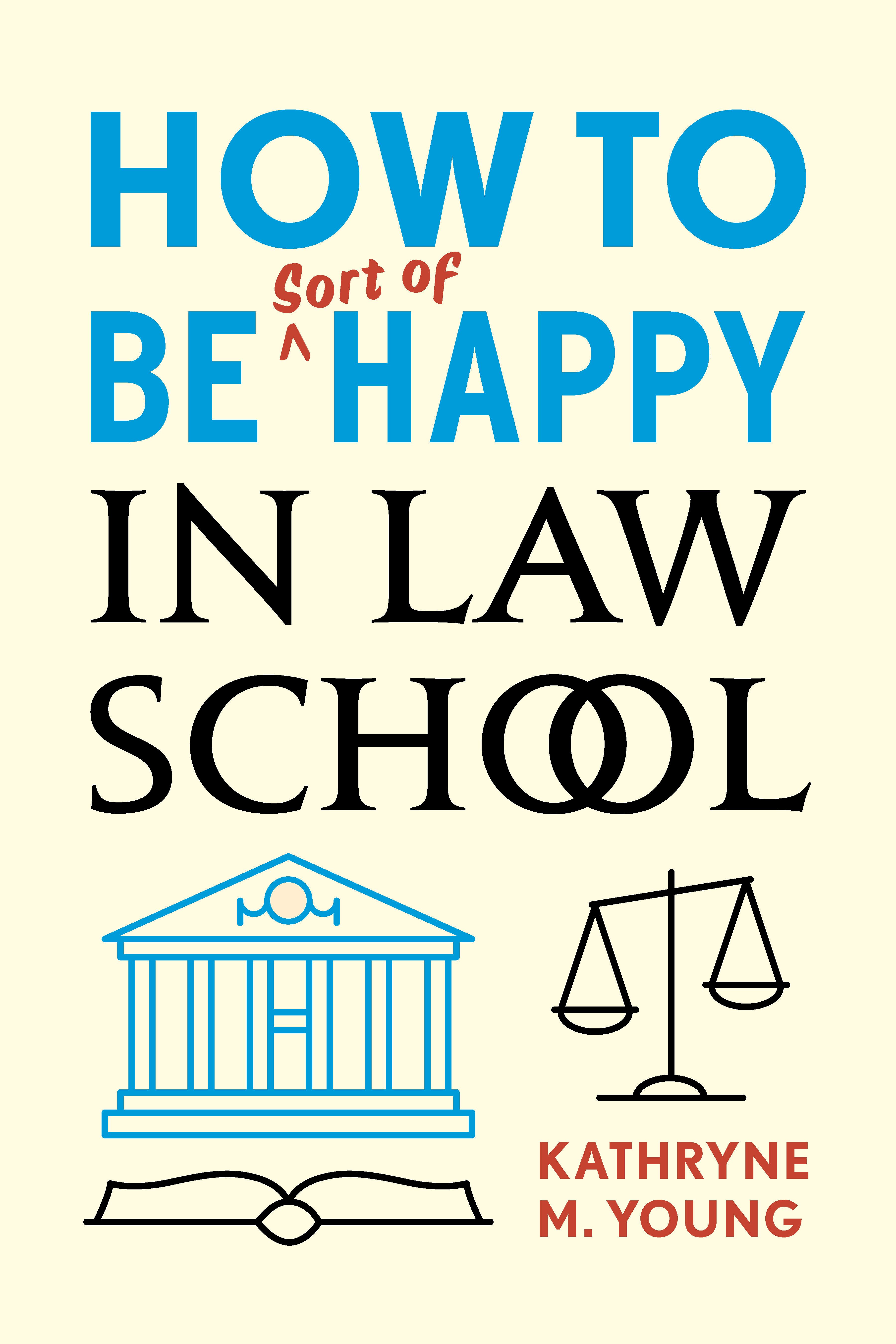
How to Be Sort of Happy in Law School
Each year, over 40,000 new students enter America's law schools. Each new crop experiences startlingly high rates of depression, anxiety, fatigue, and dissatisfaction. Kathryne M. Young was one of those disgruntled law students. After finishing law school (and a PhD), she set out to learn more about the law school experience and how to improve it for future students. Young conducted one of the most ambitious studies of law students ever undertaken, charting the experiences of over 1000 law students from over 100 different law schools, along with hundreds of alumni, dropouts, law professors, and more.
How to Be Sort of Happy in Law School is smart, compelling, and highly readable. Combining her own observations and experiences with the results of her study and the latest sociological research on law schools, Young offers a very different take from previous books about law school survival. Instead of assuming her readers should all aspire to law-review-and-big-firm notions of success, Young teaches students how to approach law school on their own terms: how to tune out the drumbeat of oppressive expectations and conventional wisdom to create a new breed of law school experience altogether.
Young provides readers with practical tools for finding focus, happiness, and a sense of purpose while facing the seemingly endless onslaught of problems law school presents daily. This book is an indispensable companion for today's law students, prospective law students, and anyone who cares about making law students' lives better. Bursting with warmth, realism, and a touch of firebrand wit, How to Be Sort of Happy in Law School equips law students with much-needed wisdom for thriving during those three crucial years.
eBook

Power trip
As the daughter of a former NBA player and a criminal attorney, Skye Lewis is faced with immense pressures to become successful. Starting her first year of law school, she meets third-year student Cameron Carter. Their immediate attraction is threatened, as Cameron has a host of secrets and a complex occupation that he must keep from Skye. Cameron's secret life eventually forces Skye to choose between love and her own well-being. -- adapted from back cover
Book

Is problem-based learning associated with students’ motivation? A quantitative and qualitative study
In this study, a mixed-method design was employed to investigate the association between a student-centred, problem-based learning (PBL) method and law students’ motivation. Self-determination theory (SDT) states that autonomous motivation, which is associated with higher academic performance, can be reached when there is fulfillment of three psychological needs: autonomy, competence and relatedness. PBL aims to trigger autonomous motivation. In Study 1, 85 PBL law students (37% male; Mean age = 21.99 years) and 69 law students of a lecture-based, non-PBL program (39% male; Mean age = 22.72 years) filled out the Self-Regulation Questionnaire and an adapted version of the Work-related Basic Need Satisfaction Scale in order to measure autonomous and controlled motivation and perceived autonomy, competence and relatedness. In order to compare both groups, two MANOVAs were conducted and results showed differences neither in autonomous and controlled motivation, nor in feelings of autonomy and competence. However, PBL students experienced more relatedness. Additionally, in Study 2, focus-group discussions that were conducted indicated that PBL contains both autonomy-supportive and controlling elements, which might explain why no differences were found in perceptions of autonomy and autonomous and controlled motivation between PBL and non-PBL students. Furthermore, students reported that tutorial groups in PBL contributed to feelings of relatedness.
Journal Article

News Literacy Skills among Undergraduate Law Students in the Age of Infodemic
Objectives: The objective of this study is to identify the news literacy skills of law students, their ability to encounter fake news, as well as their news sharing behavior. Research Methodology: A survey was conducted in two public sector universities of South Punjab i.e. The Islamia University of Bahawalpur and the Bahauddin Zakariya University of Multan. The population of the study comprised of undergraduate law students of the participating universities. The three-part questionnaire was used to collect the data on demographic information, perceived news literacy skills, and news sharing behavior. The collected data were analyzed using a statistical package for social sciences (SPSS version 24). The data was presented in frequency, percentage, mean and standard deviation. Findings: The findings of the study showed that the majority of the respondents often get information from social media. They never consulted a librarian as a source for information seeking relating to news. The majority of the respondents sometimes encountered a fake news story on social media. They check the authenticity of a news story sometimes. Their ability to recognize the fake news was quite low. The major motives behind sharing the news include changing the views of their friends/followers, being the first to share the news with others, and just for a fun or as a prank. Conclusion: The findings of the study concluded low perceived news literacy skills among undergraduate law students. The study recommends organizing news literacy instructions programs for undergraduate students.
Journal Article

The sin collector
\"Ever since the unsolved murder of her father, law student Masha Karavay has nursed an obsession with homicide cases. When she nabs an internship with Moscow's Central Directorate Headquarters, seasoned detective Andrey Yakovlev gives her a file of bizarre, seemingly unrelated slayings that should keep her busy and out of his way. But when Masha discerns a connection between the crimes and the symbolic world of medieval Moscow, she has Andrey's full attention. The victims weren't just abandoned... they were displayed--from Red Square to Kutafya Tower to the Bersenevskaya waterfront. What Masha and Andrey are dealing with is no ordinary serial killer, but rather a psycho with an unfathomable purpose, guided by sacred texts to punish his victims in the most unspeakable--and public--ways.\"-- Provided by publisher.
Book

Legal Value Orientations as Basic Category of Law Students’ Legal Culture
An obvious connection of legal culture, value orientations and legal consciousness was established by cross-disciplinary analysis. Legal culture is considered as a whole in relation to legal value orientations. The necessity of forming legal value orientations is proved, as without them it is impossible to achieve a high level of legal culture and to ensure a student’s behavior within the framework of the law. This component is analyzed as a compulsory element of a law school student’s legal consciousness. The concept of legal value orientations is defined from the standpoint of different approaches and from the point of view of various authors, wherein these orientations are studied through the cognitive-volitional component. The relation of legal value orientations and legal beliefs is analyzed. It is offered to comply with a number of pedagogical conditions, to apply certain methods and techniques, which will influence the educational process and will promote forming legal value orientations. The need for developing value orientations in students is proved; it is shown that without value orientations it is impossible to reach a high level of legal culture, to engage in civic activities and to become a law-abiding citizen. Legal value orientations are studied as a construction material of legal culture and govern a student’s legal behavior.
Journal Article

The schoolhouse gate : public education, the Supreme Court, and the battle for the American mind
\"By a brilliant young constitutional scholar at the University of Chicago--who clerked on the U.S. Court of Appeals for the District of Columbia for Judge Merrick B. Garland and on the Supreme Court of the United States for Justices Sandra Day O'Connor and Stephen Breyer, and who also happens to be an elegant stylist--a powerfully alarming book concerned to vindicate the constitutional rights of public school students, so often trampled upon by the Supreme Court in recent decades Supreme Court decisions involving the constitutional rights of students in the nation's public schools have consistently been most controversial. From racial segregation to unauthorized immigration, from economic inequality to public prayer and homeschooling: these are but a few of the many divisive issues that the Supreme Court has addressed vis-a-vis elementary and secondary education. The Schoolhouse Gate gives a fresh, lucid, and provocative account of the historic legal battles waged over education. It argues that since the 1970s, the Supreme Court through its decisions has transformed public schools into Constitution-free zones. Students deriving lessons about citizenship from the Court's decisions over the last four decades would conclude that the following actions taken by school officials pass constitutional muster: inflicting severe corporeal punishment on students without any procedural protections; searching students and their possessions, without probable cause, in bids to uncover violations of school rules; engaging in random drug testing of students who are not suspected of any wrongdoing; and suppressing student speech solely for the viewpoint that it espouses. Taking their cue from such decisions, lower courts have validated a wide array of constitutionally dubious actions, including: repressive student dress codes; misguided \"zero tolerance\" disciplinary policies; degrading student strip searches; and harsh restrictions on off-campus speech in the internet age. Justin Driver dramatically and keenly surveys this battlefield of constitutional meaning and warns that impoverished views of constitutional protections will only further rend our social fabric\"-- Provided by publisher.
Book
