
Catalogue Search | MBRL


Are you sure you want to remove the book from the shelf?

{{itemTitle}}
2,106
result(s) for
"Leadership Religious aspects."
Sort by:

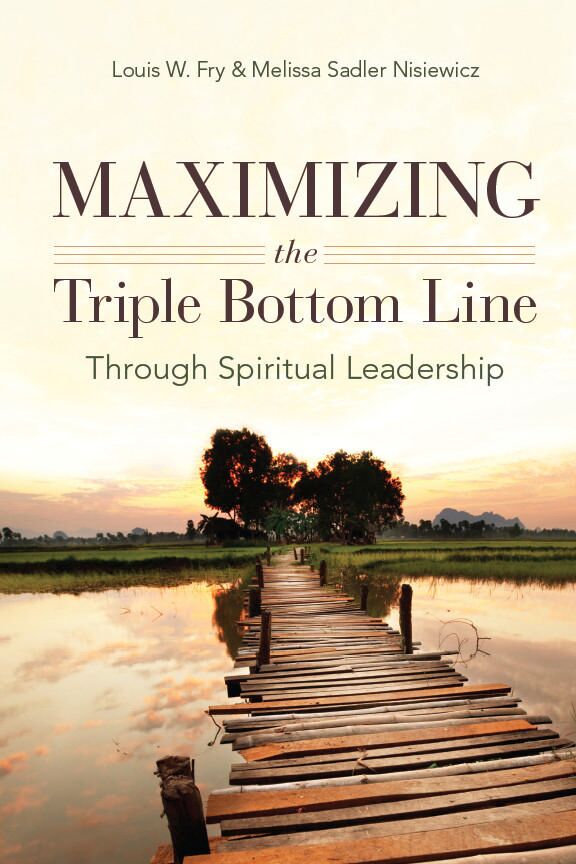
Maximizing the Triple Bottom Line Through Spiritual Leadership
Maximizing the Triple Bottom Line through Spiritual Leadership draws on the emerging fields of workplace spirituality and spiritual leadership to teach leaders and their constituencies how to develop business models that address issues of ethical leadership, employee well-being, sustainability, and social responsibility without sacrificing profitability, growth, and other metrics of performance excellence.
While this text identifies and discusses the characteristics necessary to be a leader, its major focus is on leadership—engaging stakeholders and enabling groups of people to work together in the most meaningful ways. The authors offer real-world examples of for-profit and non-profit organizations that have spiritual leaders and which have implemented organizational spiritual leadership. These cases are based on over ten years of research, supported by the International Institute of Spiritual Leadership, that demonstrates the value of the Spiritual Leadership Balanced Scorecard Business Model presented in the book. \"Pracademic\" in its orientation, the book presents a general process and tools for implementing the model.
eBook


Leadership Lessons from the Bhagavad Gita
For professionals navigating negative corporate karmas, Leadership Lessons from the Bhagavad Gita offers a way forward for overcoming self-defeating habits and managing the mind's negative chatter that is often the main obstacle to effective leadership. By promoting a leadership approach of caring for followers, stakeholders and future generations, the book offers hope for harmonious workplace relations and a protected environment. Based on leadership by inspiration as opposed to leadership by control, Leadership Lessons from the Bhagavad Gita provides an alternative to conventional leadership. Particularly, in the times we live, where there is a crisis of faith in leadership, the insights from this book presents a vision of linked-leadership—leaders who are linked through loving-connection or bhakti-yoga with themselves (through self-knowledge), with other beings, with nature and with the supreme source. As exemplified by Krishna taking over the reins of Arjuna's chariot, the crux of this book is leadership, not as a title or position, but as a commitment to service, excellence and virtuous character that motivates and inspires others to pursue the same. The unique insights from this book will help you make sense of different personality types to motivate others according to their natures and inclinations, which will support you in forming effective teams and creating a harmonious and prosperous organizational culture. In short, this book challenges and equips leaders to step up and cultivate unity and diversity, and achieve sustainable wellbeing and happiness in their organizations.
eBook

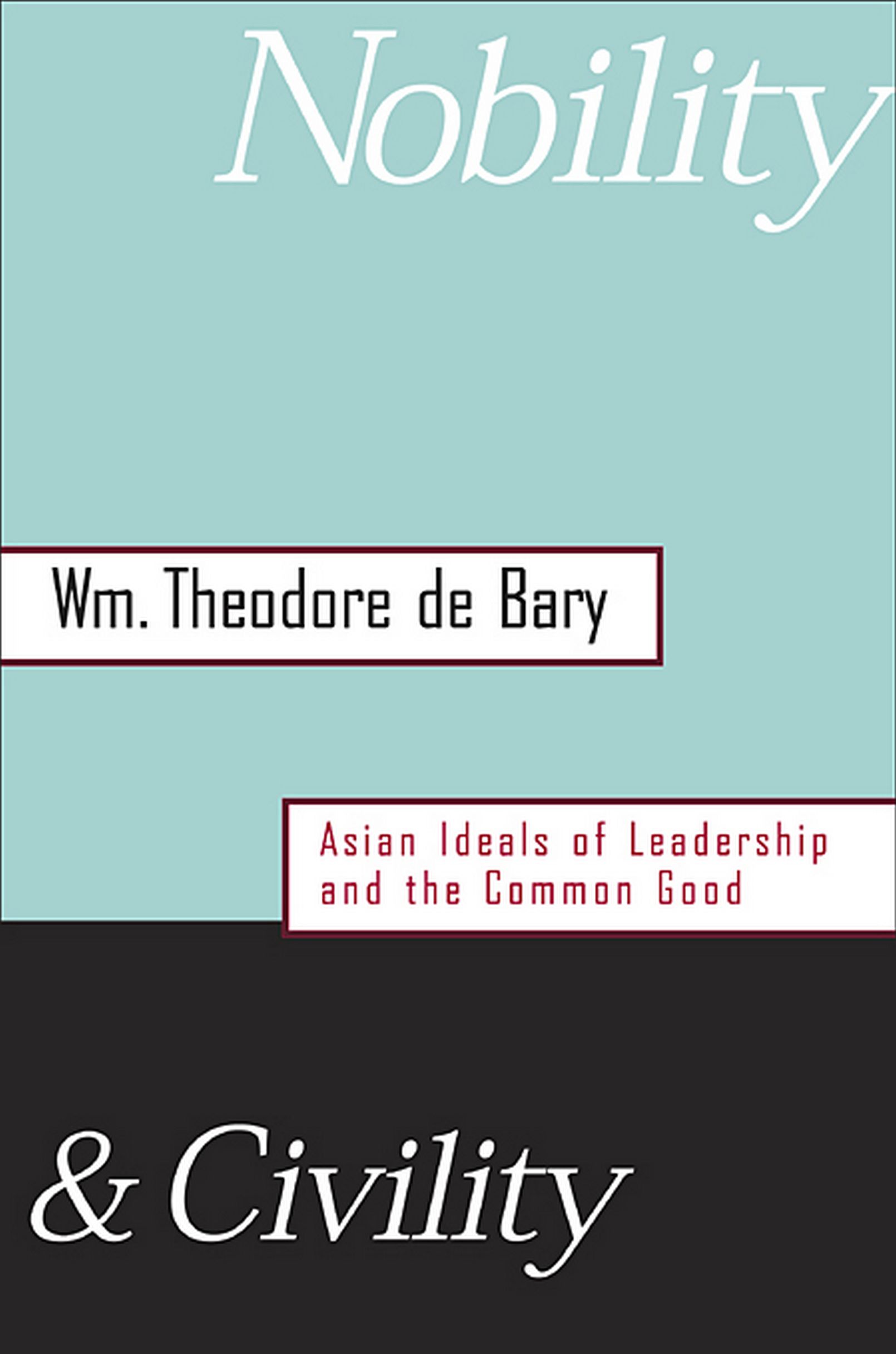
Nobility & civility : Asian ideals of leadership and the common good
Globalization has become an inescapable fact of contemporary life. Some leaders, in both the East and the West, believe that human rights are culture-bound and that liberal democracy is essentially Western, inapplicable to the non-Western world. How can civilized life be preserved and issues of human rights and civil society be addressed if the material forces dominating world affairs are allowed to run blindly, uncontrolled by any cross-cultural consensus on how human values can be given effective expression and direction?
In a thoughtful meditation ranging widely over several civilizations and historical eras, Wm. Theodore de Bary argues that the concepts of leadership and public morality in the major Asian traditions offer a valuable perspective on humanizing the globalization process. Turning to the classic ideals of the Buddhist, Hindu, Confucian, and Japanese traditions, he investigates the nature of true leadership and its relation to learning, virtue, and education in human governance; the role in society of the public intellectual; and the responsibilities of those in power in creating and maintaining civil society.
De Bary recognizes that throughout history ideals have always come up against messy human complications. Still, he finds in the exploration and affirmation of common values a worthy attempt to grapple with persistent human dilemmas across the globe.
eBook

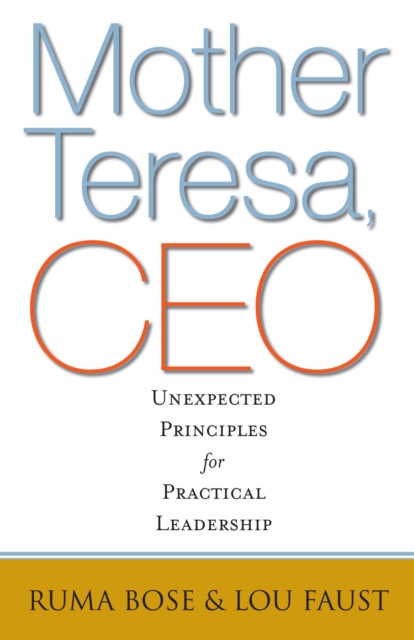
Mother Teresa, CEO : unexpected principles for practical leadership
This book details the leadership principles used by Mother Teresa in building one of the world's largest and most successful organizations, with this as its central lesson: leaders must articulate a simple vision, and execute it with absolute practicality. Bose who spent eight months working with Mother Teresa in 1992-3 and Faust have distilled Mother Teresa's leadership style into nine essential principles. Each principle shows readers how to apply Mother Teresa's wisdom in their lives and businesses.Much has been written about Mother Teresa. She is an actual saint, beatified by Pope John Paul II in 2003, as well as the winner of the 1979 Nobel Peace Prize, This book is the first to view her in another light as a pragmatic, realistic leader who over 47 years raised billions of dollars and helped millions of people. This often meant making tough decisions-such as accepting a donation from Saddam Hussein. This book has the principles that guided those decisions. These are universal principles that can help any leader working to keep an organization on course and on mission.
eBook

Bold followership : a biblical cure for organizational toxicity
This book uses biblical writings to examine how to build wise and moral boardroom boldness to mitigate executive ethical mishaps. The author uses the story of King David to explore the possible perplexities followers experience when their leaders suddenly make a toxic choice. Introducing a boardroom boldness language model (BBLM), Buford presents five boardroom languages to use when dealing with toxic leaders. How well organizations brace, respond, and proactively navigate the uncharted terrain of uncertainty could play a pivotal role in the success of the firm. Calling into question traditional constructs affiliated with power and trust, this book will advance the greater discussion by integrating spirituality, case studies, and leadership principles to measure the culture to cultivate boardroom boldness.
Book
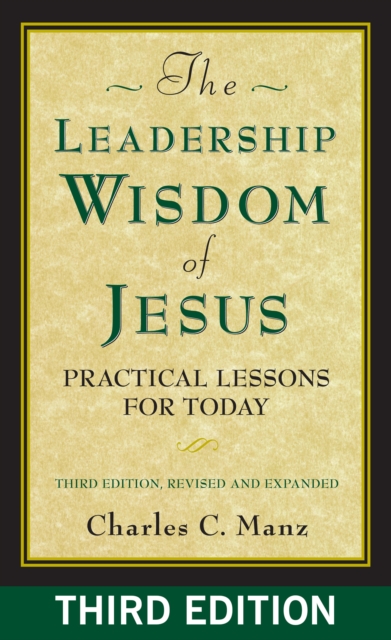
The leadership wisdom of Jesus : practical lessons for today
NEW EDITION, REVISED AND UPDATEDA new edition of the bestselling book (75,000 copies sold) that shows how the teachings of Jesus can bring a new angle to your leadership style. No matter what your religious background, this book will help you map out the high road to your personal and professional goals.
eBook