
Catalogue Search | MBRL


Are you sure you want to remove the book from the shelf?

{{itemTitle}}
2,077
result(s) for
"Learning Disabilities - economics"
Sort by:

Co-production of research derived actionable resources for the delivery of Individual Service Funds (EQUALD study): Protocol
Adults with a learning disability who receive social care are legally entitled to a personal budget. Personal budgets were introduced to promote choice and control in support. Individual Service Funds were introduced as a flexible way that personal budgets can be managed by a provider while maintaining choice and control for the individual. Individual Service Funds have been shown to improve quality of life for individuals and efficiency in support. Despite this, only 20% of local authorities offer them to adults with a learning disability, demonstrating the need for resources to be developed to support their delivery. This protocol described a co-production study with key stakeholders to develop and refine Individual Service Fund resources. Our primary aim is to co-produce two actionable resources: to support development, delivery, consistency, and sustained provision of ISFs; and to support uptake and optimal use of ISFs by recipients. We also aim to user-test and evaluate these resources with three Local Authorities. The result of this study will be two resources that will support the uptake of Individual Service Funds for adults with a learning disability that will be freely available online.
Journal Article

Intensive Interaction for children and young people with profound and multiple learning disabilities (INTERACT): study protocol for a cluster randomised controlled trial, economic evaluation and process evaluation
Background
Communication interventions can facilitate communication between people with profound and multiple learning disabilities (PMLD) and familiar partners such as family and educational setting staff, including speech and language therapists. Various communication interventions are routinely used but their clinical and cost-effectiveness are unclear. Intensive Interaction (II) is one intervention that focuses on early interaction abilities. II can be delivered by staff in educational settings and/or at home. Despite many settings already implementing II, staff are sometimes untrained or have not received up to date training, potentially leading to inconsistencies in how the technique is applied and the quality of the interactions. We will provide structured training in II to educational setting staff and parents/carers with coordinated activities developed jointly for each child/young person to be delivered within the educational setting and at home. This study aims to establish whether Intensive Interaction delivered within educational settings improves communication skills of children and young people with PMLD.
Methods
A multi-site pragmatic cluster randomised controlled trial comparing usual care with Intensive Interaction and usual care. Clusters will be educational settings. This study will recruit 330 participants (aged 3–25 years) with PMLD from 66 educational settings within Great Britain. Each participant will have a corresponding teacher, parent/carer, and interventionist. Potential participants will be screened by their educational setting for eligibility prior to giving informed consent. Data will be collected at baseline, 32 weeks, and 52 weeks post-randomisation and will assess health and educational outcomes including participants’ communication skills, behaviour, wellbeing, and quality of life. The primary outcome is communication skills, measured by the Communication Complexity Scale (CCS) at 32 weeks post-randomisation. Setting staff will video record an interaction with each participating child/young person. Communication will be coded by members of the research team blinded to allocation using the CCS.
Discussion
This study addresses a much used but currently under-researched intervention and results will inform the support provided to children and young people with PMLD in their educational settings and at home.
Trial registration
The trial was prospectively registered on the ISRCTN registry on 3rd May 2023 (registration number: ISRCTN81099965,
https://www.isrctn.com/ISRCTN81099965
).
Journal Article

Assessment of the Economic Burden of Specific Learning Disability by Estimating the Direct, Indirect, and Intangible Costs: A Low- and Middle-Income Country Perspective
Introduction:
The economic burden of specific learning disability (SLD) in the Indian setting is high, but a few studies have been done in this regard.
Methods:
This cross-sectional questionnaire-based descriptive cost of illness study was conducted in the pediatric neurocognitive clinic at a premier teaching hospital in North India between January and December 2021 to determine the economic burden of SLD by estimating the direct, indirect, and intangible costs related to this illness from the perspectives of afflicted families, health care providers, and society and to assess the impact of demographic and clinical variables on the economic burden. A \"person-based\" \"bottom-up\" approach for estimating costs from the perspective of the \"afflicted families\" was followed. A pre-designed structured questionnaire, while interviewing the parent/guardian of SLD patients, to collect data related to cost of treatment for SLD in their child under three types of expenses was used. The contingent valuation technique was used to document the willingness-to-pay value for estimating intangible cost data.
Results:
A total of 162 SLD patients (64% boys, 107 newly diagnosed, and 55 diagnosed in previous years and under regular follow-up) were enrolled. From the perspectives of afflicted families, the direct, indirect, total, and intangible costs were estimated to be INR 2,618,030, 14,525,180, 17,143,210, and 30,658,470, respectively (median 16,878, 89,771, 104,689, and 200,000). The \"average annual total costs of SLD\" were estimated to be INR 11,213,710 (the average annual cost per student was INR 69,220). Expenditure availed on special educators and tuition teachers constituted 64.5% and 54.3% of the direct and indirect costs, respectively. Both socio-economic status (P = 0.001, 0.002, 0.006) and duration of poor scholastic performance (P = 0.01, 0.02, and 0.04) were significant predictors of \"direct costs\", \"indirect costs\", and \"total costs\" for SLD. But only socio-economic status was a significant predictor of \"intangible costs\" (P = 0.009) and co-morbid psychiatric illness was a significant predictor only for \"direct costs\" (P = 0.03).
Conclusion:
The economic burden of SLD is huge, and most cases are diagnosed/referred late. There is an urgent need for Government-initiated SLD-specific programs to avail affordable remedial education for SLD-afflicted children in schools and create more skilled personnel in schools and hospitals, who can screen these children early and counsel parents to avoid wasteful expenditure.
Journal Article

The mental wealth of nations
Neuroimaging and neuropsychological studies indicate that substance use during adolescence is associated with neural disadvantages, particularly in the networks involved in learning, attention and executive function. Occupational professionals should be closely integrated with primary-care givers, and workplaces can promote mental health through well-being audits and widespread availability of flexible working. Already, we have found that learning difficulties such as dyslexia, which affects up to 10% of children, reduce the probability of achieving good grades at school16.
Journal Article

Is the money following the clients with learning disabilities?
For the past decade patients with learning disabilities living in long stay mental handicap hospitals have been resettled in the community. Local authorities have also taken on the care of new patients who would once have been long stay residents. The imperfect data that are available suggest that in England about half the residents in mental handicap hospitals in 1981 are now the responsibility of local authorities; the figures for Wales and Northern Ireland are 38% and 33%. Data on revenue suggest that the savings to the health service are much less--perhaps 9% in Northern Ireland and 3.6% in England, although there have also been capital gains through the sale of hospitals. Existing methods of transferring money from health to local authorities--joint finance and \"dowries\" for individual patients--do not seem adequately to have compensated local authorities. Moreover, as patients still to be transferred are more severely disabled local authorities will require larger sums--about 26 000 pounds per patient per year plus 39 200 pounds in capital. If the government chooses not to transfer these resources from health authorities it will be switching funds away from learning disabled people to other care groups.
Journal Article
Supplemental choline to prevent and treat learning and memory deficits of early-life iron deficiency (The SupCHO Study): study protocol for a randomized, placebo-controlled trial in Ugandan infants with iron deficiency anemia
Background
Iron deficiency (ID) limits the neurodevelopmental potential of more than 200 million children each year. Iron therapy started when IDA is first diagnosed—typically by screening for anemia or detection of clinical symptoms of IDA at 12 months of age—does not fully correct earlier ID-mediated brain dysfunction, underscoring the need for low-cost, easily implementable adjunct therapies to iron to treat or prevent this dysfunction in high-risk populations. Supplementation with the essential nutrient choline lessens damage done to the developing hippocampus when given with iron in pre-clinical rodent models, and choline supplementation improves hippocampus-mediated memory and learning in 2–3-year-old children with Fetal Alcohol Spectrum Disorders, a condition associated with hippocampal damage and one for which ID is a component of the neuropathology. Choline has not been tested in children with IDA. Our overall aim is to conduct a randomized, placebo-controlled clinical trial to test whether nine months of daily choline supplementation along with standard iron therapy improves hippocampus-dependent neurobehavioral outcomes in Ugandan infants with IDA.
Methods
Three hundred 6-month-old infants with IDA who present to immunization clinics at Mulago and Kawempe National Referral Hospitals in Kampala, Uganda, will be randomized to iron plus choline or iron plus placebo. Iron (oral ferrous sulfate 2 mg/kg/day) will be given for the first 3 months of follow-up, and a dispersible tablet of choline (200 mg as choline bitartrate) or identical placebo will be given daily for all 9 months of follow-up. We will conduct neurobehavioral tests assessing hippocampus-specific memory and attention and global cognition at enrollment (when each infant is 6 months of age) and after 9 months of follow-up (when each infant is 15 months of age).
Discussion
If we find a neurobehavioral benefit when choline is given along with iron, choline could be added immediately to standard of care treatment for IDA. This low-cost intervention could safely mitigate the brain dysfunction of early-life ID that is often not diagnosed until the hippocampal critical window is closing, providing life-long benefit for both the individual and the economic and social prosperity of entire regions.
Trial registration
Clinical trials.gov NCT06527391. Registered on 24 July 2024.
Journal Article

Group-based cognitive–behavioural anger management for people with mild to moderate intellectual disabilities: cluster randomised controlled trial
Many people with intellectual disabilities find it hard to control their anger and this often leads to aggression which can have serious consequences, such as exclusion from mainstream services and the need for potentially more expensive emergency placements.
To evaluate the effectiveness of a cognitive-behavioural therapy (CBT) intervention for anger management in people with intellectual disabilities.
A cluster-randomised trial of group-based 12-week CBT, which took place in day services for people with intellectual disabilities and was delivered by care staff using a treatment manual. Participants were 179 service users identified as having problems with anger control randomly assigned to either anger management or treatment as usual. Assessments were conducted before the intervention, and at 16 weeks and 10 months after randomisation (trial registration: ISRCTN37509773).
The intervention had only a small, and non-significant, effect on participants' reports of anger on the Provocation Index, the primary outcome measure (mean difference 2.8, 95% CI -1.7 to 7.4 at 10 months). However, keyworker Provocation Index ratings were significantly lower in both follow-up assessments, as were service-user ratings on another self-report anger measure based on personally salient triggers. Both service users and their keyworkers reported greater usage of anger coping skills at both follow-up assessments and keyworkers and home carers reported lower levels of challenging behaviour.
The intervention was effective in improving anger control by people with intellectual disabilities. It provides evidence of the effectiveness of a CBT intervention for this client group and demonstrates that the staff who work with them can be trained and supervised to deliver such an intervention with reasonable fidelity.
Journal Article

Does Money Matter? The Effects of Cash Transfers on Child Development in Rural Ecuador
A large body of research indicates that child development is sensitive to early‐life environments, so that poor children are at higher risk for poor cognitive and behavioral outcomes. These developmental outcomes are important determinants of success in adulthood. Yet, remarkably little is known about whether poverty‐alleviation programs improve children’s developmental outcomes. We examine how a government‐run cash transfer program for poor mothers in rural Ecuador influenced the development of young children. Random assignment at the parish level is used to identify program effects. Our data include a set of measures of cognitive ability that are not typically included in experimental or quasi‐experimental studies of the impact of cash transfers on child well‐being, as well as a set of physical health measures that may be related to developmental outcomes. The cash transfer program had positive, although modest, effects on the physical, cognitive, and socioemotional development of the poorest children in our sample.
Journal Article

The influence of genetic factors on education health and care plan obtainment for pupils with intellectual developmental disabilities
The study aimed to investigate the hypothesis that the Education, Health and Care Plan (EHCP) obtainment for pupils with intellectual developmental disabilities (IDD) of genetic aetiology was influenced by genetic factors and their family’s socioeconomic status. We recruited 2738 participants with IDD of genetic aetiology aged between 6–28 years old (mean age 14 years, 56% male). The data used included genetic inheritance information, primary special educational needs type, the age when the EHCP was granted, parental education level, free school meal eligibility and a family index of multiple deprivation score. Only 78% of participants were eventually granted EHCPs. Those with an inherited variant waited significantly longer and were less likely to receive an EHCP than those with a
de novo
variant. They were significantly more likely to be living in more deprived areas, and their parents had attained lower levels of education compared with those whose IDD was caused by an equivalent
de novo
genetic anomaly. This unique cohort study demonstrated that the obtainment of an EHCP in families seeking additional educational support for children with IDD of genetic origin is inequitable and is influenced by social and genetic factors.
Journal Article
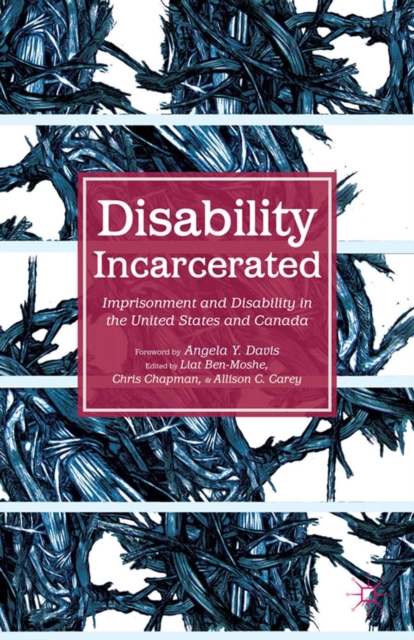
Disability Incarcerated
Disability Incarcerated gathers thirteen contributions from an impressive array of fields. Taken together, these essays assert that a complex understanding of disability is crucial to an understanding of incarceration, and that we must expand what has come to be called 'incarceration.' The chapters in this book examine a host of sites, such as prisons, institutions for people with developmental disabilities, psychiatric hospitals, treatment centers, special education, detention centers, and group homes; explore why various sites should be understood as incarceration; and discuss the causes and effects of these sites historically and currently.This volume includes a preface by Professor Angela Y. Davis and an afterword by Professor Robert McRuer.
eBook