
Catalogue Search | MBRL


Are you sure you want to remove the book from the shelf?

{{itemTitle}}
1,023
result(s) for
"Learning disabilities History."
Sort by:


Neuropsychology of Learning Disabilities: The Past and the Future
Over the past 50 years, research on children and adults with learning disabilities has seen significant advances. Neuropsychological research historically focused on the administration of tests sensitive to brain dysfunction to identify putative neural mechanisms underlying learning disabilities that would serve as the basis for treatment. Led by research on classifying and identifying learning disabilities, four pivotal changes in research paradigms have produced a contemporary scientific, interdisciplinary, and international understanding of these disabilities. These changes are (1) the emergence of cognitive science, (2) the development of quantitative and molecular genetics, (3) the advent of noninvasive structural and functional neuroimaging, and (4) experimental trials of interventions focused on improving academic skills and addressing comorbid conditions. Implications for practice indicate a need to move neuropsychological assessment away from a primary focus on systematic, comprehensive assessment of cognitive skills toward more targeted performance-based assessments of academic achievement, comorbid conditions, and intervention response that lead directly to evidence-based treatment plans. Future research will continue to cross disciplinary boundaries to address questions regarding the interaction of neurobiological and contextual variables, the importance of individual differences in treatment response, and an expanded research base on (a) the most severe cases, (b) older people with LDs, and (c) domains of math problem solving, reading comprehension, and written expression. (JINS, 2017, 23, 930–940)
Journal Article


Does Money Matter? The Effects of Cash Transfers on Child Development in Rural Ecuador
A large body of research indicates that child development is sensitive to early‐life environments, so that poor children are at higher risk for poor cognitive and behavioral outcomes. These developmental outcomes are important determinants of success in adulthood. Yet, remarkably little is known about whether poverty‐alleviation programs improve children’s developmental outcomes. We examine how a government‐run cash transfer program for poor mothers in rural Ecuador influenced the development of young children. Random assignment at the parish level is used to identify program effects. Our data include a set of measures of cognitive ability that are not typically included in experimental or quasi‐experimental studies of the impact of cash transfers on child well‐being, as well as a set of physical health measures that may be related to developmental outcomes. The cash transfer program had positive, although modest, effects on the physical, cognitive, and socioemotional development of the poorest children in our sample.
Journal Article

Citizenship and Learning Disabled People: The Mental Health Charity MIND’s 1970s Campaign in Historical Context
Current policy and practice directed towards people with learning disabilities originates in the deinstitutionalisation processes, civil rights concerns and integrationist philosophies of the 1970s and 1980s. However, historians know little about the specific contexts within which these were mobilised. Although it is rarely acknowledged in the secondary literature, MIND was prominent in campaigning for rights-based services for learning disabled people during this time. This article sets MIND’s campaign within the wider historical context of the organisation’s origins as a main institution of the inter-war mental hygiene movement. The article begins by outlining the mental hygiene movement’s original conceptualisation of ‘mental deficiency’ as the antithesis of the self-sustaining and responsible individuals that it considered the basis of citizenship and mental health. It then traces how this equation became unravelled, in part by the altered conditions under the post-war Welfare State, in part by the mental hygiene movement’s own theorising. The final section describes the reconceptualisation of citizenship that eventually emerged with the collapse of the mental hygiene movement and the emergence of MIND. It shows that representations of MIND’s rights-based campaigning (which have, in any case, focused on mental illness) as individualist, and fundamentally opposed to medicine and psychiatry, are inaccurate. In fact, MIND sought a comprehensive community-based service, integrated with the general health and welfare services and oriented around a reconstruction of learning disabled people’s citizenship rights.
Journal Article

Heritage and Stigma. Co-producing and communicating the histories of mental health and learning disability
University engagement with mental health services has traditionally been informed by the vocational and pedagogical links between the two sectors. However, a growth in the interest in public history and in the history of mental healthcare has offered new opportunities for those in the humanities to engage new audiences and to challenge perceptions about care in the past. The introduction of the ‘impact agenda’ and related funding streams has further encouraged academics to contribute to historical debates, and to those concerning current services. One such example of this is the Arts and Humanities Research Council funded Heritage and Stigma project at the University of Huddersfield, which was conceived to support mental health and learning disability charities in the exploration and dissemination of their own histories. Using this project as a case study, this paper will draw on primary source material to reflect on the opportunities and challenges of working in partnership with such groups. In particular, it will consider the need to address issues of stigma and exclusion in tandem with a critical understanding of the moves to ‘community care’ instigated by landmark legislation in the form of the 1959 Mental Health Act. Overall, it provides evidence of an inclusive, coproductive model of design and highlights the positive contribution to communicating mental health made by those based in the humanities.
Journal Article

From Idiocy to Mental Deficiency
From Idiocy to Mental Deficiency is the first book devoted to the social history of people with learning disabilities in Britain. Approaches to learning disabilities have changed dramatically in recent years. The implementation of 'Care in the Community', the campaign for disabled rights and the debate over the education of children with special needs have combined to make this one of the most controversial areas in social policy today. The nine original research essays collected here cover the social history of learning disability from the Middle Ages through the establishment of the National Health Service. They will not only contribute to a neglected field of social and medical history but also illuminate and inform current debates. The information presented here will have a profound impact on how professionals in mental health, psychiatric nursing, social work and disabled rights understand learning disability and society's responses to it over the course of history.
eBook

Cognitive Assessment
This chapter contains sections titled:
History of Cognitive Assessment
Cognitive Assessment within A Person Centred Framework
Definition of Learning Disability
What is Cognition and can it be Measured?
General Principles when Using Global Assessments of Intelligence
Psychometric Assessment of Global Intellectual Functioning
Why Use Global Assessments of Gognitive Function?
A Few Notes of Caution When Carrying Out Cognitive Assessment
How to Use Global Assessments of Cognitive Function to Gain More Useful Information
Other Specific Neuropsychological Tests that may be of Use
Using a Neuropsychological Model when you can't Find the Right Test in the Cupboard
Summary and Conclusion
References
Book Chapter
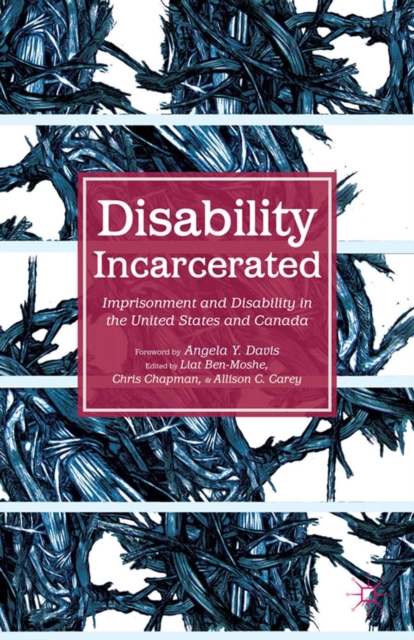
Disability Incarcerated
Disability Incarcerated gathers thirteen contributions from an impressive array of fields. Taken together, these essays assert that a complex understanding of disability is crucial to an understanding of incarceration, and that we must expand what has come to be called 'incarceration.' The chapters in this book examine a host of sites, such as prisons, institutions for people with developmental disabilities, psychiatric hospitals, treatment centers, special education, detention centers, and group homes; explore why various sites should be understood as incarceration; and discuss the causes and effects of these sites historically and currently.This volume includes a preface by Professor Angela Y. Davis and an afterword by Professor Robert McRuer.
eBook

In-school eyecare in special education settings has measurable benefits for children’s vision and behaviour
To determine whether implementation of comprehensive in-school eyecare results in measurable benefits for children and young people in terms of visual status, classroom behaviours and how well their visual needs are met.
School-based observational study.
200 pupils [mean age 10 years 9 months, 70% male, majority moderate (40%) or severe (35%) learning difficulty] of a special education school in the UK. A sector-agreed in-school eyecare framework including full eye examination and cycloplegic refraction, dispensing of spectacles (as appropriate) and written reporting of outcomes to parents/teachers was applied. Classroom behaviours were observed and recorded prior to, and after, the in-school eyecare. Surveys were employed to obtain visual histories from parents/teachers. School records and statutory documents were reviewed for diagnostic and learning disability classifications. Visual function and ocular health were profiled at baseline and significant visual deficits identified. Where such deficits were previously unrecognised, untreated or not compensated for (e.g. correction of refractive error, enlargement of educational material) they were recorded as 'unmet visual need'. At follow-up, 2-5 months after initial (baseline) measures, eye examinations, parent/teacher surveys and behaviour observations were repeated. Follow-up measures were used to determine if measurable improvements were evident in visual function, ocular health, the level of unmet need and classroom behaviour following implementation of in-school eyecare.
199 participants completed baseline and follow-up measures. 122 (61%) participants presented with at least one significant visual or ocular health deficit and 90 (45%) participants had at least one unmet visual need. Younger pupils and those with no previous history of eyecare were more likely to demonstrate unmet visual needs at baseline (OR 1.12 95% CI 1.03 to 1.21) p = 0.012; (OR 4.44 95% CI 1.38 to 14.29 p = 0.007 respectively). On follow-up, the number of pupils with unmet visual needs dropped significantly to 36 (18%) (McNemar's test p<0.001). Visual and behavioural metrics of participants without significant visual deficits or whose visual needs were adequately addressed at baseline remained relatively unchanged between baseline and follow-up (Wilcoxon signed rank p>0.05). Where significant refractive deficits were corrected at follow-up, near visual acuity improved significantly (Wilcoxon signed rank p = 0.013), however, poor spectacle compliance was a persistent cause of unmet visual need. Off-task behaviour reduced significantly after actions to address unmet visual needs were communicated to parents and teachers (Wilcoxon signed rank p = 0.035).
The present study demonstrates for the first time measurable visual and behaviour benefits to children in special education settings when they receive comprehensive in-school eye examinations, on-site spectacle dispensing and jargon-free reporting of outcomes to teachers and parents.
Journal Article