
Catalogue Search | MBRL


Are you sure you want to remove the book from the shelf?

{{itemTitle}}
607
result(s) for
"Learning disabled Education (Higher)."
Sort by:

College for students with learning disabilities : a school counselor's guide to fostering success
\"College for Students with Learning Disabilities is a guide for counselors working with high school students with learning disabilities who are planning on attending college. Divided into two distinct parts, the book first gives an overview of learning disabilities and related issues as they apply to the role of the high school counselor, written in a question/answer format. The second part is a comprehensive, step by step program for creating working groups for college-bound students with learning disabilities. This book advises counselors in a positive way and aims to change the lives of students with learning disabilities by preparing them for college in an effective, concrete way\" -- Provided by publisher.
Book


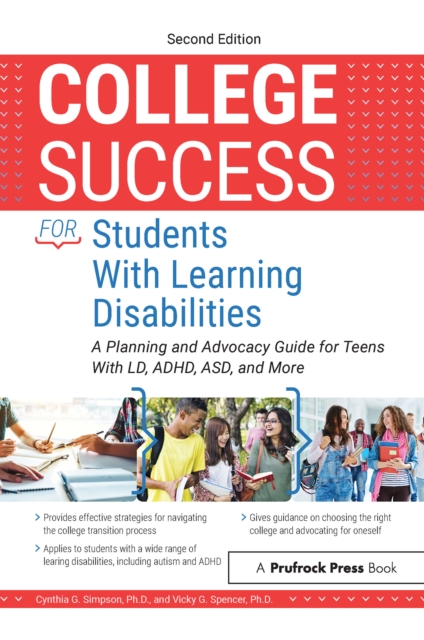
College Success for Students With Learning Disabilities
College Success for Students With Learning Disabilities (2nd ed.) offers students the knowledge, guidance, and strategies they need to effectively choose a college, prepare for university life, and make the most of their collegiate experience. This revised edition:
Outlines the rights and responsibilities of students with learning disabilities
Gives advice on talking to professors and peers, getting involved, and asking for and receiving accommodations.
Helps students utilize their strengths to meet and exceed academic standards.
Provides additional information on autism spectrum disorders (ASD) and ADHD.
Includes a handy guide to universities with special programs and advice from current college students with disabilities.
Planning for college can be one of the biggest moments in any student's life, but for students with disabilities, the experience can be challenging on many different levels. This book will empower future students and provide them with hope for success.
Grades 9-12
Acknowledgments Introduction: College Planning for Students With Learning Disabilities and Other Special Needs < Chapter 1 > Making the Change: Transition Planning < Chapter 2 > Stand Up for Yourself: Advocacy < Chapter 3 > College as the Next Step < Chapter 4 > Preparing to Attend College < Chapter 5 > Academics < Chapter 6 > Adapting to University Life < Chapter 7 > Family and College Success Final Thoughts Glossary of Terms Resources References Appendix: What Students With Disabilities and Their Families Need to Know About the Authors
Cynthia G. Simpson, Ph.D., has more than 16 years of experience in the public and private sector as a preschool teacher, special education teacher, elementary teacher, educational diagnostician, associate professor of education, and administrator. She maintains an active role in the lives of children and young adults with exceptionalities as an educational consultant in the areas of assessment, inclusive practices, and transition planning. She currently is an associate professor and program coordinator for special education in the College of Education at Sam Houston State University.
Vicky G. Spencer, Ph.D., has served in the field of special education for more than 20 years as a special education teacher, educational consultant, and assistant professor. Vicky continues to remain actively involved in the field as she collaborates with special education teachers to implement cognitive strategies within the inclusive classroom setting. Vicky currently is an assistant professor and the Assistant Director of Operations at the Kellar Institute for Human Disabilities at George Mason University.
eBook

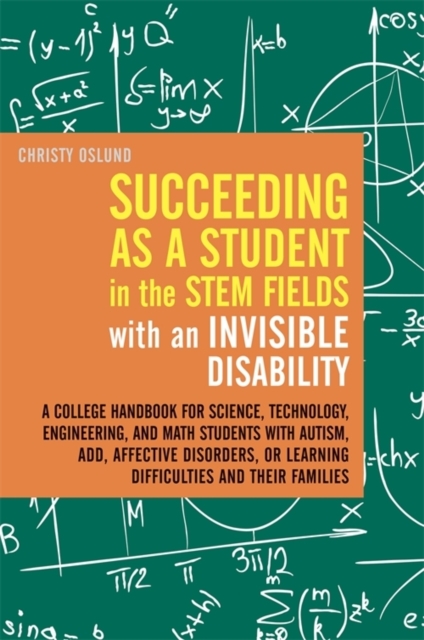
Succeeding as a Student in the STEM Fields with an Invisible Disability
The STEM fields (Science, Technology, Engineering and Math) attract many students with autism, ADD, affective disorders and related invisible disabilities who are highly intelligent and analytical, but who, upon entering higher education, may find that they struggle with independent living and a different way of learning.
This is a preparation guide for students and their families that explains everything they need to know about the university experience including classroom behavior, study skills, self-reliance, accessing support services, and when parents should and shouldn't get involved. Offering practical advice and strategies, this is a useful handbook that students can refer to again and again throughout their college years guiding them on their paths to becoming the inventors, scientists, engineers, and computer entrepreneurs of the future.
eBook

People with intellectual disability experiencing university life : theoretical underpinnings, evidence and lived experience
\"This book will introduce the reader to international perspectives associated with post-secondary school education for students with intellectual disability attending university settings. Examples of students with intellectual disability gaining their right to full inclusion within university settings are outlined, as well as the barriers and facilitators of such innovation. The four parts of the text will act as a reader for all stakeholders of inclusion at the university level. The first part examines the philosophical, theoretical and rights-based framework of inclusion. The second part provides evidence and insight into eight programs from across the globe, where students with intellectual disability are included within university settings. The third part consists of six chapters associated with the lived experiences of stakeholders in the programs profiled in Part 2. These stories are represented through the voices of former students of inclusive tertiary education initiatives, parents of adult children with intellectual disability who have participated in tertiary education, and lecturers who have taught students with intellectual disability as members of their courses. In the fourth part, critical issues examined, including the role of secondary school counsellors, sustaining post university outcomes, transition from university to employment, inclusive university teaching approaches, and decision-making approaches to successfully implement a tertiary education initiative. The text concludes with a synthesis of the book themes and proposes calls to action with specific tasks to move the rhetoric of human rights into reality for adults with intellectual disability through an inclusive tertiary education\"-- Provided by publisher.
Book
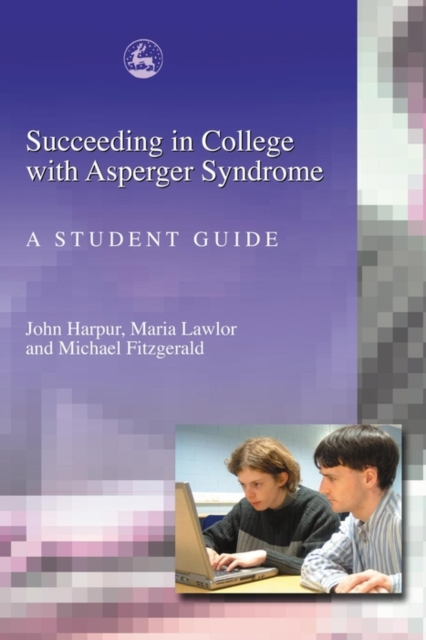
Succeeding in college with Asperger syndrome : a student guide
This guide provides information to help students with AS prepare successfully for the rites and rituals of studying, interact with staff and fellow students, cope with expectations and pressures, and understand their academic and domestic responsibilities. The authors draw on first hand interviews with AS students and direct clinical experience.
eBook

Neurodiversity in higher education
Neurodiversity is an umbrella term, including dyspraxia, dyslexia, attention deficit hyperactivity disorder, dyscalculia, autistic spectrum and Tourette syndrome. The increasing number of students with learning difficulties associated with neurodiversity entering higher education (HE) poses a shared and growing challenge internationally for teachers and institutional leaders. This narrative synthesis draws together a corpus of international literature on how neurodiverse students experience higher education and the ways in which higher education institutions respond to the cluster of neurodiverse conditions. A systematic review was carried out to search, retrieve, appraise and synthesize the available evidence to provide an original contribution to the literature and significant insights of worth to higher education internationally. An inclusive approach to data extraction was used to ensure that all the relevant studies were included. All stages of the review process, including the initial search, screening, sample selection and analysis, are described. Three main themes and 11 subthemes were identified. Although the majority of publications focus on either dyslexia, autistic spectrum disorder, or ADHD, some common themes are evident in student experience across learning difficulties associated with neurodiversity. Although support services and technologies are available to meet students’ specific needs, there is an apparent dislocation between the two. Fear of stigmatization and labelling worsens the divide between what is needed and what is available to ensure neurodiverse students’ success in higher education, where good intentions are evidently not enough.
Journal Article

Unveiling ableism and disablism in assessment: a critical analysis of disabled students’ experiences of assessment and assessment accommodations
This study examines the underlying mechanisms of ableism and disablism in the assessment of student learning in higher education. Globally, higher education institutions rely strongly on assessment accommodations (e.g., extra time in tests) to ensure disabled students’ participation in assessment. This is also the case in Finland. Even though research on disabled students’ experiences of assessment has repeatedly shown that both assessment and assessment accommodations cause barriers for disabled students’ inclusion, critically oriented research on this topic has been scarce. In this study, the frameworks of ableism and disablism are used to unveil how assessment is predominantly designed for “the ideal, able student” and how disabled students are framed as “the Other” through assessment. This work is based on an analysis of 139 disabled students’ experiences of assessment and assessment accommodations as collected through an open-ended, institution-wide survey at a Finnish university. The findings reveal the profound role of assessment in excluding and marginalizing disabled students as unfit to take part in the testing cultures of academia. The accommodation model is shown to hold disabled people responsible for their own exclusion. Disablism is identified in students’ experiences of outright discrimination, such as teachers denying access to assessment accommodations when they are officially granted. This study offers a novel, critical means of discussing assessment from the viewpoints of diversity and inclusion. It also proposes future trajectories for anti-ableist assessment approaches that understand diversity as enriching, rather than obscuring, assessment.
Journal Article