
Catalogue Search | MBRL


Are you sure you want to remove the book from the shelf?

{{itemTitle}}
2,313
result(s) for
"Learning disabled Rehabilitation."
Sort by:


From Isolation to Intimacy
If you have no language, how can you make yourself understood, let alone make friends? Phoebe Caldwell has worked for many years with people with severe intellectual disabilities and/or autistic spectrum disorder who are non-verbal, and whose inability to communicate has led to unhappy and often violent behaviour. In this new book she explores the nature of close relationships, and shows how these are based not so much on words as on the ability to listen, pay attention, and respond in terms that are familiar to the other person. This is the key to Intensive Interaction, which she shows is a straightforward and uncomplicated way, through attending to body language and other non-verbal means of communication, of establishing contact and building a relationship with people who are non-verbal, even those in a state of considerable distress. This simple method is accessible to anyone who lives or works with such people, and is shown to transform lives and to introduce a sense of fun, of participation and of intimacy, as trust and familiarity are established.
eBook

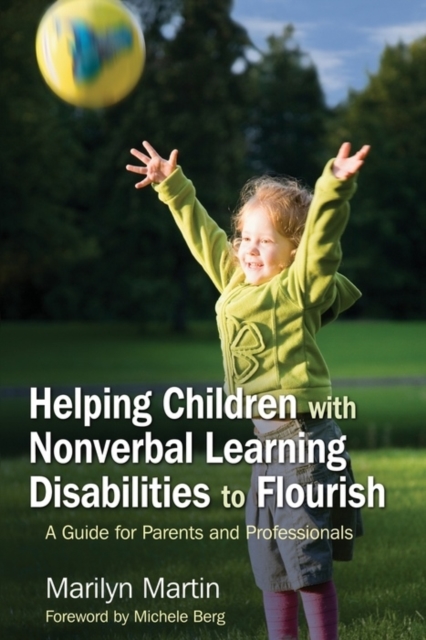
Helping children with nonverbal learning disabilities to flourish : a guide for parents and professionals
`Imagine getting lost in your own home, forgetting where the bathroom is at work, or being unable to operate a simple door knob. These are just some of the myriad challenges faced by individuals with a Nonverbal Learning Disability, or NLD…In Helping Children With Non-Verbal Learning Disabilities to Flourish, Marilyn Martin gives an overview of NLD and strategies for teaching individuals with this disability. Using examples of her struggles to help her daughter, who has NLD, as well as current research, she has written a book helpful for both parents and professionals. In addition to her experiences with her daughter, Martin is a Learning Specialist with more than fifteen years of experience working with students who have dyslexia, NLD, and other learning disorders… This book is a good introduction to NLD and interventions for treating it… As it gains recognition as a distinct learning disorder, interventions and informative books, like this one, will open doors, literally and figuratively, for families and individuals touched by NLD.' - Foreword, Autumn 2007 `Author Marilyn Martin's daughter Sara was diagnosed with Nonverbal Learning Disability (NLD). Marilyn offers a comprehensive developmental profile of children with NLD and explores the controversies surrounding the condition so parents and professionals can identify learners with NLD and ensure they receive early intervention. Offering practical advice on NLD at home and at school, the book describes step by step interventions for improving a range of skills from penmanship to social acumen.' -Autism Us, 2007 `Marilyn Martin's book Helping Children with Nonverbal Learning Disorder to Flourish is an exciting and essential new addition to the literature. … Martin shines in her ability to match interventions to a broad range of problems and examples abound in every chapter. Clear, concise, and detailed explanations are given so that the interventions can be applied skillfully. … Each intervention is presented in a terrifically useful and usable format that includes the problem, strengths available, proposed solution, how the solution can be generalized, the goal of the intervention, and a very up-to-date and helpful listing of relevant resources.' - from the Foreword by Michele Berg, Director, Center for Learning Disorders, Family Service and Guidance When you continuously cannot find the bathroom in your best friend's house, or you cannot print the letter `t' when all your friends are writing volumes, you notice, and you ask questions. So it was for Marilyn Martin's daughter, Sara, who was diagnosed with Nonverbal Learning Disability (NLD). This book skilfully combines a comprehensive guide to NLD with the inspiring story of how Sara transformed herself from that young girl whose existence seemed darkened by learning difficulties into the capable young woman she is today. In Helping Children with Nonverbal Learning Disabilities to Flourish, Marilyn Martin presents a comprehensive developmental profile of children with NLD. She explores the controversies surrounding the disorder so parents and professionals can identify learners with NLD and insure they receive early intervention. Offering practical advice on NLD at home and at school, she describes step-by-step interventions for improving a range of skills from penmanship to social acumen. This book is essential reading for parents and professionals working with children with NLD.
eBook
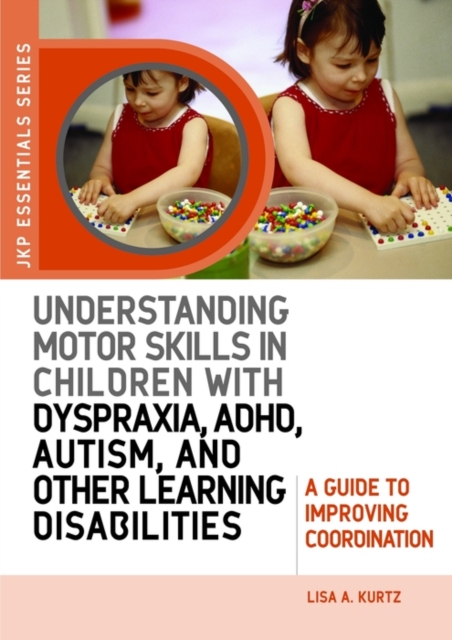
Understanding motor skills in children with dyspraxia, ADHD, autism, and other learning disabilities : a guide to improving coordination
The book is user-friendly and includes clear diagrams in each section, along with tables to outline key points. I found these very useful and they are an easy reference/ reminder, for example, they include a normal development chart, what assessments are available and their main aims.' - National Association of Paediatric Occupational Therapists Coordination problems often make everyday activities a challenge for children with learning disabilities. This accessible manual offers practical strategies and advice for helping children with coordination difficulties. The author explains how to recognize normal and abnormal motor development, when and how to seek help, and includes specific teaching strategies to help children with coordination difficulties succeed in the classroom, playground, and home. She describes a wide range of therapeutic methods and provides a comprehensive list of resources. Full of practical help, this is essential reading for anyone caring for, or working with, children with developmental motor concerns.
eBook
Nameless
Is learning disability determined from birth? Psychoanalysis has always striven to reconstruct damaged human subjectivity. However, with a few exceptions, people with learning disabilities have long been excluded from this enterprise as a matter of course. It has been taken for granted that learning disability is a deficient state in which psychodynamics play but a minor role and where development is irrevocably determined by organic conditions. First published in German in 1980s and published here in English for the first time, this brave and provocative book was one of the first to attempt to understand learning disabilities in terms of psychoanalysis and socio-psychology. Controversially, the author does not distinguish between a primary organic handicap and a secondary psychological one; rather, she argues that it is developed from the very outset of the process of socialisation during the interaction of caregiver and infant, and therefore gives the analyst room to work on this maladapted socialisation. She illustrates the effectiveness of this theory when put into practice in a number of illuminating case studies. Still as influential and powerful as when it was first published, Nameless will be of interest to psychoanalysts and clinicians from across the mental health services who work with people with learning disabilities.
eBook
Psychological therapies for adults with intellectual disabilities
Psychological Therapies for Adults with Intellectual Disabilities brings together contributions from leading proponents of psychological therapies for people with intellectual disabilities, which offer key information on the nature and prevalence of psychological and mental health problems, the delivery of treatment approaches, and the effectiveness of treatment. Offers a detailed guide to available therapies for adults with intellectual disabilities Includes case illustrations to demonstrate therapies in action Provides up-to-date coverage of current research in the field Puts forward a consideration of the wider contexts for psychological therapy including the relationship with social deprivation, general health, and the cost effectiveness of treatment Places individual interventions in the context of the person’s immediate social network including families and carers Includes contributions from leading proponents from around the world
eBook

Impact of Psychological Factors in the Experience of Pain
This article reviews the role of psychological factors in the development of persistent pain and disability, with a focus on how basic psychological processes have been incorporated into theoretical models that have implications for physical therapy. To this end, the key psychological factors associated with the experience of pain are summarized, and an overview of how they have been integrated into the major models of pain and disability in the scientific literature is presented. Pain has clear emotional and behavioral consequences that influence the development of persistent problems and the outcome of treatment. Yet, these psychological factors are not routinely assessed in physical therapy clinics, nor are they sufficiently utilized to enhance treatment. Based on a review of the scientific evidence, a set of 10 principles that have likely implications for clinical practice is offered. Because psychological processes have an influence on both the experience of pain and the treatment outcome, the integration of psychological principles into physical therapy treatment would seem to have potential to enhance outcomes.
Journal Article

Promoting Social Interactions and Job Independence for College Students with Autism or Intellectual Disability: A Pilot Study
The employment outcomes for young adults with autism or intellectual disability (ID) lag far behind those of their peers without disabilities. Most postsecondary education programs for students with disabilities incorporate internship experiences to foster employment skills. However, the proximity of job coaches may inadvertently hinder social opportunities and independence. We used a multiple-probe, single-case experimental design across three college students with autism or ID to examine the effects of a coaching package on task engagement and social interactions. For all participants, interactions increased and task engagement maintained when job coaches reduced proximity and delivered prompts discreetly through bug-in-ear devices. Participants considered the intervention beneficial and unobtrusive. We present implications for supporting employment preparation within postsecondary education programs.
Journal Article

AI enabled sign language recognition and VR space bidirectional communication using triboelectric smart glove
Sign language recognition, especially the sentence recognition, is of great significance for lowering the communication barrier between the hearing/speech impaired and the non-signers. The general glove solutions, which are employed to detect motions of our dexterous hands, only achieve recognizing discrete single gestures (i.e., numbers, letters, or words) instead of sentences, far from satisfying the meet of the signers’ daily communication. Here, we propose an artificial intelligence enabled sign language recognition and communication system comprising sensing gloves, deep learning block, and virtual reality interface. Non-segmentation and segmentation assisted deep learning model achieves the recognition of 50 words and 20 sentences. Significantly, the segmentation approach splits entire sentence signals into word units. Then the deep learning model recognizes all word elements and reversely reconstructs and recognizes sentences. Furthermore, new/never-seen sentences created by new-order word elements recombination can be recognized with an average correct rate of 86.67%. Finally, the sign language recognition results are projected into virtual space and translated into text and audio, allowing the remote and bidirectional communication between signers and non-signers.
Though wearable gloves are widely used for gesture associated applications (e.g. sign language recognition), sentence identification of sign language remains a challenge. Here, the authors report AI-enabled recognition system helps barrier-free communication between signers and non-signers.
Journal Article