
Catalogue Search | MBRL


Are you sure you want to remove the book from the shelf?

{{itemTitle}}
55
result(s) for
"Lebanon Civilization."
Sort by:
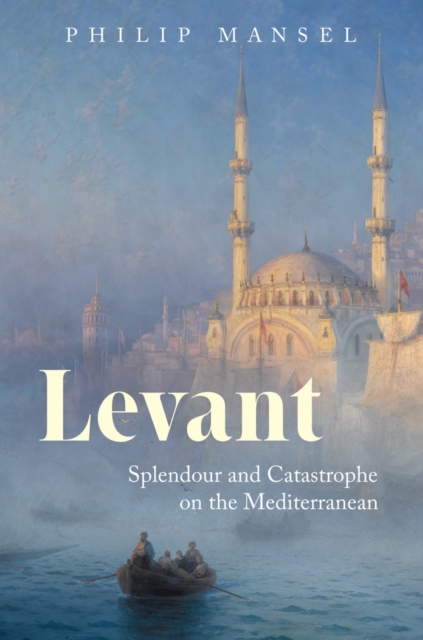
Levant
'Levant' is a book of cities. It describes the role of Smyrna, Alexandria and Beirut as windows on the world, escapes from nationality and tradition, centres of wealth, pleasure and freedom. By their mix of races and religions, they challenge stereotypes.
eBook


The Eastern Mediterranean and the making of global radicalism, 1860-1914
In this groundbreaking book, Ilham Khuri-Makdisi establishes the existence of a special radical trajectory spanning four continents and linking Beirut, Cairo, and Alexandria between 1860 and 1914. She shows that socialist and anarchist ideas were regularly discussed, disseminated, and reworked among intellectuals, workers, dramatists, Egyptians, Ottoman Syrians, ethnic Italians, Greeks, and many others in these cities. In situating the Middle East within the context of world history, Khuri-Makdisi challenges nationalist and elite narratives of Mediterranean and Middle Eastern history as well as Eurocentric ideas about global radical movements. The book demonstrates that these radical trajectories played a fundamental role in shaping societies throughout the world and offers a powerful rethinking of Ottoman intellectual and social history.
eBook

Precarious imaginaries of Beirut : a city's suspended now
This book investigates a shared experience of time and space in the post-civil-war city of Beirut:?the suspended now.? Based on the close analysis of a large corpus of cultural objects; including visual art, literature, architecture and cinema; the book argues that last decades have witnessed a gradual shift in understanding this temporality from being a transitional phase to a more durable experience of precariousness. The theoretically rich analyses take us on a journey through Beirut?s real and imagined geographies, from garbage dumps to real estate advertisements, and from subterranean spaces to martyr?s posters. For scholars of cultural analysis, urban studies, cultural geography and critical theory, the case of post-1990 Beirut offers a fascinating case of neoliberal urban renewal, which challenges existing theories. For scholars of Lebanon and Beirut, this study complements existing work on post-civil-war Lebanese cultural production rooted in trauma studies by its focus on the city?s continual exposure to violence.
Book

Anatolian genetic ancestry in North Lebanese populations
Lebanon’s rich history as a cultural crossroad spanning millennia has significantly impacted the genetic composition of its population through successive waves of migration and conquests from surrounding regions. Within modern-day Lebanon, the Koura district stands out with its unique cultural foundations, primarily characterized by a notably high concentration of Greek Orthodox Christians compared to the rest of the country. This study investigates whether the prevalence of Greek Orthodoxy in Koura can be attributed to modern Greek heritage or continuous blending resulting from the ongoing influx of refugees and trade interactions with Greece and Anatolia. We analyzed both ancient and modern DNA data from various populations in the region which could have played a role in shaping the current population of Koura using our own and published data. Our findings indicate that the genetic influence stemming directly from modern Greek immigration into the area appears to be limited. While the historical presence of Greek colonies has left its mark on the region’s past, the distinctive character of Koura seems to have been primarily shaped by cultural and political factors, displaying a stronger genetic connection mostly with Anatolia, with affinity to ancient but not modern Greeks.
Journal Article

Levant : splendour and catastrophe on the Mediterranean
'Levant' is a book of cities. It describes the role of Smyrna, Alexandria and Beirut as windows on the world, escapes from nationality and tradition, centres of wealth, pleasure and freedom. By their mix of races and religions, they challenge stereotypes.
Book

Digital health determinants & divide in the Arab world: A cross-sectional study
Digital determinants of health include key technological factors such as internet access, digital literacy, and the quality of online health information. These elements critically influence health outcomes and behaviors.
This study examined the impact of digital health determinants on health improvement across ten Arab countries: Bahrain, Palestine, Lebanon, Jordan, Kuwait, the United Arab Emirates, Saudi Arabia, Egypt, Morocco, and Tunisia. The study analyzed a dataset of 12,522 samples after implementing SMOTE-ENN to balance underrepresented demographics, capturing data on digital literacy, internet access, and the impact of online health information on personal health.
Results showed that 93.9% of participants reported having internet access, yet 71.4% did not receive formal education on internet usage. Morocco, Tunisia, and Jordan reported the highest percentages of individuals without such education. Regarding health impacts, 32.9% of participants reported significant personal health improvements linked to digital determinants. Egypt, Lebanon, and Saudi Arabia had higher rates of positive health impacts, while Morocco, Jordan, and Bahrain reported the lowest health improvements. Higher digital literacy and reliable internet access were positively associated with better health outcomes across all countries, whereas specific sociodemographic and digital factors varied: younger age and urban residence were linked to greater benefit in the Gulf; education level and healthcare access were especially influential in North Africa; and in the Levant, digital literacy and use of trusted health sources showed strong impact. These findings show both shared and region-specific drivers of digital health benefits.
Improving health outcomes requires diversification: foundational education on internet usage must be combined with broader digital literacy initiatives, efforts to build and maintain trust in credible online health platforms, and strategies that actively foster patient engagement through interactive digital tools. Policies should also ensure reliable internet infrastructure and tailor interventions to regional and sociodemographic contexts to improve overall health outcomes.
Journal Article


Multifactorial Analysis of Wood Deterioration in Ancient Egypt: A Case Study of Khufu’s Second Solar Boat
This study presents a multi-analytical investigation of the wooden components from Khufu’s Second Solar Boat, one of the valuable archaeological discoveries in ancient Egypt. The research integrates advanced imaging and analytical techniques to identify wood species, assess deterioration patterns, and characterize the fungal and bacterial biodeteriogens. The initial visual examination documented the state of preservation at the time of discovery. Subsequently, the identification of the wood species was carried out. The deterioration status was assessed using a variety of tools, including scanning electron microscopy (SEM) and high-resolution synchrotron radiation computed microtomography (SR-μCT) for morphological alterations, X-ray diffraction (XRD) for crystallinity changes and Fourier-transform infrared spectroscopy (FTIR) to assess chemical degradation indexes of wood. Moreover, molecular techniques were used to identify and characterize the presence of biodeterioration agents. Results indicate that ancient craftsmen used cedar wood for the boat construction. The analysed samples exhibited advanced biotic and abiotic degradation, as evidenced by microbiological assessments, XRD measurements of cellulose crystallinity, FTIR indices, SEM micrographs and SR-μCT data. These results provide crucial insights into the long-term degradation processes of archaeological wood in arid environments, enhancing our understanding of ancient Egyptian woodworking practices and informing future conservation strategies for similar artifacts.
Journal Article